Can You Buy a ₹1.25 Lakh Bike on a ₹25,000 Salary? The Real Monthly Maths
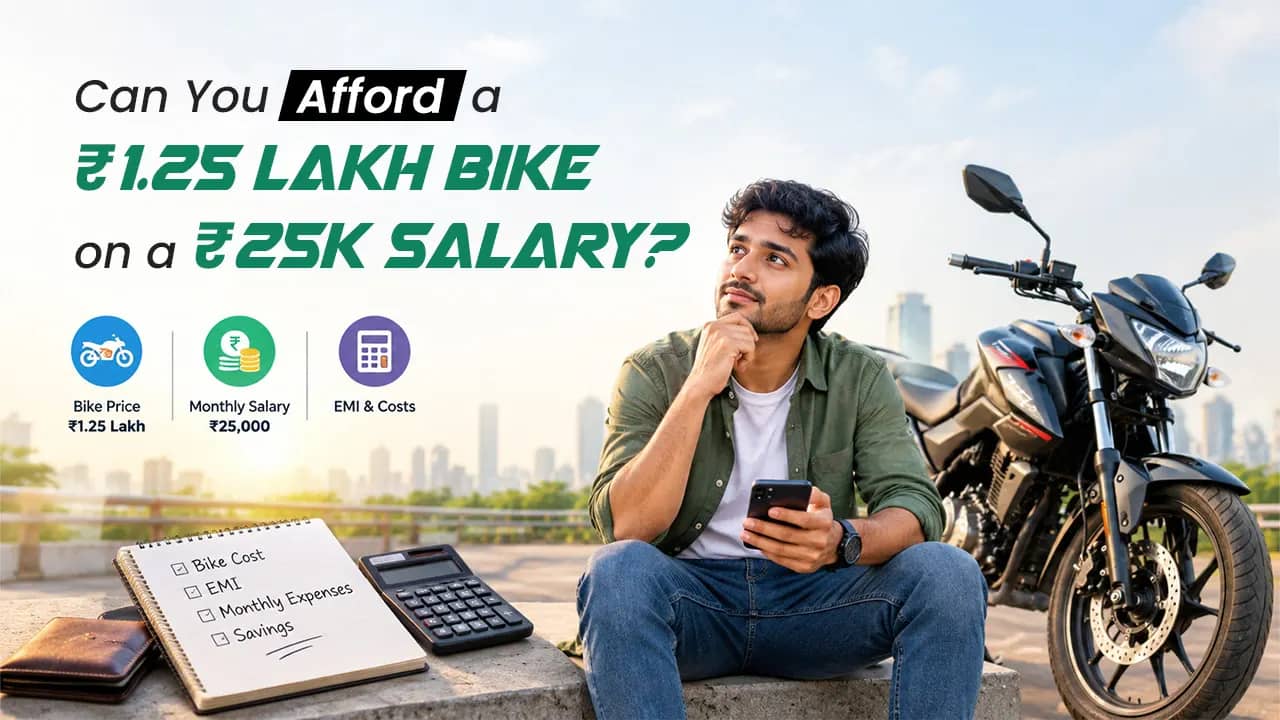
Overview
A ₹1.25 lakh ex-showroom bike costs about ₹1.45 lakh on the road in Delhi, and the loan is only part of the bill. This India-focused breakdown adds EMI, petrol at ₹103 a litre and service costs to a ₹25,000 monthly take-home. It is written for first-time buyers deciding between a 160cc commuter-sport bike and something cheaper.
Can you buy a ₹1.25 lakh bike on a ₹25,000 salary? Technically yes, and thousands of people in India do it every month. The real question is what it does to the other 72% of your pay. A ₹1.25 lakh ex-showroom price, typical for a 160cc bike like the Bajaj Pulsar N160 or TVS Apache RTR 160 4V, becomes roughly ₹1.40-1.48 lakh on the road in Delhi once RTO charges, insurance and handling are added. That on-road number is what the loan actually has to cover. This article does the full sum, so you can decide before you walk into a showroom.
What the on-road price really looks like
Ex-showroom is the number on the poster. On-road is the cheque you write. In Delhi, expect about ₹8,000-9,000 for first-year comprehensive insurance, ₹5,000-7,000 in registration and road tax, and a few thousand for handling and accessories the dealer will push. Mumbai runs ₹5,000-10,000 higher because of road tax slabs. Treat these as likely figures, since dealer quotes vary by city and variant.
Call it ₹1.45 lakh in Delhi. If you put ₹25,000 down, you borrow ₹1.20 lakh. Most banks and NBFCs will lend on a ₹25,000 salary slip if your CIBIL score is above 700, though some ask for six months of salary credits first.
The EMI maths at 36 and 48 months
On ₹1.20 lakh at 11% interest, a 36-month loan means an EMI of about ₹3,930. Stretch it to 48 months and it falls to roughly ₹3,100, but you pay nearly ₹29,000 in interest instead of ₹21,000. At 13%, which is common for first-time borrowers or two-wheeler NBFCs, the 36-month EMI creeps to about ₹4,040.
Lenders usually like the EMI under 15% of take-home. At ₹3,930 you sit at 15.7%, right on the edge. At ₹3,100 you are comfortably inside. The tenure you choose decides how tight the first year feels. Not a financial recommendation, only arithmetic you can check on any EMI calculator.
Petrol, service and the bills nobody mentions
A 160cc bike like these gives about 45-50 kmpl in real Indian traffic, not the 55-60 on the brochure. Ride 1,000 km a month and you burn about 22 litres, which is roughly ₹2,300 at ₹103 a litre. Ride 1,500 km, a normal office commute plus weekend errands, and fuel climbs to about ₹3,400.
Service is cheaper than people fear. The first four services in the 10,000 km window cost around ₹500-900 each at an authorised centre, with an oil change at each. Budget ₹300-400 a month including tyres and chain lube, then add about ₹250 a month towards next year’s insurance renewal.
That is the honest picture. The bike costs you a quarter of your take-home every month for three or four years, before a single puncture or a pillion’s helmet.
Which 160cc makes sense at this budget
The Pulsar N160 is the one to look at if you want a bigger rear tyre and a relaxed ride on broken roads, though its roughly 16 PS and 14.6 Nm feel mild once you leave the city. The Apache RTR 160 4V is quicker, with about 17 PS and a lighter feel in stop-go traffic, and its ex-showroom price is similar. The Hero Xtreme 160R 4V sits a little cheaper and is the easiest on the wallet at service time. Drivio has covered all three, and the gap between them is smaller than the gap between any of them and a 125cc commuter.
The cheaper bike that changes the equation
Drivio’s recent look at the Honda SP125 and Hero Splendor+ shows the other path. A 125cc commuter at about ₹95,000 ex-showroom drops your on-road price near ₹1.10 lakh, your EMI under ₹2,800 over 36 months, and your fuel bill to roughly ₹1,700 because these bikes return 55-60 kmpl in daily use. Total monthly cost lands near ₹5,000, a clear 20% of your salary instead of 28%.
You give up about 3-4 PS and the sporty look. In a 30 km daily office commute through Gurugram or Bengaluru traffic, you will notice the lost power on exactly two days a year.
Verdict: do it, but on three conditions
You can do this, and many riders have. Put at least ₹25,000 down, keep the tenure at 36 months only if no other loan sits on your salary slip, and make sure your commute is long enough to justify a 160cc. If your daily ride is under 20 km, the cheaper 125cc is the smarter buy and nobody will think less of you for choosing it.
The ₹1.25 lakh bike is a stretch, not a mistake. If you can still save ₹3,000 a month after the loan, fuel and service, go ahead and buy a ₹1.25 lakh bike on a ₹25,000 salary. Run your own numbers before you commit: check the on-road price and EMI for the Pulsar N160, Apache RTR 160 4V or Xtreme 160R 4V in your city on Drivio.
Yes, it works, but only with about ₹25,000 down and a 36-month loan, which makes the full monthly cost near ₹6,900, or 28% of your pay. Go to 48 months and the EMI drops to roughly ₹3,100, though you pay more interest. If your daily ride is under 40 km, a ₹95,000 125cc bike leaves far more breathing room. Expected figures, not quotes.