New Delhi


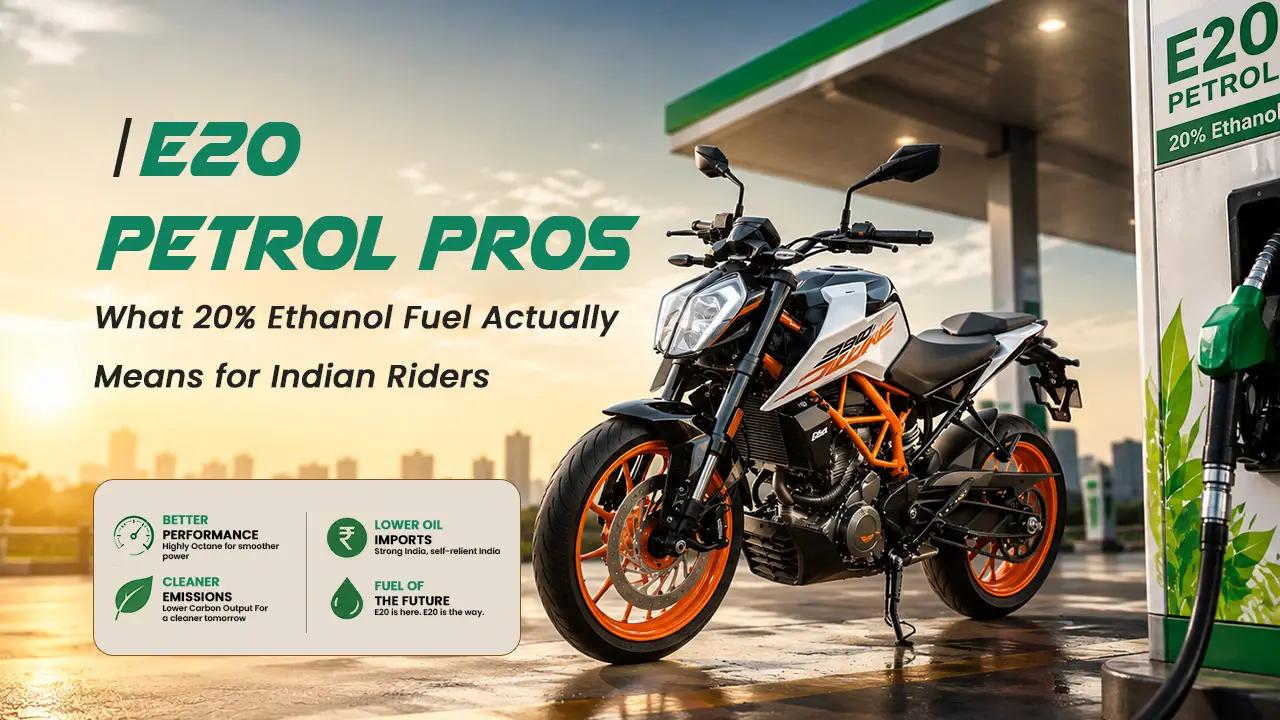

E20 Petrol Pros: What 20% Ethanol Fuel Actually Means for Indian Riders
Featured Stories by Drivio | 17 Jul 2026
E20 petrol pros are worth understanding properly now that every pump in India sells nothing else — the fuel switch became mandatory on April 1, 2026, and there's no E10 or plain petrol option left on the shelf. At roughly ₹103 a litre in most Indian cities, the price tag hasn't moved much, but what's inside the nozzle has changed for good. For the country's 24-crore-plus two-wheeler fleet, that's not a footnote. It's the single biggest fuel shift since BS6 emission norms landed in 2020.
Why E20 Fuel Actually Helps Newer Engines
Start with the number most articles skip: octane. Ethanol carries a higher octane rating than pure petrol, and that translates into better resistance to knocking under load. On a high-compression engine — think KTM 390 Duke or a Triumph Speed 400 running aggressive ignition timing — that headroom shows up as marginally smoother power delivery, not a dramatic gain, but a real one. Suzuki has already confirmed its entire two-wheeler lineup runs on E20 without modification. Honda's compatibility claims stretch back even further, to 2009-era engines. If your bike was built after April 2023, it was certified for this fuel from day one, and the octane bump is one of the few upsides that costs you nothing.
There's a national angle too, and it's not just government talking points. Ethanol is distilled largely from sugarcane and surplus grain, which means every litre blended into the tank is a litre of crude oil India didn't have to import. That has pulled down the country's oil import bill and put more cash into the hands of sugarcane farmers in states like Uttar Pradesh and Maharashtra. Cleaner combustion is the other side of it — ethanol burns with lower carbon monoxide output, which matters in cities like Delhi where two-wheelers are a meaningful chunk of tailpipe emissions.
The Fuel-Cost Math Nobody's Running
Here's where it gets specific. Take a commuter riding a 110cc scooter roughly 40km a day, or about 1,200km a month. On pre-E20 petrol at 50kmpl, that's 24 litres and a monthly fuel bill near ₹2,472. Real-world reports peg the mileage hit from E20 at 2-7% for compliant vehicles, so assume a conservative 5% drop to 47.5kmpl. That same rider now burns roughly 25.3 litres, pushing the bill to about ₹2,605 — a difference of just over ₹130 a month. It's a real cost, but it's nowhere near the scare-headline territory some outlets suggest, and it's the kind of number this segment's readers actually want before they decide whether to worry.
| Vehicle age | Typical mileage impact | E20 compliance status |
| Post-April 2023 | 2-5% | Certified by manufacturer |
| BS6, pre-2023 | 5-7% | Warranty honoured, per SIAM |
| BS4 and older | Up to 20% reported | No official compliance |
That last row is where the real caution lives. Older carbureted engines run tighter fuel-system tolerances, and ethanol's moisture-absorbing, solvent-like behaviour degrades rubber hoses and seals faster than plain petrol ever did. SIAM has stated manufacturers will honour warranties on older bikes regardless of what the owner's manual says, which takes one worry off the table. Royal Enfield is currently the only brand offering an actual retrofit kit, though it doesn't extend to the 650 twins or the 500cc range yet — worth checking before you assume your Classic or Himalayan is covered.
What This Means If You're Buying Now
For anyone shopping in 2026, E20 compatibility isn't a spec sheet afterthought anymore — it's as basic a checkbox as ABS or a digital cluster. Riders comparing the Hero Splendor Plus against the Honda Shine 100, both of which Drivio has covered in detail, will find both fully compliant out of the box, so the fuel question doesn't tilt that decision either way. It's the used-bike buyers who need to slow down. A five-year-old commuter picked up second-hand almost certainly predates the April 2023 cutoff, and that's exactly the profile most likely to see hose swelling or filter clogging over the next couple of years.
Brazil ran this experiment first, mandating ethanol blends decades ago and eventually building flex-fuel engines designed around it rather than retrofitted for it. India's approach has been faster and blunter — moving the target from 2030 to 2026 in a matter of years — which is why the transition has felt abrupt to owners of older bikes even as newer ones sail through without issue. The upside is real: cheaper energy imports, a cleaner-burning fuel, and a small but genuine performance bump on modern engines. The catch is equally real for anyone still riding pre-2023 metal, and pretending otherwise does readers no favours.
If you're upgrading to an E20-certified two-wheeler or checking whether your current one qualifies, check the on-road price and EMI for your next bike on Drivio.