TVS iQube 2.3kWh Launched in India: Price, Range and What You Give Up
Overview
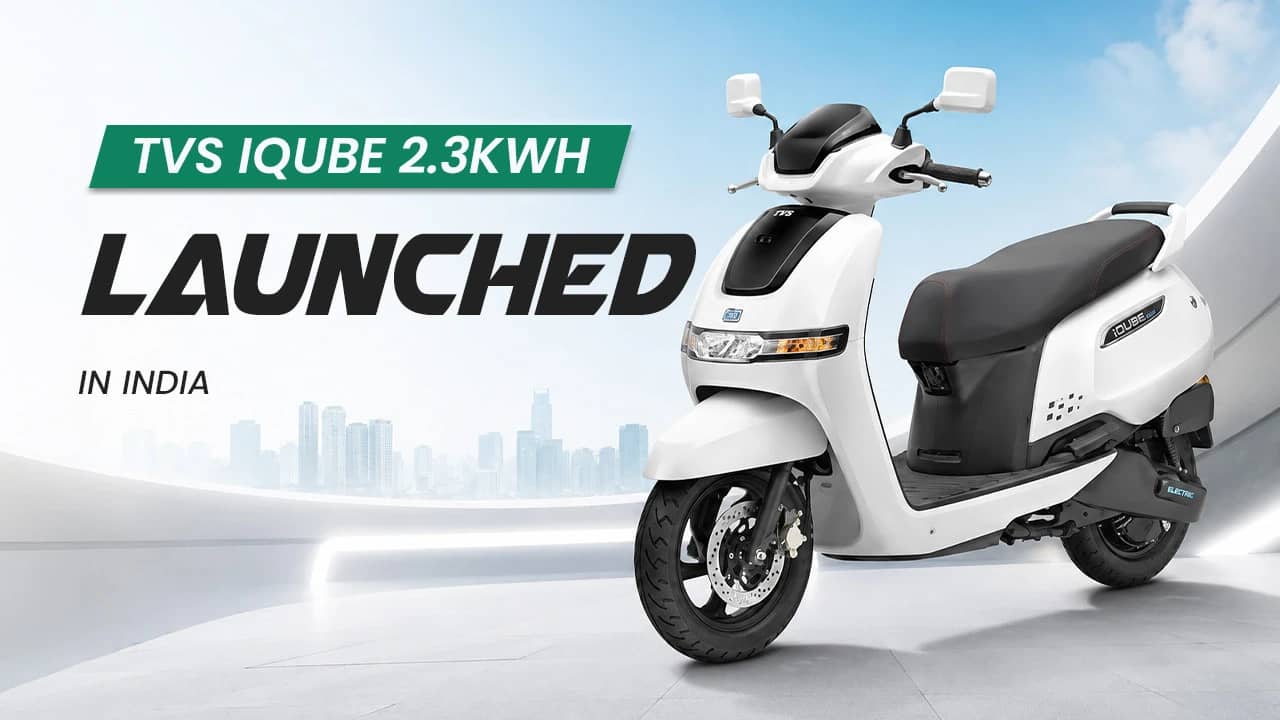
TVS has launched the iQube 2.3kWh as the new entry-level variant in its electric scooter lineup, replacing the older 2.2kWh model at the same ₹1.16 lakh ex-showroom price. The bigger battery pushes claimed IDC range up to 114km, a 20km jump over the outgoing version, making it more usable for longer daily commutes. However, TVS has trimmed peak motor power to 3.68kW and swapped the front disc brake for a drum unit to hold the price line, so top speed drops from 75kph to 68kph.
The TVS iQube 2.3kWh variant has just replaced the outgoing 2.2kWh base model in India, and it brings a bigger battery at the same ₹1.16 lakh (ex-showroom, Bengaluru) price — but TVS has quietly dropped the front disc brake for a drum and cut peak motor power to get there. On-road in Delhi, expect to pay close to ₹1.22 lakh once insurance is added, since electric two-wheelers skip road tax in most states. For a scooter that has topped VAHAN's electric two-wheeler sales charts for months running, this base variant is the one most first-time EV buyers will actually ride home.
TVS iQube 2.3kWh price and what actually changed
Here's the trade TVS is asking you to make. The new 2.3kWh pack pushes claimed IDC range up from 94km to 114km — a real 20km gain that matters if your commute stretches past 30-35km a day. But the motor powering it now peaks at 3.68kW, down from the 4.4kW unit every other iQube variant still uses, and top speed has fallen from 75kph to 68kph. The front disc brake is gone too, replaced by a drum, which is the kind of change that won't show up on a spec sheet skim but will matter the first time you're braking hard in Delhi traffic. Torque stays rated at 140Nm, so low-speed pull off the line shouldn't feel dramatically different, but this is now a scooter built for range and price, not quick overtakes.
EMI and running costs on the iQube 2.3kWh
Financing this at 20 percent down over 60 months at 11 percent interest — a fairly standard dealer-financing structure — works out to roughly ₹2,130 a month against the Delhi on-road price. That's before any PM E-Drive subsidy, which most buyers will qualify for and which would knock the ex-showroom figure down further depending on your state.
The bigger number, though, is what you're not spending at the pump. A comparable petrol scooter doing 900km a month at a real-world 40-45kmpl burns through roughly 20 litres of fuel — at today's ₹103/litre in Delhi, that's around ₹2,060 monthly. Charging the iQube 2.3kWh for the same distance, going by real-world owner data of about 25-30 paise per km, lands closer to ₹230-270 a month. Run the numbers over a year and you're looking at savings north of ₹20,000, and that's before factoring in service.
Speaking of which: TVS quotes annual maintenance on the iQube line at roughly ₹1,800-2,500, which covers you comfortably through the 10,000km mark since there's no engine oil, spark plugs, or air filter to replace — just brake checks, battery diagnostics, and the odd firmware update. A petrol scooter covering the same distance typically racks up ₹3,000-4,000 in that window once an oil change is factored in.
TVS iQube 2.3kWh vs Ola S1 X and Bajaj Chetak C2501
This is where the base iQube's positioning gets interesting, because it isn't actually the cheapest option in its own segment anymore.
Bajaj's new entry-level Chetak matches the iQube's range almost exactly at a much lower price, though it caps out at a sluggish 55kph and trades TVS's dealer network for Bajaj's own. Ola's S1 X undercuts both on price and comfortably beats them on top speed, but Ola's after-sales reputation is the thing most buyers still ask about before signing. What the iQube still has going for it is TVS's service network depth and the resale confidence that comes from being the segment's best-seller — reasons that show up repeatedly in the ownership reviews we've tracked on Drivio's own iQube maintenance breakdown.
Should you buy the TVS iQube 2.3kWh
If your daily riding is genuinely under 15-20km and you're buying on brand trust and dealer proximity, the extra range is a real, usable upgrade over the old 2.2kWh version at no added cost. But walk in knowing you're getting a drum front brake and a noticeably slower scooter than the Chetak C2501 offers at nearly ₹25,000 less, or the S1 X offers with far punchier performance. This variant makes sense as a steady, low-drama city commuter rather than a scooter you'll enjoy pushing hard. Check the on-road price and EMI for the TVS iQube 2.3kWh in your city on Drivio.
The TVS iQube 2.3kWh trades outright performance for extra range, positioning itself as a steady city commuter rather than a quick one. Financed over 60 months, EMIs work out to roughly ₹2,130 a month, while running costs stay well below a petrol scooter's. Against rivals, the Bajaj Chetak C2501 matches its range at a lower price, and the Ola S1 X offers sharper performance for less money. TVS's dealer network and resale value remain the iQube's strongest arguments, but this variant suits buyers with shorter daily commutes best.