Ampere Electric Scooter Sales Nearly Double in Six Months — Is This India's Most Underrated EV Brand?
Overview
Ampere Electric Scooter Sales Nearly Double in Six Months — Is This India's Most Underrated EV Brand? details recent electric two-wheeler market trends, highlighting monthly registration growth figures, shifting brand market shares, and key adoption milestones across the Indian EV industry.
Ampere electric scooter sales have climbed from 5,421 units in January to an estimated 9,500-plus in June 2026, a jump that's close enough to doubling to raise a real question: why isn't this brand talked about the way Ola or Ather are? The Ampere Nexus, the brand's flagship, is priced at ₹1,29,999 (ex-showroom), which puts it firmly in the mainstream EV scooter bracket in India rather than the budget corner it used to occupy. For a brand that most riders still associate with slow-speed, low-speed segment scooters from a decade ago, that's a meaningful shift.
The Numbers Behind Ampere's Quiet Growth
Greaves Electric Mobility, Ampere's parent, crossed 4 lakh cumulative scooters sold in India by late June 2026, with FY26 sales growing 51 percent year-on-year. Market share moved from 3.6 percent in FY25 to 4.4 percent in FY26 — not dramatic on paper, but enough to push Ampere past several better-funded rivals into sixth place among India's e-scooter sellers, behind TVS, Bajaj, Ather, Hero Vida and Ola Electric. What stands out is the shape of the growth curve. January and February were slow, at 5,421 and 4,762 units. Then March, April and May each crossed 7,000 units, with May alone up 78 percent year-on-year. That's not a company riding a subsidy wave. That's a company that fixed something.
What Actually Changed: Magnus Neo and the Reo VYB
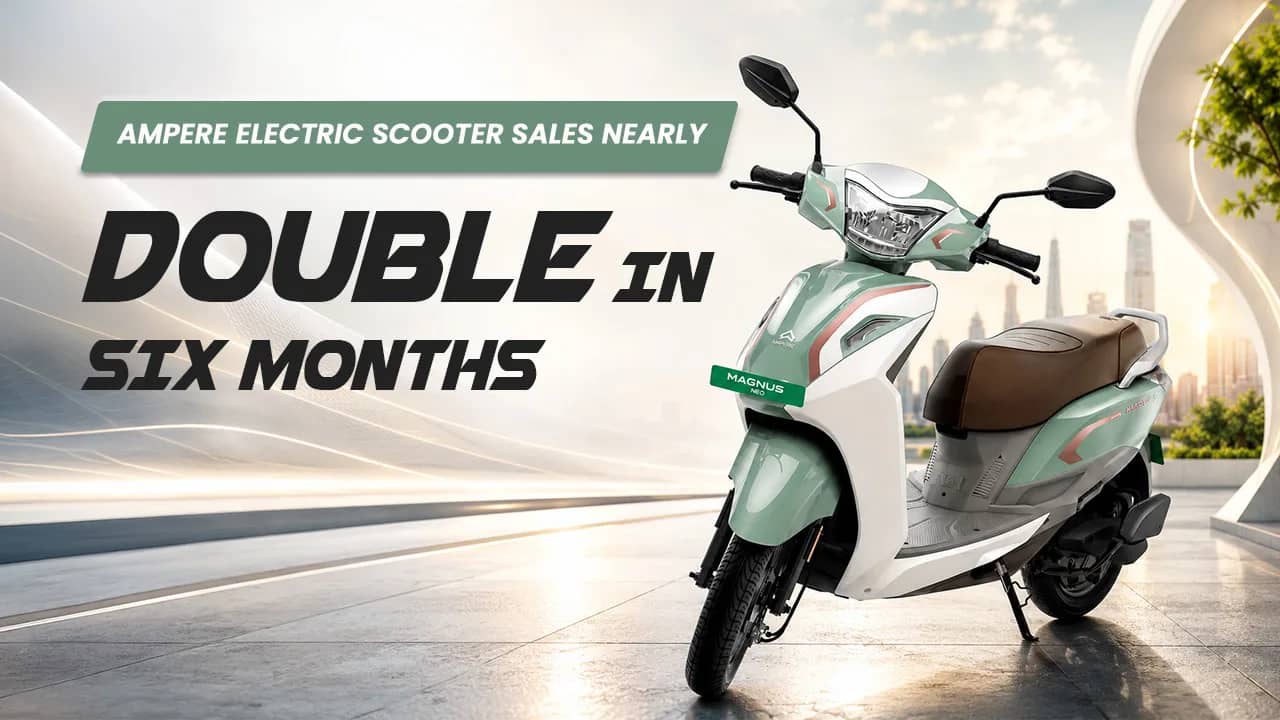
Two launches explain most of the acceleration. The updated Magnus Neo, priced at ₹86,000, arrived in the last week of April and directly targets the sub-₹1-lakh urban commuter — the same buyer TVS chases with the iQube and Ola with the S1X. Then came the Reo VYB on June 17, aimed even lower, at first-time EV buyers who'd otherwise default to a Honda Activa. Between these two, Ampere now has a genuine low-price funnel feeding into its pricier Nexus range, which most rivals still lack. Ather, for comparison, has nothing under ₹1.15 lakh; Ampere does, twice over.
Ampere Nexus: Price, Range and What It's Actually Like to Ride
The Nexus runs a 3kWh LFP battery paired with a 4kW swingarm-mounted motor, good for a claimed 136km range and a 93kmph top speed in Power mode. Real-world range sits closer to 100-105km, which lines up with what most Indian commuters actually need across a week of city riding. It comes in EX and ST variants, weighs around 126kg, and carries a 7-inch TFT display with turn-by-turn navigation — features that used to be Ather's exclusive territory. Battery warranty now stands at 5 years or 75,000km, among the longest in the segment. Throttle response in Eco and City modes lags slightly when you need a quick overtake on Indian roads, so Power mode ends up being the default setting for most riders rather than the occasional treat it's meant to be.
The Math Rivals Won't Show You
Run the ownership numbers and the Nexus starts looking less like a budget alternative and more like a smart one. At a typical residential electricity rate of ₹8 per unit, a full 3kWh charge costs roughly ₹24 and delivers around 100km, working out to about ₹0.24 per kilometre. A petrol scooter at 45kmpl and ₹103/litre costs closer to ₹2.29 per kilometre — nearly ten times more. Over 1,500km a month, that's roughly ₹360 in electricity against ₹3,433 in petrol. On financing, a 20 percent down payment (around ₹26,000) on the Nexus at 9.45 percent interest over 36 months works out to an EMI of approximately ₹3,330 — competitive with what TVS quotes on the base iQube. Servicing costs stay low too: with no engine oil, clutch, or gearbox to maintain, a typical EV scooter service bill through 10,000km runs an estimated ₹1,500-2,000, against ₹4,500-5,000 for a comparable ICE scooter with multiple oil changes factored in.
Ampere Nexus vs the Competition
| Model | Ex-Showroom Price | Range (claimed) | Top Speed |
| Ampere Nexus | ₹1.20-1.30 lakh | 136 km | 93 km/h |
| TVS iQube (base) | ₹1.16-1.18 lakh | 94 km | 75 km/h |
| Ather Rizta | ₹1.15-1.54 lakh | 123 km | 80 km/h |
| Ola S1X | ₹80,000-1.15 lakh | Varies by variant | Varies |
On paper, the Nexus beats the TVS iQube's base variant on both range and top speed while sitting close in price. Against the Ather Rizta, it undercuts on the entry trim and matches on range, though Ather still holds an edge in software polish and charging infrastructure. Where Ampere pulls ahead is dealer reach — over 500 dealers across roughly 27 states and 400-plus service touchpoints, a network built over 17 years that newer, venture-funded rivals are still assembling city by city.
The Verdict
Ampere isn't going to out-hype Ola or out-engineer Ather anytime soon, and it doesn't need to. What it's built instead is a scooter lineup that actually undercuts rivals on ownership cost while matching them on range and features that mattered three years ago but are table stakes now. The Nexus makes sense if you want a well-specced daily commuter without paying Ather or TVS iQube S money for it, and the Magnus Neo and Reo VYB give first-time EV buyers an entry point that's genuinely cheaper to run than a petrol Activa. Check the on-road price and EMI for the Ampere Nexus in your city on Drivio.
Ampere electric scooter sales have climbed from 5,421 units in January to an estimated 9,500-plus in June 2026, a jump that's close enough to doubling to raise a real question: why isn't this brand talked about the way Ola or Ather are? The Ampere Nexus, the brand's flagship, is priced at ₹1,29,999 (ex-showroom), which puts it firmly in the mainstream EV scooter bracket in India rather than the budget corner it used to occupy.