Diwali 2026: Petrol Bike vs EV vs Scooter — Which Should You Buy?
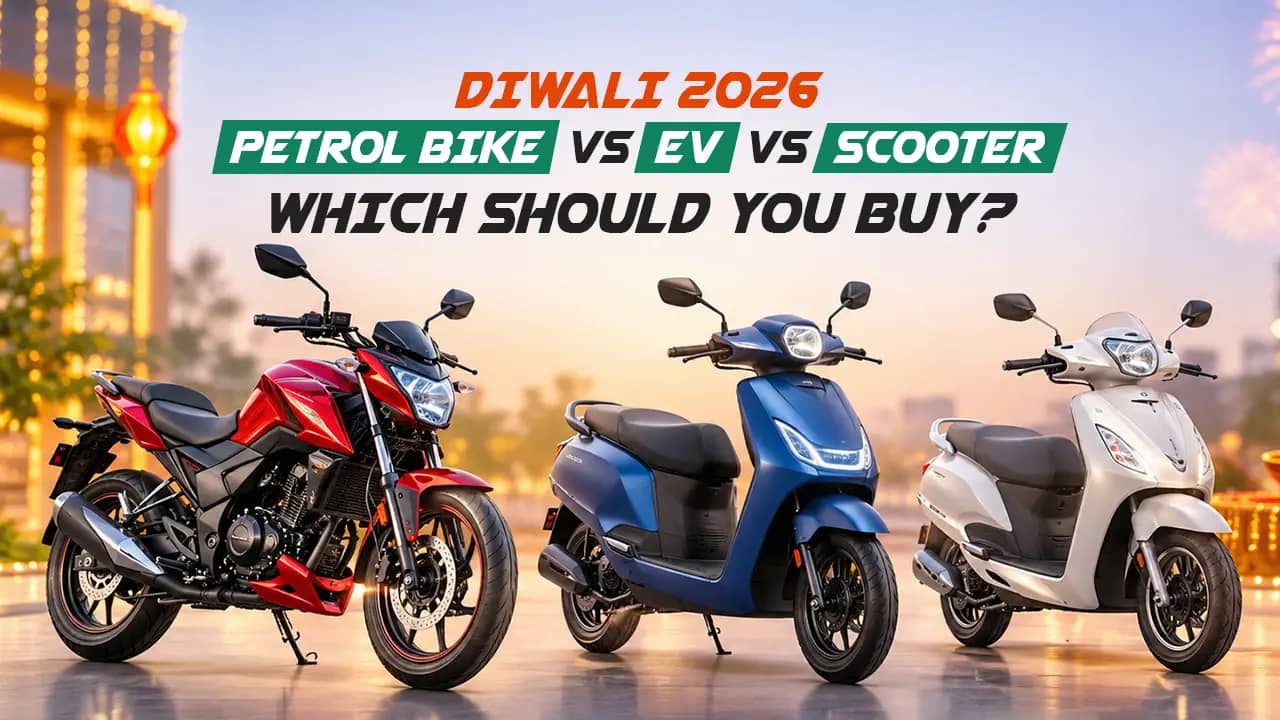
Overview
Choosing between a petrol motorcycle, an electric scooter and a petrol scooter this festive season comes down to how far you ride each day. We set the Honda Shine 125 (₹82,000 ex-showroom), the TVS iQube 3.1 kWh (₹1.21 lakh) and the Honda Activa 6G side by side for Delhi riders, with monthly fuel bills, EMIs and a break-even point. Written for first-time and upgrading buyers across India who want numbers before the showroom visit.
The petrol bike vs EV vs scooter debate has a sharper edge this Diwali, because Delhi petrol now costs ₹102.12 a litre, about ₹7 more than it did in May. Across India, a Honda Shine 125 starts near ₹82,000 ex-showroom, a TVS iQube 3.1 kWh at ₹1.21 lakh and a Honda Activa 6G at roughly ₹75,000. Diwali falls on 8 November and dealers want numbers on the board. The cheapest sticker, though, is no longer the cheapest vehicle to own.
What each one costs on the road in Delhi
Start with what leaves your account on day one. The Shine 125 Drum lists at about ₹82,000 ex-showroom, and after RTO and insurance the Delhi on-road figure lands near ₹92,000. Its 123.94 cc single makes 10.59 bhp and about 11 Nm, and the listed efficiency is 55 kmpl. The iQube 3.1 kWh costs ₹1.21 lakh ex-showroom and roughly ₹1.31 lakh on-road. A 4.4 kW motor (about 5.9 bhp) takes it to 75 kph, and TVS claims 123 km of range. Delhi’s EV policy has waived road tax on electric two-wheelers, though listings differ, so ask the dealer to show that line in the quote. The Activa 6G sits between the two at ₹84,940 to ₹99,260 on-road, with a 109.5 cc engine making 7.8 bhp.
One tax detail is easy to miss. Since the September 2025 GST revision, petrol two-wheelers up to 350 cc attract 18% instead of 28%, while EVs stay at 5%. That helped petrol buyers, but it didn’t close the gap. The iQube still costs about ₹39,000 more than the Shine on the road.
Which is cheaper to run: petrol bike or electric scooter?
Take a rider covering 40 km a day, so 1,200 km a month. That is ordinary for a Gurugram-to-Delhi or Thane-to-Mumbai commute. A Shine returning a real-world 55 kmpl burns about 22 litres, which is ₹2,230 at ₹102.12. The Activa, at a realistic 48 kmpl, drinks 25 litres and costs ₹2,550. The iQube’s 3.1 kWh pack gives closer to 85–90 km in mixed traffic than the claimed 123 km, so budget about 40 Wh per kilometre from the wall socket. That is 48 units a month, or ₹340 at ₹7 a unit.
The gap against the Shine is roughly ₹1,890 a month. Divide the ₹39,000 premium by it and the iQube pays for itself in about 20 months. Cut the commute to 15 km a day and the same sum stretches past four and a half years. The saving is real, but too slow to justify a premium and a hunt for a charging point.
Service is the quieter win. Expect around ₹3,000–4,000 for the Shine’s first 10,000 km (oil changes, chain, filters) and roughly ₹1,500–2,000 for the iQube, which has no engine oil, clutch or spark plug. Treat both as likely figures, since dealers differ.
Petrol bike vs EV vs scooter: the Delhi EMI test
Most buyers finance, so compare monthly outgo rather than the sticker. Assume a 10% down payment and a three-year loan at 12%, a common two-wheeler rate that your bank may beat or miss. The Shine needs about ₹9,200 down and an EMI near ₹2,750. The iQube needs ₹13,100 down and an EMI near ₹3,920. Add fuel or electricity at 1,200 km a month and the picture flips.
The EV rider is about ₹720 a month better off than the Shine rider even while the loan is running. That is the number a showroom salesman rarely volunteers, and it is why this contest is closer than the price tags suggest.
Where the iQube’s maths breaks down
All of this assumes you can charge at home. Many flat owners in Delhi and Mumbai cannot: no dedicated parking, no society approval for a socket, a landlord who objects. Public charging costs more per unit and eats most of the saving. Winter will likely trim real-world range by 10–15%, and 85 km is plenty for a 40 km commute but tight once a weekend run to Noida or Lonavala enters the picture. Resale also favours petrol, because a three-year-old Shine finds a buyer in a week while used EV values are still settling.
Rivals narrow the choice. The Bajaj Chetak and the Ather Rizta S 2.9 kWh sit in the same ₹1.3–1.5 lakh on-road band, and the Rizta has the roomier seat for pillion-heavy use.
When the Shine or Activa is the smarter buy
Ride 10 to 12 km a day and the arithmetic reverses. The Shine’s ₹92,000 ticket and 55 kmpl take some beating, with the Hero Glamour (124.7 cc, 10.39 bhp, around ₹83,000 ex-showroom) as the obvious cross-shop. Want more punch? The Honda SP 125 (₹88,528 ex-showroom, 10.72 bhp, 10.9 Nm) is the natural step up.
The Activa solves a different problem. No gears, under-seat storage and a 109 cc motor that shrugs off stop-start traffic. It costs about ₹320 a month more than the Shine to fuel, and that is the price of convenience. For a first-time rider or anyone running errands all day, the premium is easy to defend.
The verdict
Ride 30-plus km most days and can plug in at home? Buy the iQube. It costs less every month from the first EMI. Short commute, shared parking or frequent highway trips? The Shine 125 is the better fit. Pick the Activa only when scooter ease matters more than ₹320 a month. Whatever you choose, haggle on Diwali offers and ask for accessories and insurance to be itemised. Settle the petrol bike vs EV vs scooter question with your own daily kilometres, not the showroom banner, then check the on-road price and EMI for the TVS iQube, Honda Shine 125 or Honda Activa in your city on Drivio.
Ride 40 km a day and the iQube wins: about ₹340 a month in electricity against ₹2,230 in petrol for the Shine, a gap that repays the ₹39,000 price premium in roughly 20 months. Ride less, or lack a charging socket, and the Shine 125 is the safer buy. The Activa suits short, stop-start errands but costs the most to fuel.