Bajaj Pulsar 125: Is It Still a Smart Everyday Motorcycle in 2026?
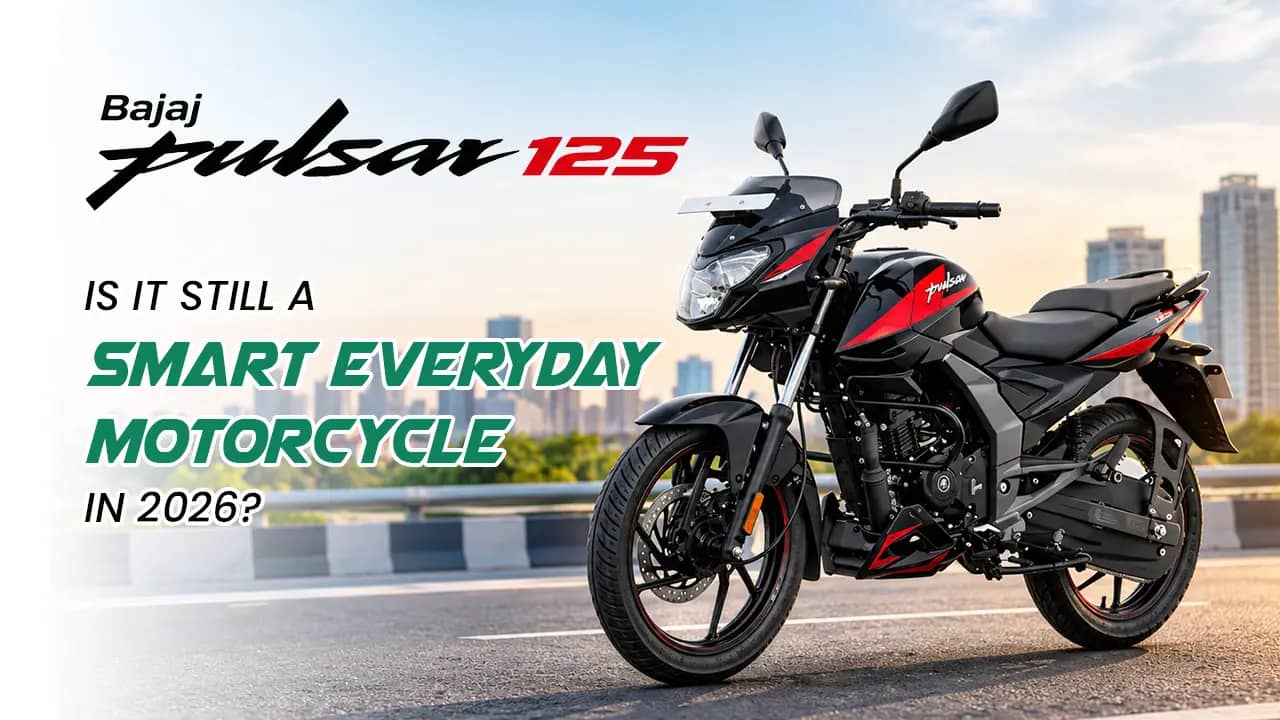
Overview
Bajaj has relaunched its entry-level Pulsar in India with a new engine, single-cradle frame and 5-inch TFT, starting at ₹92,990 ex-showroom. This guide covers the Delhi on-road price, a 36-month EMI example, a real monthly petrol bill and how the Bajaj Pulsar 125 compares with the TVS Raider 125 and Honda SP125. It is written for commuters choosing a 125cc bike before Diwali.
The Bajaj Pulsar 125 is no longer the bike your neighbour bought in 2019. Since the 24 August 2026 relaunch it starts at ₹92,990 (ex-showroom, Delhi), runs a new 124.58cc engine and carries a 5-inch TFT console on every variant. For anyone in India filling up at roughly ₹103 a litre, the real question is simple: does the extra tech justify a price that now sits above several plain 125cc commuters?
Bajaj Pulsar 125 on-road price and EMI in Delhi
Four variants cover the range, from the ₹92,990 STD to the ₹1,04,318 Premium Split Seat TFT+. The single-seat and split-seat TFT versions sit in the middle, separated by only ₹997. Anyone who carries a pillion should take the split seat without thinking twice.
Add RTO charges, insurance and handling, and the base bike likely lands near ₹1.05 lakh on-road in Delhi. The top variant should be around ₹1.17 lakh. Mumbai buyers should expect a few thousand rupees more. These are estimates, so confirm the dealer quote.
Here is the number most listicles skip. Put ₹15,000 down on the base bike and borrow about ₹90,000 over 36 months at an assumed 11 per cent, and the EMI works out to roughly ₹2,950. Total interest is close to ₹16,000. Stretch the loan to 48 months and the EMI falls to about ₹2,325, but interest climbs past ₹21,000. The longer tenure feels cheaper every month and costs you more overall.
What actually changed under the bodywork
The engine is the headline, though not for the reason you might expect. The air/oil-cooled single makes about 12 PS and 11.4 Nm, a small step up from the outgoing 11.63 bhp motor. Nobody should expect a different bike off the line.
The more meaningful changes are mechanical. A new five-speed gearbox arrives. The old double-cradle frame gives way to a single-cradle one, and a monoshock replaces the twin rear shocks. Those changes decide how a commuter bike behaves over potholes, speed breakers and broken tarmac, which is where most Pulsars spend their lives.
Features carry the price premium more than power does. The TFT shows call and SMS alerts and turn-by-turn prompts. It also adds music controls and Google Maps mirroring, which means you can mount the phone in your pocket instead of on the handlebar. Higher variants add ride modes, Crawl Tech for creeping through jams and an Integrated Starter Generator. The base STD keeps an LCD console, so if navigation is why you are here, skip it.
Real running costs: fuel and the 10,000 km service
Bajaj’s launch material does not make the new engine’s ARAI figure easy to pin down. The outgoing bike claimed 51.46 kmpl, and owners report 45 to 50 kmpl in daily use. Take 48 kmpl as a working number until real tests arrive. That figure is expected, not confirmed.
At 1,000 km a month, you burn about 21 litres, which is ₹2,150 at ₹103 a litre. A longer 1,500 km commute pushes it to roughly ₹3,200. Pair the 1,000 km fuel bill with the 36-month EMI above and you are spending close to ₹5,100 a month for the first three years, before insurance renewal.
Servicing is gentler. The 10,000 km visit typically means fresh engine oil, a new oil filter, an air filter check, chain adjustment and a brake inspection. Budget ₹1,500 to ₹2,500 at an authorised Bajaj centre. That is a likely range, not a published rate card, and it varies by city.
Pulsar vs Raider vs SP125: which 125cc is smarter?
The TVS Raider 125 is the closest rival, with roughly 11.4 PS and 11.2 Nm. The Honda SP125 makes about 10.7 PS and 10.9 Nm. The Pulsar’s edge on paper is small, and nobody buys a 125 for its 0.6 PS advantage. What separates them is everything around the engine.
Honda wins on refinement, resale and the sheer reach of its service network. Its console is plainer and the styling is deliberately quiet. The Raider is the sportier alternative, and its TFT sits on a pricier variant. In my view the Bajaj Pulsar 125 wins this comparison for anyone doing 20-plus km a day in stop-start traffic, because the monoshock, the navigation display and the Crawl Tech all pay off in exactly that situation. Base-level rivals are likely cheaper by a few thousand rupees, so verify local quotes.
Also look at the Pulsar N160 if your budget stretches. It costs more but borrows the same TFT idea with more engine behind it.
Who should buy it, and who should not
Buy the split-seat TFT if you commute daily, ride with a pillion and want navigation without a phone mount. It is the variant where the new Pulsar makes the most sense. The Premium TFT+ is only worth the extra for riders who want the Integrated Starter Generator and ride modes, and few will use either every day.
Skip it if your on-road budget is a hard ₹1 lakh. The base STD gets you the new engine and chassis, but without the TFT you lose the main reason to pay Pulsar money. Under that ceiling, the Honda SP125 gives you a calmer, cheaper ownership story. If you ride under 500 km a month, the fuel savings of any 125 are small, so buy on comfort and looks alone.
For most Indian city riders, the new Pulsar is the right call: more tech than its price suggests, a better-sorted chassis and a monthly cost that stays manageable. Check the on-road price and EMI for the Bajaj Pulsar 125 in your city on Drivio.
Go for the split-seat TFT variant. It costs a trivial amount more than the single seat and suits daily riding better. Budget roughly ₹2,150 a month in petrol for 1,000 km, and about ₹5,100 once the EMI is added. Buy the Honda SP125 if resale and low fuss matter most. Pick the Pulsar if you want sharper looks, 12 PS and a proper navigation display.