TVS Raider 125: The Features That Actually Matter in Everyday Riding
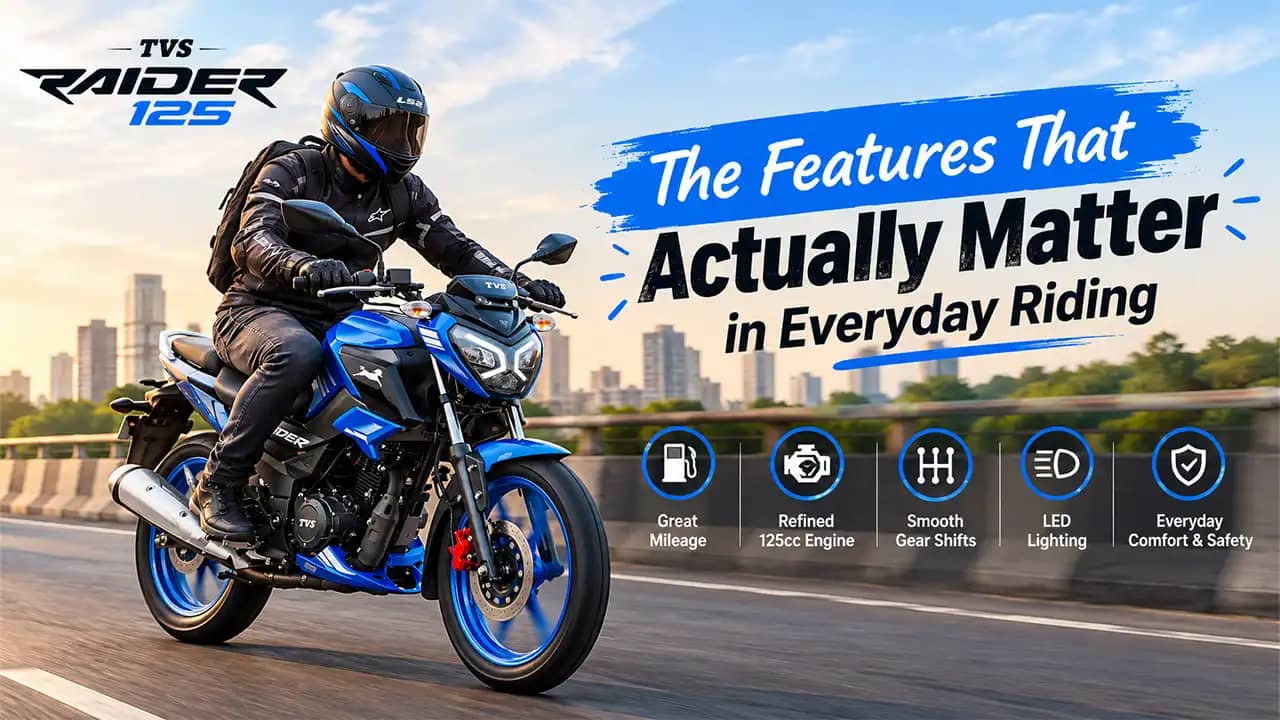
Overview
The TVS Raider 125 is priced from about ₹83,000 (ex-showroom, Delhi) for the Drum variant to around ₹1 lakh for the TFT Dual Disc, making it one of India's best-equipped 125cc commuters. Its 124.8cc engine makes 11.38 PS and 11.2 Nm, with 11.75 Nm on iGO variants. Idle start-stop, a 780 mm seat, 180 mm ground clearance and a light 123-125 kg kerb weight suit city traffic. ABS arrives only on the SXC DD and TFT DD variants, which makes them the safest picks.
The TVS Raider 125 is priced from roughly ₹83,000 (ex-showroom, Delhi) for the Drum variant to around ₹1 lakh for the TFT Dual Disc, which makes it one of the better-equipped 125cc motorcycles in India right now. Seven variants sit between those two numbers, and most of the gap is electronics, not engineering. Before you pay extra for any of it, work out which features you will actually touch on a daily commute in Delhi or Mumbai.
TVS Raider 125 Features That Help in Daily Traffic
Start with the engine, because every variant shares it. The 124.8cc air-and-oil-cooled single makes 11.38 PS at 7,500 rpm and 11.2 Nm at 6,000 rpm, and it pulls cleanly from low revs. That matters more than the power figure. In bumper-to-bumper traffic you stay in second and third gear and let the motor do the work.
The Raider also weighs just 123-125 kg, with a 780 mm seat and 180 mm of ground clearance. The weight makes U-turns and filtering easy. The clearance gets you over Indian speed breakers without the sump scraping, which is not something every 125cc commuter manages.
Two features earn their place in city use. One is the idle start-stop system, which kills the engine at a red light and restarts it the moment you pull the clutch. At a Delhi signal that runs 90 seconds, you save real petrol. The other is the iGO Assist boost, available from the iGO variant upwards. It adds a short electric push and lifts torque to 11.75 Nm, which helps when you need to get past a bus before the lane closes.
The feature list gets less useful at the top end. The 5-inch TFT display, Bluetooth and voice assist on the SXC DD and TFT DD variants are pleasant, but you can live without them. Single-channel ABS is a different matter. It arrives only on those two variants, and for a bike that sees wet roads and sudden stops, it is the one upgrade worth stretching the budget for.
How It Compares With the Hero Xtreme 125R
The closest rival is the Hero Xtreme 125R, which makes roughly 11.5 PS and 10.5 Nm. On paper the two are almost level, so the real difference is in what you get for the money. The Raider has more torque, boost, start-stop and a wider variant range. The Xtreme is the sharper-looking option for some riders. If you are cross-shopping, Drivio's coverage of the Hero Splendor Plus and Honda Shine 100 shows what you give up in power and features by dropping down to a cheaper commuter.
Raider 125 Mileage and Monthly Fuel Cost
TVS claims an ARAI figure of 56.7 kmpl. Real-world city riding will likely settle nearer 48-52 kmpl, and that is the number to budget with. At 50 kmpl, a rider covering 1,000 km a month burns 20 litres. At ₹103 a litre, that is about ₹2,060 a month. A Splendor Plus rider doing the same distance at a likely 60 kmpl or so would spend around ₹1,700. The Raider costs roughly ₹350-400 more each month to run, and in return you get noticeably better performance.
Raider 125 On-Road Price in Delhi and Monthly EMI
The ex-showroom figure is only the start. In Delhi, the Drum variant comes to about ₹92,000 on-road once RTO charges (roughly ₹6,500) and insurance (roughly ₹3,500) are added. Top variants cross ₹1.1 lakh. Mumbai and Bengaluru run a few thousand rupees higher, so treat these as estimates and confirm with your dealer.
Take a mid-range variant at an on-road price of about ₹1 lakh. With 20% down (₹20,000), you borrow ₹80,000. Over 60 months at 11%, the EMI works out to roughly ₹1,740, and the total interest comes to about ₹24,400. Add the ₹2,060 fuel bill and you are looking at around ₹3,800 a month to own and run the bike. That is a fair number for a daily-use motorcycle, and it is lower than the monthly cost of many 150cc options.
Ownership cost is helped by TVS's standard warranty of 5 years or 60,000 km, which covers a rider doing 1,000 km a month for the full five years. For a first bike, that removes much of the worry about early repair bills.
Which Variant Should You Buy?
Skip the Drum if you can. It lacks ABS and the boost feature, and the saving is small once you count insurance and registration. The Split Seat or iGO suits a buyer who wants the better engine tune and does not care about screens. The SXC DD is the sensible choice for most people, because it adds ABS and the connected features without the TFT's price. The TFT DD is for riders who want every option and are happy to pay for it.
The Raider is a strong buy for anyone who wants a quick, light and well-equipped 125 for daily use, and it holds up against every rival in its price bracket. Check the on-road price and EMI for the TVS Raider 125 in your city on Drivio.
Real-world mileage should land near 48-52 kmpl against the ARAI claim of 56.7 kmpl, so a rider covering 1,000 km a month spends about ₹2,060 on petrol at ₹103 a litre. Delhi on-road prices run from roughly ₹92,000 to over ₹1.1 lakh. On a ₹1 lakh on-road price, with 20% down and a 60-month loan at 11%, the EMI is about ₹1,740. The SXC DD is the sensible variant for most buyers, adding ABS and connected features without paying the TFT's premium.