Bajaj Pulsar 125 EMI Guide: On-Road Price, Down Payment & Finance Breakdown
Overview
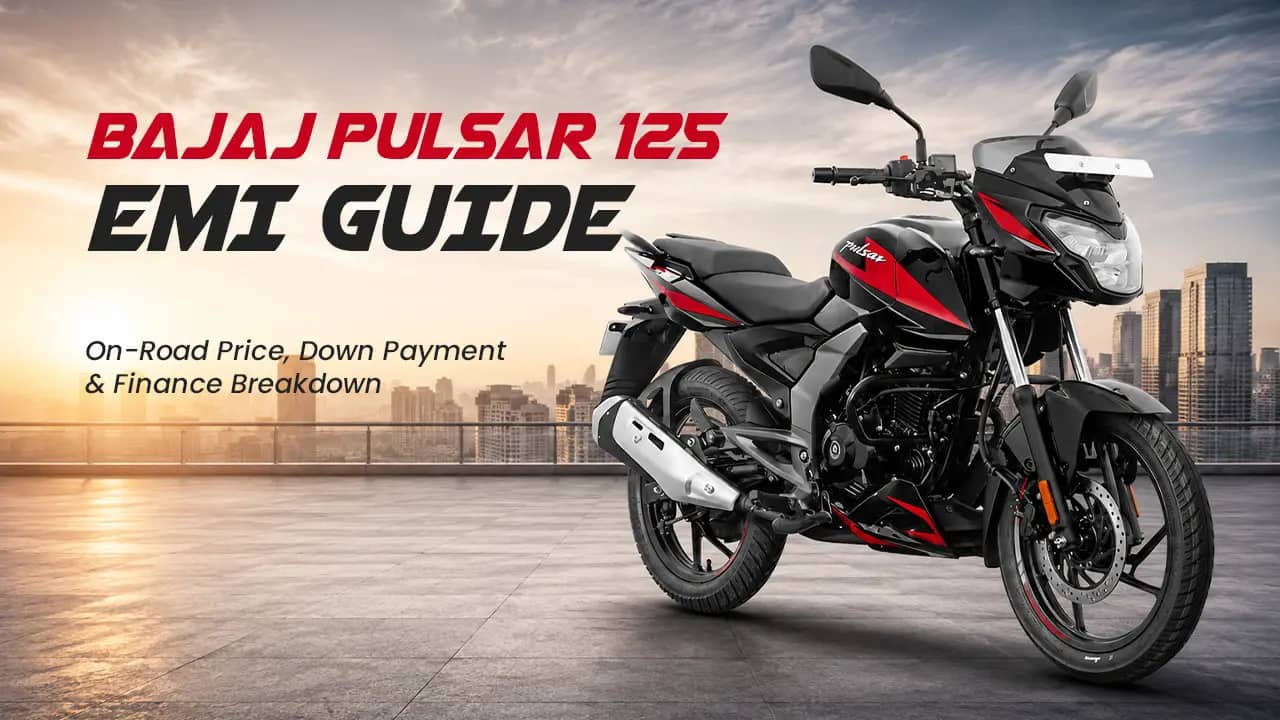
The Bajaj Pulsar 125 gets a complete redesign for 2026, priced from ₹92,990 to ₹1,04,318 ex-showroom Delhi, with on-road costs ranging up to ₹1,19,195. Power comes from a 124.58cc engine producing 12.1 PS, paired with a new monoshock chassis and 17-inch wheels at both ends. On a standard 20% down payment, 60-month, 11% interest loan, EMIs run between ₹1,857 and ₹2,073 monthly depending on variant. It competes closely with the TVS Raider 125 and Honda SP125 in the 125cc commuter-sport segment.
The Bajaj Pulsar 125 price in India starts at ₹92,990 ex-showroom Delhi for the base LCD variant, climbing to ₹1,04,318 for the top-spec Premium Split Seat TFT, following the model's complete redesign launched in August 2026. On-road, factoring RTO and insurance, that range works out to roughly ₹1,06,745 to ₹1,19,195 in Delhi. For a buyer weighing whether to walk into a Bajaj showroom this month, the number that actually decides the deal isn't the sticker price — it's the monthly EMI, and that's where most comparison articles stop short.
Working Out the Bajaj Pulsar 125 EMI
Run the numbers on a standard 20% down payment, 60-month tenure, and 11% interest — the terms most Indian dealers and NBFCs quote as their default package — and the base variant's on-road price of ₹1,06,745 breaks down to a down payment of ₹21,349, with the remaining ₹85,396 financed. That comes out to an EMI of roughly ₹1,857 a month. Step up to the top TFT variant at ₹1,19,195 on-road, and the down payment rises to ₹23,839, pushing the EMI to about ₹2,073 a month over the same five years. Over the full tenure, the base variant costs around ₹26,000 in interest alone — money worth weighing against a shorter 36-month loan, which cuts total interest by nearly half even though the monthly outgo climbs closer to ₹2,800.
A higher down payment changes this equation faster than most buyers expect. Push it to 30% instead of 20%, and the EMI on the base variant drops under ₹1,650 a month, saving close to ₹4,000 in interest over the loan's life. Dealers rarely volunteer that comparison because a lower EMI on paper looks better for closing a sale today, not five years from now.
What the Engine and Chassis Bring to the Table
Under the redesigned bodywork sits a 124.58cc air-cooled single making 12.1 PS at 8,500rpm and 11.4 Nm at 6,500rpm, paired with a 5-speed gearbox — modest numbers, but enough to keep the Pulsar 125 competitive with anything short of the pricier KTM 125 Duke in outright feel. Bajaj has finally given it a monoshock rear end and 17-inch wheels at both ends, a genuine upgrade over the outgoing bike's dated twin-shock setup. At 131kg kerb weight, though, it's noticeably heavier than most of its 125cc rivals, which shows up in how eagerly it changes direction in Delhi traffic rather than in outright speed. The base variant runs a simple LCD cluster; step up a trim or two and you get a TFT display, which is a meaningful jump in a segment where most rivals still stick to basic LCD screens across the range.
Bajaj Pulsar 125 vs the Segment
TVS Raider 125 and Honda SP125 are the two bikes most cross-shopped against the Pulsar 125, and the numbers tell slightly different stories depending on what a buyer prioritizes.
The Raider 125 undercuts the Pulsar by roughly ₹10,000 on ex-showroom price and is lighter to throw around, which matters more than most spec sheets suggest once you're splitting lanes near ITO or Sarai Kale Khan. The SP125 sits closer to the Pulsar's price but leans on Honda's reliability reputation rather than outright performance. What the Pulsar offers that neither rival matches at this price is the Classic Pulsar styling and the muscular tank shrouds — for a certain buyer, that alone justifies the premium.
The Real Running Cost Nobody Puts in the Brochure
At the ARAI-claimed 51.46 kmpl, real-world city riding through stop-start traffic typically settles closer to 45 kmpl. For a rider covering 1,200km a month — a fairly standard commute-and-weekend-errands pattern in a city like Delhi or Pune — that works out to roughly 27 litres a month, or about ₹2,747 at ₹103 a litre. Add that to the EMI and a base-variant buyer is looking at a monthly outlay close to ₹4,600 just to keep the bike running and financed, before insurance renewal or the odd tyre replacement factors in.
Servicing is where the Pulsar 125 actually earns some goodwill. The first two services, at 500-750km and again at 5,000km, are free under warranty, and the third service at 10,000km typically starts from ₹999 at authorised centres. That keeps total service spend to well under ₹1,500 through the first 10,000km — a genuinely low number for anyone budgeting a first bike loan.
The Verdict
The Bajaj Pulsar 125 isn't the cheapest bike in its class, and the Raider 125 will out-EMI it by a couple hundred rupees a month if price is the only variable that matters. But between the redesigned chassis, the TFT option, and Bajaj's dealer network for financing and servicing, it's a stronger long-term ownership proposition than the price gap alone suggests — particularly for a buyer who plans to hold onto the bike past the loan tenure rather than trade up in two years. Check the on-road price and EMI for the Bajaj Pulsar 125 in your city on Drivio.
This article breaks down the real cost of owning a Bajaj Pulsar 125 — EMI at different down payments and tenures, on-road pricing across variants, and how it compares to the TVS Raider 125 and Honda SP125 on price and specs. It also covers real-world fuel cost at ₹103/litre and service expenses through the first 10,000km. The piece closes with a verdict on whether the Pulsar 125's styling and TFT option justify its price premium over cheaper rivals, directing readers to check EMI options on Drivio.