Overview
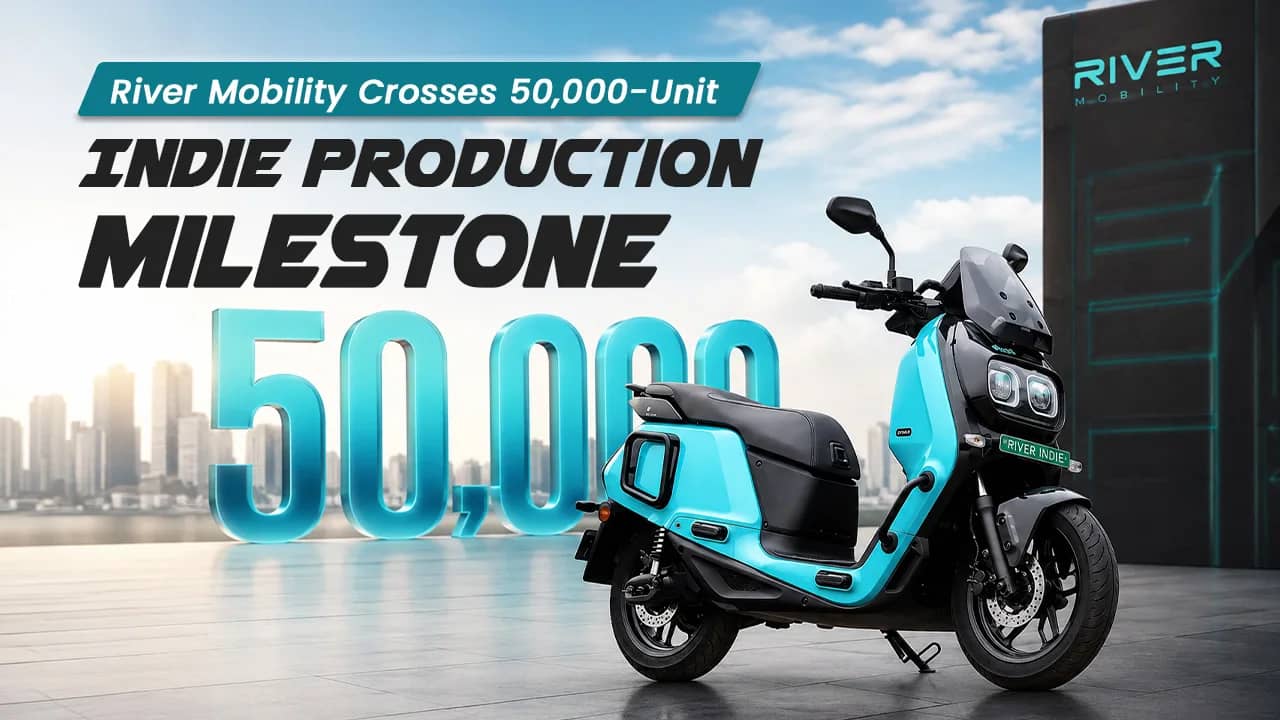
River Mobility Crosses 50,000-Unit Indie Production Milestone brings key updates for two-wheeler buyers in India. River Mobility has crossed the 50,000-unit production milestone for its Indie electric scooter, currently priced at ₹1,55,199 ex-showroom in India, and it has done this in under three years since
River Mobility has crossed the 50,000-unit production milestone for its Indie electric scooter, currently priced at ₹1,55,199 ex-showroom in India, and it has done this in under three years since the first unit left its Hoskote plant. That's a faster climb than most legacy two-wheeler brands manage even with a decade's head start, and it comes at a moment when the Bengaluru-based startup is also scaling a Yamaha-backed spinoff and pushing annual capacity toward 1.5 lakh units. For anyone tracking India's EV scooter race beyond Ola and Ather, this milestone is the clearest signal yet that River has moved from niche curiosity to a real volume player.
Why the 50,000-Unit Milestone Matters Right Now
Numbers alone don't tell the story here — the pace does. River rolled out its 20,000th unit only in May 2026. Going from 20,000 to 50,000 in roughly two months means production and retail expanded together, not sequentially. June 2026 alone brought 5,217 Indie units sold, against 1,432 in June 2025 — a 264% jump year-on-year. Compare that to November 2025's then-record of 1,801 monthly units, and you can see how steep this curve has actually gotten. Co-founders Aravind Mani and Vipin George built the Hoskote facility with 100,000-unit annual capacity in mind; that ceiling is now within sight, not a distant target.
The Yamaha Connection Nobody Saw Coming
River's Indie platform underpins the Yamaha EC-06, a jointly developed electric scooter that carries Yamaha styling and tuning but shares its bones with the Indie. Priced around ₹1,67,600 ex-showroom, the EC-06 gives River a manufacturing contract beyond its own retail business — and Yamaha's badge lends credibility that a three-year-old startup couldn't buy on its own. A new utility-lifestyle vehicle is also in development, aimed at a different buyer than the Indie's core commuter crowd, and it's this second product that's expected to push River past 1.5 lakh units of annual capacity.
Specs, Range and What Changed With Gen 3
The current Indie Gen 3, launched in October 2025, runs a 4 kWh battery paired with a mid-mounted PMSM motor producing 6.7 kW peak power. IDC-certified range sits at 161 km, with a 90 kmph top speed available in Rush mode. Gen 3 also brought 14-inch alloy wheels, telescopic front suspension, twin hydraulic rear units, app connectivity and Hill Hold Assist — additions that moved the Indie away from its early "quirky retro" image toward something closer to a proper daily commuter. River still markets it as the "SUV of scooters," and at 143 kg kerb weight with genuine pannier-mount capability, that description holds up better than most marketing taglines do.
Ex-Showroom vs On-Road: What Delhi and Mumbai Buyers Actually Pay
At ₹1,55,199 ex-showroom, the Indie benefits from road tax exemptions on electric two-wheelers that both Delhi and Maharashtra currently extend. Factor in insurance and registration, and the expected on-road price in Delhi lands close to ₹1,60,000–1,62,000; Mumbai buyers should see a similar range, give or take local RTO charges. That's a tighter on-road gap over ex-showroom than you'd get with a petrol scooter carrying full road tax.
Run the numbers on financing and the picture gets more interesting. On a 20% down payment against ₹1,55,199 — that's ₹31,040 upfront — the remaining ₹1,24,159 financed over 60 months at 11% interest works out to an EMI of roughly ₹2,700 a month. Set that against fuel savings and the case builds itself: a comparable 110cc petrol scooter averaging 45 kmpl at today's ₹103/litre petrol price costs about ₹2,289 to cover 1,000 km a month. Charging the Indie's 4 kWh pack a comparable distance costs closer to ₹200–250 at typical domestic tariffs. That's a monthly running-cost saving of roughly ₹2,000, which more than offsets the EMI for riders doing serious daily mileage.
How the Indie Stacks Up Against Ather and TVS
| Model | Ex-Showroom Price | Range | Peak Power |
| River Indie Gen 3 | ₹1,55,199 | 161 km | 6.7 kW |
| Ather 450X | ~₹1,54,500 | 126 km | — |
| TVS iQube | ~₹1,15,000–1,37,000 | 94–110 km | — |
The Indie undercuts Ather on range by a wide margin while sitting at nearly identical pricing, and it's priced well above the TVS iQube's entry variants — though the iQube's newer 4.7 kWh version narrows that range gap considerably. For a rider prioritising fewer weekly charges over brand recognition, the Indie's numbers are hard to ignore. Ather still wins on charging infrastructure and service network depth simply by virtue of being older and bigger; River's 75-plus stores are growing fast but aren't yet at Ather's coverage.
Should You Wait for the New Model or Buy Now
If you're commuting daily and want the longest range at this price point, there's no real reason to wait — the Gen 3 Indie is a mature product, not an early-adopter gamble anymore, and the 50,000-unit run rate backs that up with real service history behind it. The upcoming utility-lifestyle model targets a different buyer entirely, so it shouldn't factor into an Indie purchase decision either way. Riders who value a slightly larger dealer network and don't need the extra range might still lean Ather, but on pure numbers — range, price, and now proven production scale — River has built a case that's tough to argue against. Check the on-road price and EMI for the River Indie in your city on Drivio.
River Mobility has crossed the 50,000-unit production milestone for its Indie electric scooter, currently priced at ₹1,55,199 ex-showroom in India, and it has done this in under three years since the first unit left its Hoskote plant. That's a faster climb than most legacy two-wheeler brands manage even with a decade's head start, and it comes at a moment when the Bengaluru-based startup is also scaling a Yamaha-backed spinoff and pushing annual capacity toward 1.5 lakh units.