Bajaj Avenger 220 Street vs Royal Enfield Meteor 350 — The Real Cruiser Battle Under ₹2 Lakh
Overview
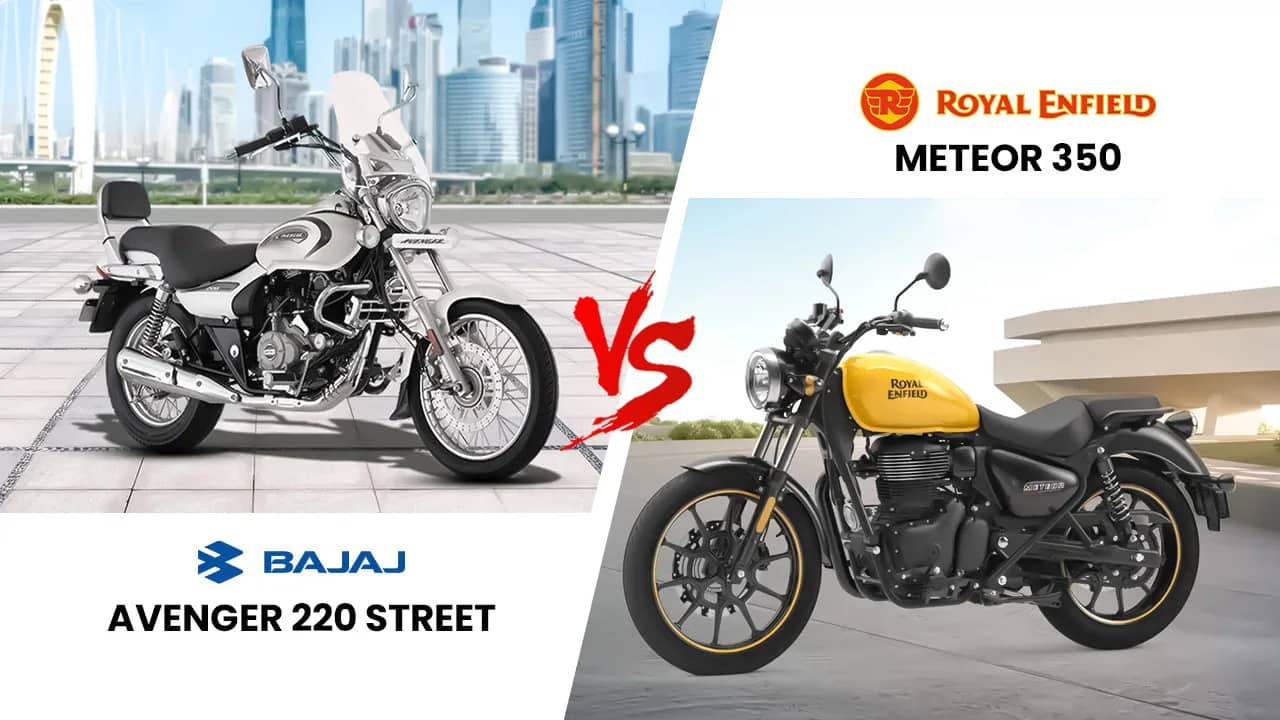
Bajaj Avenger 220 Street vs Royal Enfield Meteor 350 — The Real Cruiser Battle Under ₹2 Lakh brings key updates for two-wheeler buyers in India. The Bajaj Avenger 220 Street vs Royal Enfield Meteor 350 is arguably the most relevant two-wheeler comparison in India right now — one starts at ₹1,25,965 ex-showroom Delhi , the
The Bajaj Avenger 220 Street vs Royal Enfield Meteor 350 is arguably the most relevant two-wheeler comparison in India right now — one starts at ₹1,25,965 ex-showroom Delhi, the other at ₹1,99,189 — a gap of roughly ₹73,000 that separates two very different philosophies of cruising. With petrol touching ₹103/litre across most cities in May 2026 and the touring culture in India stronger than it has ever been, the question of which cruiser makes more sense on Indian highways is one more buyers are asking before signing the dotted line. Both bikes offer relaxed ergonomics, highway-capable engines, and that long-legged stance that makes every evening ride feel intentional.
Which Bike Actually Costs Less Over Time?
Before getting into riding dynamics, it's worth doing the maths honestly. At 1,500 km of monthly riding and petrol at ₹103/litre, the Avenger 220 Street — returning a real-world 34–36 kmpl — costs approximately ₹4,300–4,400/month in fuel. The Meteor 350 in real-world conditions delivers 31–34 kmpl, translating to roughly ₹4,550–5,000/month. That's a saving of around ₹200–600/month in favour of the Avenger, but the Meteor's 15-litre tank versus the Avenger's 13-litre tank means fewer stops on a highway run — an underrated advantage on a 500-km weekend tour.
The on-road price gap is equally significant. The Avenger 220 Street's on-road price in Delhi comes to approximately ₹1,53,000, while the Meteor 350 Fireball (base variant) lands at ₹2,26,587. If you're a first-time buyer stretching to stay under ₹2 lakh, the Avenger is not just the cheaper option — it's the only option in this comparison that fits the budget outright.
Bajaj Avenger 220 Street — The Specs That Matter
The Avenger runs a 220cc air-and-oil cooled, single-cylinder DTS-i twin-spark engine producing 19.03 PS at 8,500 rpm and 17.55 Nm at 7,000 rpm, mated to a 5-speed gearbox. Suspension is handled by telescopic forks up front and 5-step adjustable twin shock absorbers at the rear. It weighs in at a slim 160 kg — 31 kg lighter than the Meteor — with a low seat height of around 715 mm that makes it genuinely accessible for shorter riders. Braking is via a 280mm front disc with single-channel ABS, and a 130mm rear drum. The 13-litre fuel tank is compact but manageable for 450–470 km of highway range at a steady throttle.
Royal Enfield Meteor 350 — What You're Paying the Premium For
The Meteor 350 is built around a 349.34cc SOHC air-cooled single producing 20.2 bhp and a notably more useful 27 Nm of torque — a full 9.45 Nm more than the Avenger. That torque figure is not just a number; it is the reason the Meteor pulls cleanly from 40 kmph in top gear without needing a downshift on rolling gradients. The engine comes paired with a 5-speed gearbox and a slipper clutch — the latter making rapid downshifts on ghat sections noticeably smoother. The Meteor weighs 191 kg, has a 765 mm seat height, a 15-litre tank, dual-channel ABS, and the standard-fit Tripper navigation pod. Suspension is conventional telescopic forks up front with twin shock absorbers at the rear, though Royal Enfield has tuned both ends for a plushness that the Avenger's harder setup cannot match.
Bajaj Avenger 220 Street vs Royal Enfield Meteor 350 — The Comparison Table
| Parameter | Bajaj Avenger 220 Street | Royal Enfield Meteor 350 |
| Engine | 220cc, air-oil cooled, single | 349.34cc, air cooled, single |
| Power | 19.03 PS @ 8,500 rpm | 20.2 bhp @ 6,100 rpm |
| Torque | 17.55 Nm @ 7,000 rpm | 27 Nm @ 4,000 rpm |
| Real-world Mileage | 34–36 kmpl | 31–34 kmpl |
| Top Speed | ~122 kmph | ~125 kmph |
| Fuel Tank | 13 litres | 15 litres |
| Kerb Weight | 160 kg | 191 kg |
| Seat Height | ~715 mm | 765 mm |
| Touring Comfort | Good (city + moderate highways) | Excellent (built for long-haul) |
| Highway Performance | Adequate; buzzy above 90 kmph | Confident, refined upto 110 kmph |
| Ex-showroom Price Delhi | ₹1,25,965 | ₹1,99,189 |
| Approx On-road Price Delhi | ₹1,53,000 | ₹2,26,587 |
How They Actually Ride on Indian Roads
This is where the two bikes diverge most sharply. The Avenger 220 Street is a genuinely likeable urban cruiser — its low kerb weight and low centre of gravity make it easy to thread through Bengaluru traffic or park on a crowded Delhi street. The 220cc engine pulls adequately from low speeds, and highway cruising at 80–90 kmph is relaxed. Push it beyond 95 kmph, though, and vibrations creep into the footpegs and handlebar with enough persistence to remind you this is still a 220cc motor working near its limits. Overtaking confidence drops on undivided highways where you need a sudden surge from 80 to 110 kmph — the engine gives you the rpm, but not quite the authority.
The Meteor 350's low-end torque changes the highway experience fundamentally. Sitting at 3,500–4,000 rpm at 90 kmph in fifth gear, it cruises in a near-silence that embarrasses bikes twice its price in this segment. Overtakes happen with a flick of the right wrist without searching for a lower gear. Pillion comfort on the Meteor is meaningfully better — the wider seat and softer suspension absorb broken National Highway tarmac in a way the Avenger's setup doesn't. On something like the NH48 Delhi–Jaipur stretch or the NH44, the Meteor is simply the more complete machine.
That said, the Avenger's 31 kg weight advantage is no small thing in city traffic or on narrow hill roads. It is easier to manoeuvre, easier to hold at a standstill on a slope, and far less fatiguing to ride in slow-moving traffic for 40 minutes.
Where Each Bike Makes Sense
For daily commuting with occasional weekend runs under 200 km, the Avenger 220 Street is the smarter buy — lower purchase cost, lower running cost, and lighter handling in traffic. First-time cruiser buyers who are unsure about long tours will appreciate the lower seat height and more forgiving power delivery. Budget-conscious riders who want the cruiser aesthetic without overcommitting financially will find it hard to argue against ₹1.53 lakh on-road.
For riders who are seriously interested in highway touring and long-distance riding in India — and who tour at least once a month — the Meteor 350's torque, pillion ergonomics, and highway composure make every extra rupee feel justified. Against rivals like the Honda CB350 and the Jawa 42 Bobber, the Meteor holds its ground convincingly on refinement, though the Harley-Davidson X440 offers a step-up option for those willing to go above ₹2.5 lakh.
The Verdict
The Bajaj Avenger 220 Street vs Royal Enfield Meteor 350 ultimately comes down to one honest question: what kind of riding do you actually do, and not what you intend to do? If your kilometres are mostly urban with occasional state highways, the Avenger is outstanding value. If long rides are genuinely on your calendar every month — Manali, Coorg, Kutch, Leh — spend the extra money. The Meteor 350 is the better long-distance cruiser, full stop. Check the on-road price and EMI for the Bajaj Avenger 220 Street or Royal Enfield Meteor 350 in your city on Drivio.
The Bajaj Avenger 220 Street vs Royal Enfield Meteor 350 is arguably the most relevant two-wheeler comparison in India right now — one starts at ₹1,25,965 ex-showroom Delhi, the other at ₹1,99,189 — a gap of roughly ₹73,000 that separates two very different philosophies of cruising.