Bajaj Chetak vs Ather 450X: Which Electric Scooter Has Better Real-World Range in India?
Overview
Bajaj Chetak vs Ather 450X: Which Electric Scooter Has Better Real-World Range in India? outlines Ather Energy's new customer initiatives, including strategic banking partnerships, competitive financing plans, and flexible ownership options designed for prospective EV buyers.
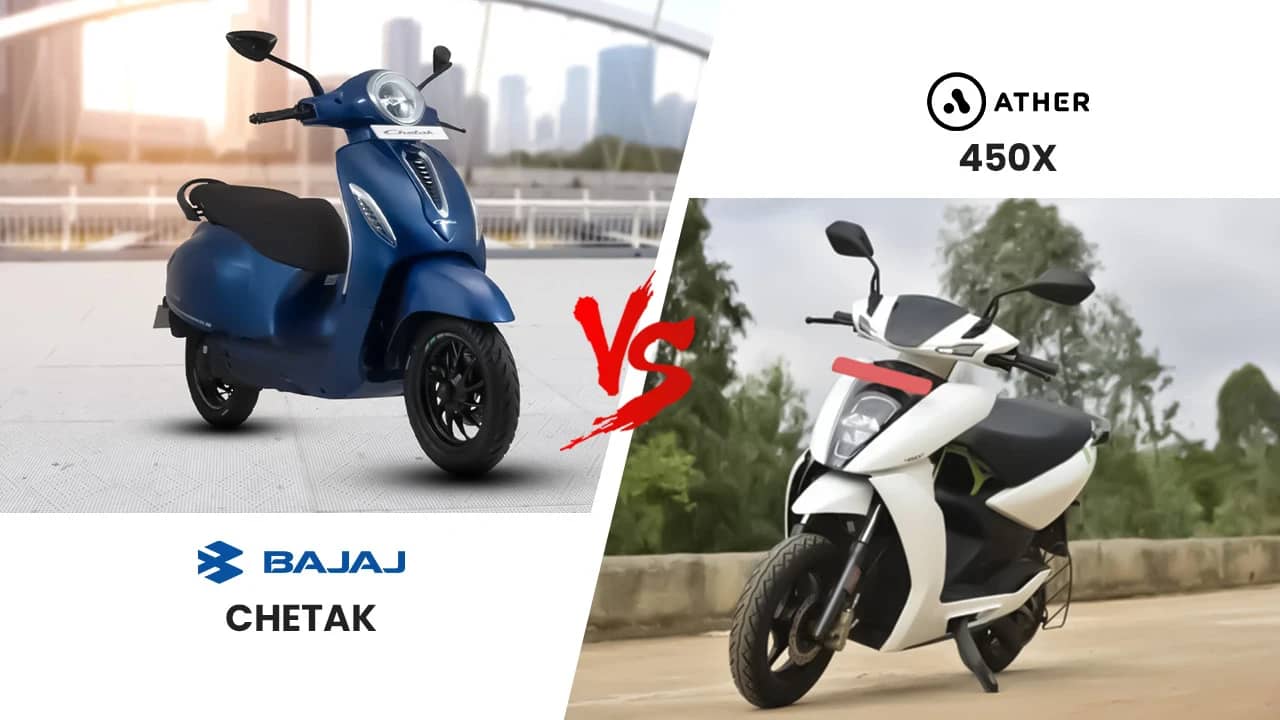
Bajaj Chetak vs Ather 450X is the comparison Indian EV buyers are typing into Google right now, and for good reason — both scooters promise big range numbers on the spec sheet, but city riding tells a different story. The Bajaj Chetak's flagship 3.5kWh variant is priced at approximately ₹1.34 lakh (ex-showroom) and claims up to 153 km on a full charge, while the Ather 450X's 3.7kWh version costs around ₹1.69 lakh (ex-showroom) and claims up to 161 km. In India, where commutes mean stop-go traffic, flyovers, and the occasional pillion rider, the gap between brochure range and what actually shows up on your dashboard every morning matters far more than the number printed on the box.
Bajaj Chetak vs Ather 450X: Real-World Range Matters More Than Claimed Numbers
Most Indian EV buyers have learned the hard way that IDC-certified figures and actual electric scooter range in India are two different conversations. Riding mode, pillion weight, tyre pressure, ambient temperature, and how often you crack the throttle open at a signal all eat into the number on the brochure. A Bajaj Chetak vs Ather 450X debate that only compares claimed figures misses the point, because neither scooter is ridden in a lab. Indian summers are particularly unkind to lithium-ion packs — heat soak in stalled traffic, combined with aggressive acceleration to beat a signal, can knock a noticeable chunk off whatever number the scooter showed at 100% charge.
Bajaj Chetak Real-World Range in India
The Bajaj Chetak real-world range story is one of consistency rather than excitement. Built on an all-metal steel body with the battery mounted under the floorboard, the Chetak is tuned for a relaxed ride rather than outright punch. In Eco mode, owners of the 3.5kWh variants typically report 100-120 km of usable range against the claimed 153 km, while the smaller 2.5kWh base variant tends to deliver closer to 85-90 km against its 113 km IDC figure. Charging is handled by a 750W portable charger that takes the battery from 0 to 80 percent in roughly four hours, with a full charge needing five to six hours on a standard home socket. The Chetak's two riding modes — Eco and Sport — keep things simple, and its 70-73 km/h top speed is enough for city flyovers without inviting the kind of aggressive riding that drains a battery fast. This is a scooter built for daily school runs and office commutes, not weekend thrills, and that restraint is exactly why its real-world numbers hold up well against the claim.
Ather 450X Real-World Range in India
Ather 450X real-world range tells a more dramatic story because the scooter encourages a different kind of riding. With a 6.4kW motor producing 26 Nm of torque and a 0-40 km/h time of around 3.3 seconds, the 450X is built to be flicked through gaps in traffic, and that performance has a direct cost in range. In SmartEco mode, the 3.7kWh variant delivers approximately 125-130 km, close to its claimed figure and arguably the best real-world-to-claimed ratio in this segment. Switch to Sport or Warp mode, however, and that number falls sharply to 65-90 km, because the motor draws far more current for the brisk acceleration the 450X is known for. The 2.9kWh variant follows the same pattern at a lower base, with SmartEco delivering around 105-110 km. Charging the 3.7kWh pack takes about five hours and 45 minutes for a full charge at home, with Ather's public fast-charging Grid network topping up around 15 km of range in 10 minutes for riders who don't want to wait. Ride the 450X like a Chetak owner would, and it nearly matches its brochure number; ride it the way its throttle response tempts you to, and the real-world range drops faster than almost anything else in this segment.
Chetak vs Ather Comparison: Price, Battery, Range and Charging
| Parameter | Bajaj Chetak (3.5kWh) | Ather 450X (3.7kWh) |
| Ex-showroom price | Approx. ₹1.34 lakh | Approx. ₹1.69 lakh |
| Battery capacity | 3.5 kWh | 3.7 kWh |
| Claimed (IDC) range | Up to 153 km | Up to 161 km |
| Real-world range | Approx. 100-120 km (Eco) | Approx. 125-130 km (SmartEco) |
| Charging time (full) | Approx. 5-6 hours | Approx. 5 hr 45 min |
| Motor performance | Relaxed, city-focused | 6.4 kW, 26 Nm, brisk acceleration |
| Ride feel | Calm, predictable, metal-bodied | Sporty, quick throttle response |
| Best use case | Daily commuting, relaxed riders | Office commutes with some spirited riding |
On-road price tells a similar story: the Chetak typically lands between approximately ₹1.07 lakh and ₹1.49 lakh in Delhi and Mumbai depending on variant, insurance, and registration, while the Ather 450X on-road price runs from approximately ₹1.69 lakh to ₹2.01 lakh in Delhi, easing slightly in Mumbai with state EV benefits. Electric scooter charging cost favours both over petrol equally — at an average Indian residential rate of approximately ₹7-8 per unit, a full charge on the Chetak costs around ₹25-28, against approximately ₹28-30 for the 450X. For a rider covering 30-40 km a day, that's roughly ₹250-280 a month on the Chetak and approximately ₹220-250 on the Ather, against a comparable petrol scooter burning through ₹103/litre fuel for the same distance.
Which Electric Scooter Is Better for Daily Commute?
For office riders doing a steady 15-20 km each way through city traffic, the Bajaj Chetak's calmer character and dependable real-world numbers make it the less stressful daily companion — you rarely think about range anxiety because the scooter doesn't tempt you into draining it faster. Families and school-run riders will also appreciate the Chetak's 35-litre underseat storage and IP67-rated battery for monsoon reliability. College students and younger riders chasing some fun on the commute will lean toward the Ather 450X for its quicker acceleration, 7-inch TFT touchscreen, and genuinely useful Google Maps navigation — provided they stay disciplined in SmartEco mode when range matters more than fun. Bajaj's service network, with over 390 exclusive Chetak stores and thousands of sales points nationwide, gives it a clear edge in reach over Ather's smaller, faster-growing network of experience centres. Riders cross-shopping this segment often also look at the TVS iQube, which Drivio has reviewed in detail, or the Hero Vida V2 for a similar relaxed-commuter positioning — both sit closer to the Chetak's character than the 450X's. Against a third rival like the Ola S1 Pro, both the Chetak and the 450X come across as the more dependable, better-built options, even if the Ola occasionally claims higher range figures on paper.
Verdict: Which Scooter Has Better Real-World Range?
On pure real-world range, the Ather 450X's 3.7kWh variant edges ahead, holding roughly 125-130 km in SmartEco against the Chetak's 100-120 km in Eco — and it stays closer to its own claimed figure while doing so. That edge disappears the moment a 450X is ridden the way its performance invites, while the Chetak's number barely moves regardless of who's riding it. If your daily distance is genuinely 30-40 km and you ride sensibly, the Ather 450X wins on real-world range between Bajaj Chetak and Ather 450X. If you'd rather trust your range without disciplining your right wrist, or save the ₹35,000 price gap and lean on Bajaj's larger service network, the Chetak remains the safer buy. Check the on-road price and EMI for the Bajaj Chetak and Ather 450X in your city on Drivio.
Bajaj Chetak vs Ather 450X is the comparison Indian EV buyers are typing into Google right now, and for good reason — both scooters promise big range numbers on the spec sheet, but city riding tells a different story. The Bajaj Chetak's flagship 3.5kWh variant is priced at approximately ₹1.34 lakh (ex-showroom) and claims up to 153 km on a full charge, while the Ather 450X's 3.7kWh version costs around ₹1.69 lakh (ex-showroom) and claims up to 161 km.