Honda Rebel 300 vs Rebel 500: Which Cruiser Fits an Indian Rider
Overview
Honda Rebel 300 vs Rebel 500: Which Cruiser Fits an Indian Rider reveals upcoming Honda two-wheeler developments, detailing new platform designs, key technological features, and expected market debuts tailored for Indian motorcycle and scooter enthusiasts.
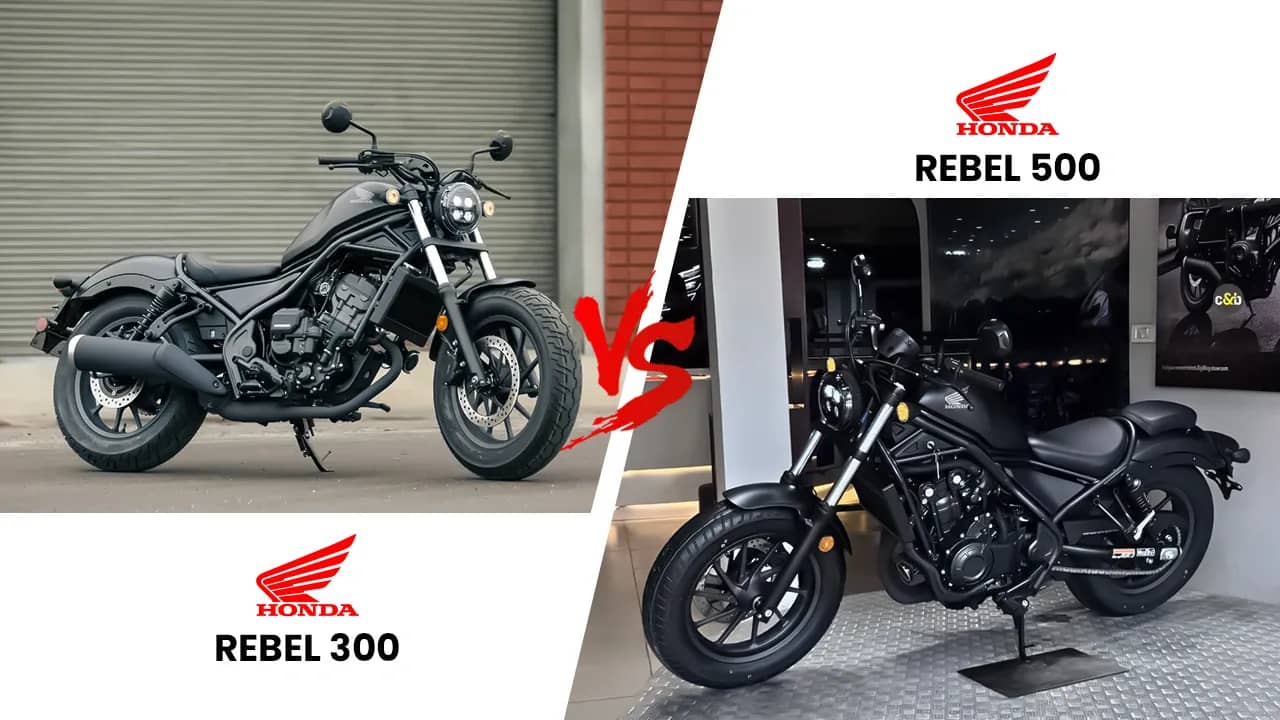
Honda's Rebel 300 and Rebel 500 were both unveiled in India on July 24, 2026, and the choice between the two now comes down to a number most buyers haven't factored in: the 350cc GST line. The Rebel 300 is expected to carry an ex-showroom price of around ₹2.1-2.2 lakh for the standard variant, while the Rebel 500 — sold briefly as a CBU import at ₹5.12 lakh before being pulled from Honda's lineup — is tipped to return at somewhere between ₹5.5-5.9 lakh. That gap isn't just about engine size. It's about tax.
Honda Rebel 300 vs Rebel 500: Specs Compared
| Spec | Honda Rebel 300 | Honda Rebel 500 |
| Engine | 286cc, liquid-cooled single | 471cc, liquid-cooled parallel-twin |
| Max Power | 30 PS (~30hp) | 46 PS (~46hp) |
| Peak Torque | 27.5 Nm | 43.3 Nm |
| Top Speed (expected) | ~135 kmph | ~165 kmph |
| Mileage (ARAI/expected) | 30 kmpl | ~25 kmpl |
| Ex-showroom Price, Delhi (expected) | ₹2.10-2.20 lakh | ₹5.50-5.90 lakh |
Honda hasn't locked in India-spec performance figures for either bike yet, so the top speed and mileage numbers above are drawn from global-market Rebel data adjusted for what's realistic on Indian fuel and roads — treat them as informed estimates, not factory claims.
Why the Rebel 300 and Rebel 500 Are Priced So Differently
India taxes motorcycles above 350cc at 40 percent GST, while anything under that threshold sits in a lower slab. The Rebel 300's 286cc single-cylinder engine keeps it firmly on the cheaper side of that line, and Honda's decision to localise production in India should trim the price further. The Rebel 500's 471cc parallel-twin puts it on the expensive side no matter how much local manufacturing content Honda adds — Autocar India's coverage of the July unveiling noted that the 40 percent slab limits how much localisation can actually bring the price down. So even though both bikes are now being built here instead of imported, the 500 stays a different financial proposition altogether, not just a bigger-engined version of the 300.
Mechanically, the two share more DNA than their price tags suggest. Both get a low-slung bobber stance, a teardrop tank, blacked-out finishing, dual-channel ABS, and a TFT instrument cluster running Honda RoadSync for turn-by-turn navigation — a genuine upgrade over the Rebel 500's old negative-LCD unit from its CBU days. Standard and E-Clutch variants are planned for both bikes, with the clutch-free version adding roughly ₹30,000 over the base price. On paper the 500 is quicker and smoother at highway speed, as the table above shows. In Indian traffic, the 300's lighter weight and narrower dimensions matter more day to day.
Running Costs: Where the Real Difference Shows Up
This is the part a spec-sheet comparison won't tell you. At an expected on-road Delhi price of roughly ₹2.5 lakh for the Rebel 300, a 20 percent down payment of ₹50,000 against a 60-month loan at 11 percent works out to an EMI near ₹4,350 a month. The Rebel 500, at an expected on-road figure closer to ₹6.15 lakh, pushes that same loan structure to roughly ₹10,700 a month — more than double, and that's before you factor in that Honda's BigWing network, which handled the old Rebel 500, tends to price servicing above what a regular dealership charges.
Fuel costs follow a similar split. The Rebel 300's 30kmpl means a rider covering 1,500km a month spends close to ₹5,150 on petrol at ₹103/litre. The Rebel 500's twin-cylinder motor is thirstier, putting the same monthly distance at around ₹6,180. Neither number is dramatic on its own, but stacked against the EMI difference, the 300 is the one that actually fits a middle-income rider's monthly budget without stretching it.
Honda Rebel 300 vs Rebel 500: Who Should Buy Which
The Rebel 300 goes up against the Royal Enfield Meteor 350, a bike Drivio has covered in detail, and on paper it has the edge in refinement — liquid cooling, a modern TFT display, and E-Clutch tech the Meteor doesn't offer. What it doesn't have yet is a track record in India, since Honda hasn't sold a small-capacity cruiser here before. The Rebel 500 competes higher up, against the Royal Enfield Super Meteor 650 and the Kawasaki Eliminator, both of which offer more displacement for similar or less money once the Rebel 500's 40 percent GST hit is priced in.
For a first cruiser, a daily commuter who wants cruiser looks without cruiser running costs, or anyone comparing this against a Meteor 350 purchase, the Rebel 300 is the one to wait for. It undercuts the segment on price, matches or beats it on features, and won't punish your fuel budget. The Rebel 500 makes more sense for a rider who already owns a smaller bike and wants a genuine step up in performance and presence, and who isn't going to flinch at an EMI north of ten thousand rupees.
Both motorcycles are still awaiting an official launch date, and Honda hasn't confirmed final pricing for either — treat the figures here as the most reliable estimates available following the July unveiling, not confirmed numbers. Once bookings open, check the on-road price and EMI for the Honda Rebel 300 and Rebel 500 in your city on Drivio.
Honda's Rebel 300 and Rebel 500 were both unveiled in India on July 24, 2026, and the choice between the two now comes down to a number most buyers haven't factored in: the 350cc GST line. The Rebel 300 is expected to carry an ex-showroom price of around ₹2.1-2.2 lakh for the standard variant, while the Rebel 500 — sold briefly as a CBU import at ₹5.12 lakh before being pulled from Honda's lineup — is tipped to return at somewhere between ₹5.5-5.9 lakh.