Hero Splendor vs Honda Shine 100 Mileage: Which Saves You More Money Every Month?
Overview
Hero Splendor vs Honda Shine 100 Mileage: Which Saves You More Money Every Month? reveals upcoming Honda two-wheeler developments, detailing new platform designs, key technological features, and expected market debuts tailored for Indian motorcycle and scooter enthusiasts.
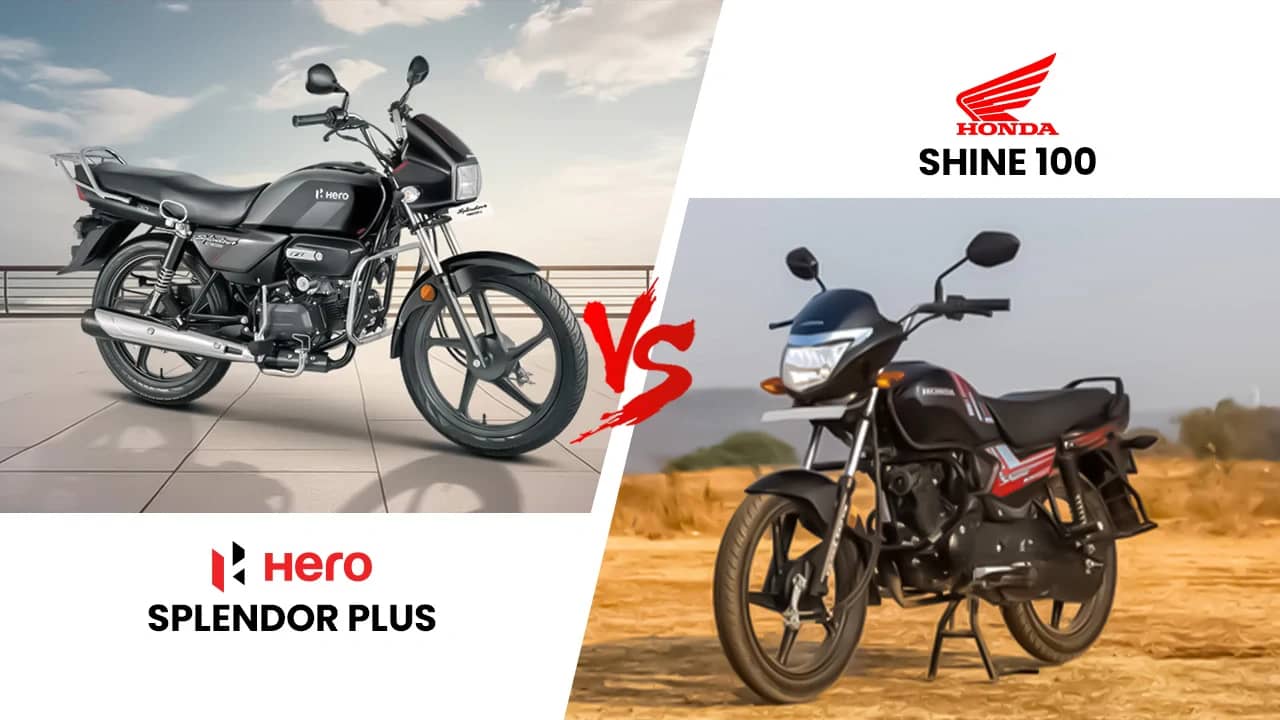
When commuters in India start comparing Hero Splendor vs Honda Shine 100 mileage, the conversation quickly moves beyond claimed figures on a brochure. With petrol sitting at around ₹103 per litre in June 2026, every kilometre per litre genuinely matters. The Hero Splendor Plus starts at roughly ₹77,000 ex-showroom, while the Honda Shine 100 undercuts it significantly at around ₹65,400 ex-showroom — a gap of over ten thousand rupees. But the cheaper bike at purchase isn't always the cheaper bike to run. Here is what the real numbers look like.
Real-World Mileage: What You Actually Get in Traffic
Hero's ARAI-certified figure for the Splendor Plus is 70 kmpl, and for once, this claim holds up reasonably well in practice. In dense city traffic — the kind you encounter on a typical Monday morning commute through Delhi, Pune or Chennai — the Splendor Plus returns around 60–70 kmpl. On mixed riding combining city stretches with some open roads, that climbs to 65–75 kmpl. On a clear highway run, riders consistently report 70–80 kmpl.
The Honda Shine 100's story is slightly different. Honda claims 65 kmpl for the Shine 100, which is a more conservative figure on paper, and real-world performance reflects that honestly. City riding typically returns 55–65 kmpl, mixed conditions yield 60–70 kmpl, and highway cruising brings 65–75 kmpl. The Shine 100's engine is marginally larger at 98.98cc versus the Splendor's 97.2cc, but it produces slightly less power — 7.38 PS compared to the Splendor's 8.02 PS — and that difference in tune contributes to the gap in fuel return.
Several variables close or widen this gap considerably. A heavier rider, consistently carrying a pillion, will see both bikes drop 5–8 kmpl from these figures. Under-inflated tyres — a chronic issue on Indian roads where proper inflation is rarely checked at petrol pumps — can cost another 3–5 kmpl. Skipping oil changes beyond 3,000 km intervals progressively hurts both engines, though the Honda's more refinement-focused tune tends to feel the strain earlier. In Bangalore's notorious stop-go traffic or Delhi's signal-heavy corridors, the Splendor's I3S idle-stop system (available on select variants) quietly helps recover a few percentage points of efficiency.
Monthly Fuel Cost: The Numbers That Actually Matter
Using a standard daily ride of 40 km and a monthly total of 1,200 km at ₹103 per litre, here is how the two bikes compare using mid-range real-world city mileage figures:
| Parameter | Hero Splendor Plus | Honda Shine 100 |
| Ex-showroom Price | ₹77,000 (approx.) | ₹65,400 (approx.) |
| Engine | 97.2cc | 98.98cc |
| Power | 8.02 PS | 7.38 PS |
| Torque | 8.05 Nm | 8.05 Nm |
| Kerb Weight | 112 kg | 99 kg |
| Claimed Mileage | 70 kmpl | 65 kmpl |
| Real City Mileage | 63 kmpl (mid) | 58 kmpl (mid) |
| Monthly Fuel Cost | ₹1,962 | ₹2,131 |
| Annual Fuel Cost | ₹23,543 | ₹25,572 |
At 63 kmpl city average, the Splendor Plus consumes roughly 19 litres per month — ₹1,962 at ₹103/litre. The Shine 100, at 58 kmpl, burns about 20.7 litres — ₹2,131 per month. The annual saving with the Splendor Plus works out to approximately ₹2,029 per year. That is not a dramatic figure in isolation, but over five years of daily use it amounts to over ₹10,000 — enough to cover a full service cycle or a set of tyres.
Engine Character and How They Behave in Traffic
Both motorcycles share the same torque output of 8.05 Nm, which means low-speed pulling ability is nearly identical. However, the way that torque arrives differs. The Splendor Plus delivers its power in a smooth, unhurried manner that suits the constant speed changes of city riding. Gear changes feel natural and the clutch action is light enough that wrist fatigue rarely becomes an issue even after an hour in traffic.
The Honda Shine 100, with its more recent engine architecture, feels noticeably more refined at idle and at slow speeds. There is less vibration coming through the handlebars and footpegs, and the throttle response is more linear — a quality that newer riders especially appreciate because it discourages jerky inputs. The Shine 100's four-speed gearbox has slightly taller ratios than the Splendor, which contributes to its marginally lower real-world efficiency in congested conditions but also means fewer gear changes are needed once you hit a clear stretch.
Which Feels Better on Indian Roads Day to Day?
The Splendor Plus is built around familiarity. Millions of Indian commuters have grown up on it, and the ergonomics reflect decades of refinement for the average Indian rider's height and riding posture. The turning radius is tight enough for U-turns in narrow lanes, the seat is firm but supportive for rides up to 45 minutes, and the suspension absorbs the kind of broken tarmac and sudden speed-breakers that define urban riding in this country.
The Shine 100 is meaningfully lighter at 99 kg versus the Splendor's 112 kg, and that 13 kg difference is something you feel every time you manoeuvre in a parking bay or balance at a signal. For new riders, women commuters, or anyone managing the bike in congested spaces, this is a genuine daily quality-of-life advantage. The clutch is also slightly lighter, and the narrower handlebar encourages a more upright, confident posture through dense traffic.
Long-Term Ownership: Service, Reliability and Resale
The Splendor Plus has one of the most extensive dealer and service networks of any motorcycle in India. Spare parts are available at virtually every roadside mechanic's shop across the country, and service costs remain predictably low — routine services typically fall in the ₹400–₹700 range excluding consumables. The engine's proven reliability record means owners regularly cross the 80,000 km mark without a major overhaul. Resale value is exceptionally strong; a three-year-old Splendor Plus retains roughly 70–75% of its ex-showroom price in most cities.
Honda's service network is strong in tier-1 and tier-2 cities but thinner in rural areas compared to Hero's near-ubiquitous presence. The Shine 100's service intervals are slightly longer, and its engine requires less attention between visits. Resale value is decent but trails the Splendor's brand recognition advantage. Riders who eventually want to move up can also consider the Honda Shine 125, which sits just above in the lineup and offers a more complete commuter package.
Hero Splendor vs Honda Shine 100 Mileage: The Verdict
On pure fuel efficiency, the Hero Splendor Plus wins this comparison. It returns consistently better mileage across city, mixed and highway conditions, translating to a real saving of roughly ₹2,000 per year for the average commuter. Combined with its lower running costs, unbeatable parts availability and stronger resale value, it is the more economical long-term ownership proposition.
The Honda Shine 100 makes a compelling case on purchase price — it is over ₹11,000 cheaper to buy. For first-time buyers, college students or anyone on a strict budget, that upfront saving is meaningful. The Shine 100's lighter kerb weight, refined engine and smoother throttle also make it genuinely better to ride in slow, congested traffic. If you ride primarily in a metro, mostly alone, and can live with slightly higher monthly fuel costs, the Shine 100 is absolutely worth considering.
For most daily commuters looking at the full picture — running costs, service ease and long-term reliability — the Splendor Plus remains the more sensible choice. Those who want to explore more performance-oriented commuter options can also look at the Hero Splendor Plus Xtec for connected features at a modest premium.
When commuters in India start comparing Hero Splendor vs Honda Shine 100 mileage, the conversation quickly moves beyond claimed figures on a brochure. With petrol sitting at around ₹103 per litre in June 2026, every kilometre per litre genuinely matters. The Hero Splendor Plus starts at roughly ₹77,000 ex-showroom, while the Honda Shine 100 undercuts it significantly at around ₹65,400 ex-showroom — a gap of over ten thousand rupees.