Royal Enfield Himalayan 450 vs BMW F 450 GS — Which Adventure Bike Is Worth Your Money in 2026?
Overview
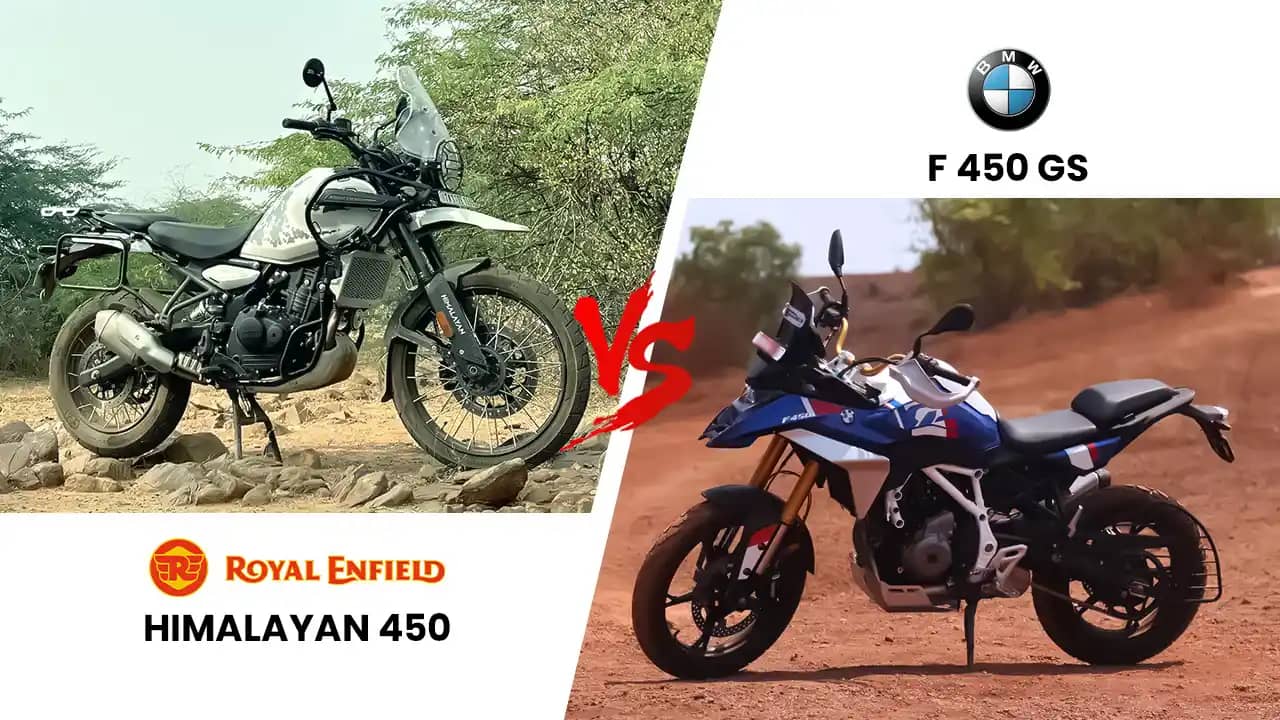
Royal Enfield Himalayan 450 vs BMW F 450 GS — Which Adventure Bike Is Worth Your Money in 2026? brings key updates for two-wheeler buyers in India. Royal Enfield Himalayan 450 vs BMW F 450 GS is shaping up to be one of the most important adventure-bike comparisons in India for 2026. The Himalayan 450 is already
Royal Enfield Himalayan 450 vs BMW F 450 GS is shaping up to be one of the most important adventure-bike comparisons in India for 2026. The Himalayan 450 is already on sale at ₹2.85 lakh (ex-showroom), while the BMW F 450 GS is expected to arrive later this year with a likely starting price of around ₹4.50 lakh to ₹5 lakh (ex-showroom). With adventure touring gaining momentum across India and more riders planning long-distance trips than ever before, buyers are now looking beyond badge value and asking a more practical question: which motorcycle actually delivers the better experience for the money?
BMW F 450 GS Price in India vs Himalayan 450
The biggest difference between these two motorcycles appears before you even throw a leg over them.
The Royal Enfield Himalayan 450 currently starts at approximately ₹2.85 lakh ex-showroom, with the top variants crossing ₹3 lakh. Depending on the city, the on-road price in Delhi ranges between ₹3.30 lakh and ₹3.55 lakh.
BMW's upcoming F 450 GS is expected to be priced between ₹4.50 lakh and ₹5 lakh ex-showroom, which could translate to an on-road price of roughly ₹5.20 lakh to ₹5.80 lakh in Delhi.
That creates a gap of nearly ₹2 lakh. For buyers financing their motorcycle, the monthly EMI difference could easily exceed ₹4,000–₹6,000 depending on tenure and down payment. That's significant money that could fund riding gear, luggage systems, fuel for multiple tours, or even a complete Ladakh trip.
The BMW badge undoubtedly carries prestige, but the Himalayan enters this comparison with a massive value advantage.
Himalayan 450 vs BMW F 450 GS Specifications
| Specification | Royal Enfield Himalayan 450 | BMW F 450 GS (Expected) |
| Engine | 452cc Single-Cylinder Liquid-Cooled | 450cc Parallel-Twin Liquid-Cooled |
| Power | 40 PS | Around 48 PS |
| Torque | 40 Nm | Around 45 Nm |
| Transmission | 6-Speed | 6-Speed |
| Front Suspension | USD Forks | USD Forks |
| Rear Suspension | Monoshock | Monoshock |
| Wheel Setup | 21-inch Front / 17-inch Rear | Likely 19-inch Front / 17-inch Rear |
| Ground Clearance | 230 mm | Expected 220+ mm |
| Fuel Tank | 17 Litres | Expected 14-16 Litres |
| Electronics | Ride Modes, TFT Navigation | Ride Modes, TFT, Traction Control |
| Price | ₹2.85 lakh onwards | ₹4.5-5 lakh expected |
The raw numbers suggest the BMW will enjoy a performance advantage, but specifications rarely tell the complete story. Adventure motorcycles live and die by how they behave on real roads, broken highways, mountain passes, and rough trails.
Engine Performance and Highway Capability
Royal Enfield's Sherpa 450 engine has transformed the Himalayan into a far more capable machine than its predecessor.
Producing 40 PS and 40 Nm, the liquid-cooled single-cylinder motor feels eager throughout the rev range. Riders who have spent time on the bike often praise its strong mid-range punch and surprisingly refined highway manners. Cruising between 100 km/h and 120 km/h is now realistic without constantly feeling like you're pushing the motorcycle to its limits.
The BMW F 450 GS, however, is expected to raise the bar.
Its parallel-twin engine configuration should produce close to 48 PS, delivering smoother power delivery and better refinement at higher speeds. Twin-cylinder engines naturally handle sustained highway touring better than singles, particularly when crossing long distances where vibration management becomes important.
For riders regularly covering 500–700 km touring days, the BMW is likely to feel more relaxed above 110 km/h. For typical Indian touring speeds, however, the Himalayan already delivers enough performance to satisfy most riders.
Which Adventure Bike Is Better for Touring?
Adventure touring in India demands a balance between comfort, fuel range, luggage carrying ability, and the ability to handle unpredictable road conditions.
The Himalayan 450 was designed specifically with Indian terrain in mind. Its upright ergonomics, wide handlebar, long-travel suspension, and 21-inch front wheel make it exceptionally comfortable on rough roads. Broken tarmac, gravel sections, and unexpected potholes rarely unsettle the motorcycle.
The 17-litre fuel tank also gives the Himalayan excellent touring range. Combined with real-world fuel economy of around 27–30 kmpl, riders can comfortably cover more than 400 kilometres between fuel stops.
BMW's F 450 GS is expected to deliver superior highway refinement and premium touring comfort. The twin-cylinder engine should make high-speed cruising easier, while BMW's expertise in adventure motorcycles will likely bring excellent rider ergonomics.
Still, the Himalayan holds a crucial advantage: it has already proven itself on Indian roads, Himalayan passes, and long-distance expeditions.
Suspension and Off-Road Capability
This is where the Royal Enfield earns serious respect.
The Himalayan 450 features long-travel suspension, 230 mm of ground clearance, standing-friendly ergonomics, and a wheel setup specifically chosen for off-road exploration. The motorcycle feels planted on loose surfaces and inspires confidence even for relatively inexperienced off-road riders.
BMW's F 450 GS concept suggests a strong off-road focus, and the company has decades of GS heritage backing it. The motorcycle is expected to feature quality suspension components, switchable ABS, traction control, and sophisticated electronics.
However, adventure riding is not only about technology.
Many Indian riders spend their weekends exploring trails, forest roads, and mountain routes where simplicity, durability, and ease of repairs matter just as much. In those situations, the Himalayan's straightforward design becomes a genuine advantage.
Features and Technology
The Himalayan 450 already offers a strong technology package.
Its TFT display includes Google Maps-powered navigation, smartphone connectivity, ride-by-wire throttle, riding modes, and useful touring information. The interface is intuitive and practical during long rides.
BMW is expected to push further.
The F 450 GS will likely feature a premium TFT display, multiple ride modes, traction control, cornering ABS, connectivity features, and possibly quickshifter options depending on variant.
For technology enthusiasts, the BMW will almost certainly emerge as the winner. Yet many touring riders care less about electronic sophistication and more about reliability, visibility, and ease of use during a 1,000-kilometre journey.
Ownership Costs and Real-World Practicality
This is where the comparison becomes particularly interesting.
Royal Enfield's service network is among the largest in India. Spare parts are widely available, service costs remain relatively affordable, and independent workshops across the country understand the platform.
BMW ownership brings premium-brand appeal but also higher maintenance costs. Parts pricing, service labour, and insurance expenses are likely to be considerably higher than those of the Himalayan.
A rider covering 15,000 to 20,000 kilometres annually may save tens of thousands of rupees over several years simply by choosing the Royal Enfield.
That financial difference becomes even more meaningful when factoring in riding gear, accessories, luggage systems, and fuel expenses.
Should You Buy the Himalayan 450 or Wait for the BMW F 450 GS?
The answer depends largely on what kind of rider you are.
If your priority is maximum value, proven reliability, strong off-road ability, and affordable ownership, the Himalayan 450 remains one of the most compelling adventure motorcycles available in India today.
If you want premium engineering, higher performance, advanced electronics, and smoother highway touring, the BMW F 450 GS is likely to justify its higher asking price.
The KTM 390 Adventure remains a strong alternative for riders seeking sharper performance, while the Royal Enfield Scram 440 continues to appeal to buyers looking for a more accessible adventure-focused motorcycle.
The Verdict
For best value, the winner is the Royal Enfield Himalayan 450.
For best technology, the BMW F 450 GS is likely to lead.
For best touring refinement, the BMW should have the edge thanks to its twin-cylinder engine.
For best beginner adventure motorcycle, the Himalayan 450 remains easier to justify.
For overall recommendation, the Royal Enfield Himalayan 450 wins because it delivers nearly everything most Indian adventure riders actually need at a significantly lower price. Unless the BMW arrives with unexpectedly aggressive pricing, the Himalayan offers the stronger balance of performance, capability, practicality, and ownership costs.
Check the latest on-road price, finance offers and EMI options for the Royal Enfield Himalayan 450 and BMW F 450 GS on Drivio before making your decision.
Royal Enfield Himalayan 450 vs BMW F 450 GS is shaping up to be one of the most important adventure-bike comparisons in India for 2026. The Himalayan 450 is already on sale at ₹2.85 lakh (ex-showroom), while the BMW F 450 GS is expected to arrive later this year with a likely starting price of around ₹4.50 lakh to ₹5 lakh (ex-showroom).
Related Blogs of Bikes Reviews


Related Bikes in India

₹4.13 L* Onwards

₹4.00 L* Onwards

₹2.10 L* Onwards

₹1.66 L* Onwards

₹1.75 L* Onwards

₹3.53 L* Onwards