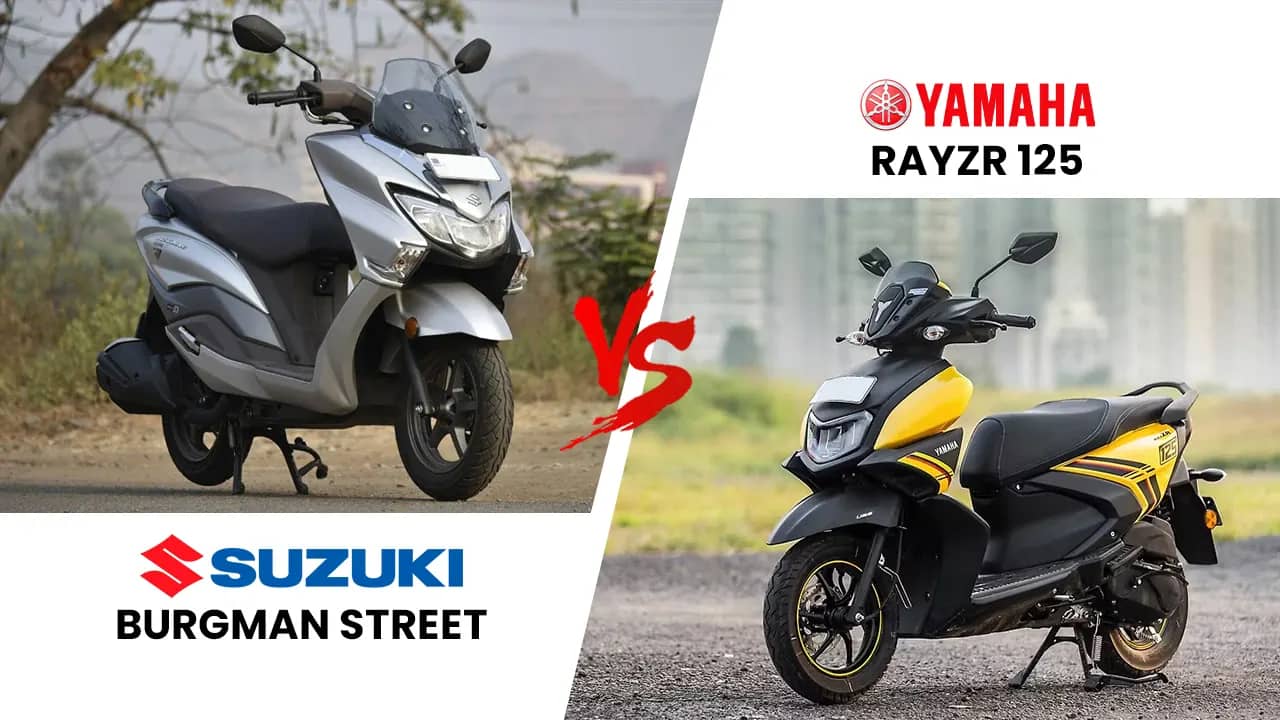
Suzuki Burgman Street vs Yamaha RayZR 125 – Style Meets Practicality
Overview
Suzuki Burgman Street vs Yamaha RayZR 125 – Style Meets Practicality brings key updates for two-wheeler buyers in India. When you’re looking for a 125 cc‑class scooter that blends everyday usability with personality, the Suzuki Burgman Street 125 and Yamaha RayZR 125 often crop up in your shortlist. Whether
When you’re looking for a 125 cc‑class scooter that blends everyday usability with personality, the Suzuki Burgman Street 125 and Yamaha RayZR 125 often crop up in your shortlist. Whether you prioritise comfort and build quality or mileage and ease of handling — this comparison breaks down their core specs, on‑road behaviour, and real‑world value so you can pick what suits you best.
| Specification | Suzuki Burgman Street 125 | Yamaha RayZR 125 |
| Engine & Capacity | 124 cc, air-cooled, fuel-injected, single‑cylinder | 125 cc, air-cooled, fuel-injected, single‑cylinder |
| Max Power | ~ 8.6–8.7 PS @ ~6,500–6,750 rpm | ~ 8.2 PS @ 6,500 rpm |
| Peak Torque | 10 Nm @ ~5,500 rpm | ~ 9.7–10.3 Nm @ ~5,000 rpm |
| Transmission | CVT (automatic) | V‑Belt Automatic (CVT-style) |
| Front Suspension | Telescopic Fork | Telescopic Fork |
| Rear Suspension | Swing Arm type | Unit Swing type |
| Ex‑Showroom Price (Delhi / approx.) | ₹ 96,399 onwards (Standard variant) | ~ ₹ 79,340 onwards for base variant (Hybrid/Disc) |
| Fuel Tank Capacity / Fuel Storage | 5.5 litres + under‑seat storage (21.5 L) | 5.2 litres + under‑seat storage (~21 L) |
Engine & Performance
The Burgman Street 125 is powered by a 124 cc, air‑cooled, fuel‑injected engine that delivers around 8.6–8.7 PS and 10 Nm of torque — enough for comfortable city commuting and occasional pillion rides.
The RayZR 125’s 125 cc motor produces about 8.2 PS and close to 10 Nm torque, making it slightly less powerful on paper — but in real‑world city traffic, it remains adequate for daily use.
Transmission for both is automatic: Burgman uses a CVT, while RayZR uses a V‑belt automatic — which amounts to similarly easy ride quality for traffic‑heavy city commutes.
Chassis, Handling & Ride Comfort
Burgman Street rides on a tubular chassis with telescopic front forks and swing‑arm rear — offering a stable, comfortable and slightly “heavy scooter” feel. Its larger size, sturdy build, and under‑seat storage make it appealing for riders carrying luggage or riding with a pillion. The 5.5-litre tank and spacious ride geometry suit city as well as occasional longer rides.
RayZR 125, on the other hand, with its lighter unit-swing chassis and narrower build — feels nimble and easier to maneuver in crowded urban traffic. Its compact size makes it handy for daily commuting, parking, and quick U-turns — though comfort and pillion friendliness may be comparatively modest because of lighter frame and smaller dimension.
Features & Practicality
Burgman Street offers under‑seat storage (~21.5 L), enough for a helmet or small luggage, and a fuel tank of 5.5 litres — useful for urban and occasional weekend outings. It’s built like a “maxi-scooter” in the 125 cc class, giving a more premium and substantial feel.
RayZR 125 brings lightweight agility, easier handling, and lower ex‑showroom pricing — making it a value‑oriented choice. Its smaller fuel tank (5.2 L) and compact build make it more suited for daily commuting rather than long rides or heavy errands.
Running Costs & Mileage (Real‑world Trends)
According to recent comparison reports, Burgman Street gives a mileage around 48 kmpl under typical city usage. RayZR 125 is often cited with higher mileage, sometimes up to 70+ kmpl (depending on riding style and variant), which makes it a more economical option in long-term running.
Conclusion
If you prioritise comfort, build quality, a roomier ride and practical storage — along with a stable and heavier feel — then Burgman Street 125 stands out in the 125 cc scooter class. It suits riders who carry luggage, ride with a pillion, or want a “bigger scooter” experience without stepping up to a larger engine.
On the other hand, if your main priorities are fuel economy, nimble handling, easy city commuting and affordability, RayZR 125 is a compelling pick — especially if you ride solo in urban traffic and value low running cost over extra bulk.
In essence — Burgman Street = comfort & utility; RayZR 125 = agility & economy. Your choice should depend on what you ride for: daily solo commuting, or comfortable rides with pillion and luggage.
When you’re looking for a 125 cc‑class scooter that blends everyday usability with personality, the Suzuki Burgman Street 125 and Yamaha RayZR 125 often crop up in your shortlist. Whether you prioritise comfort and build quality or mileage and ease of handling — this comparison breaks down their core specs, on‑road behaviour, and real‑world value so you can pick what suits you best.