Best Bikes Under Rs 2 Lakh in India (May 2026) — Updated With GST-Cut Winners
Overview
Best Bikes Under Rs 2 Lakh in India (May 2026) — Updated With GST-Cut Winners brings key updates for two-wheeler buyers in India. The best bikes under 2 lakh in India just got meaningfully cheaper — and if you've been waiting for the right moment to buy, May 2026 is arguably the most
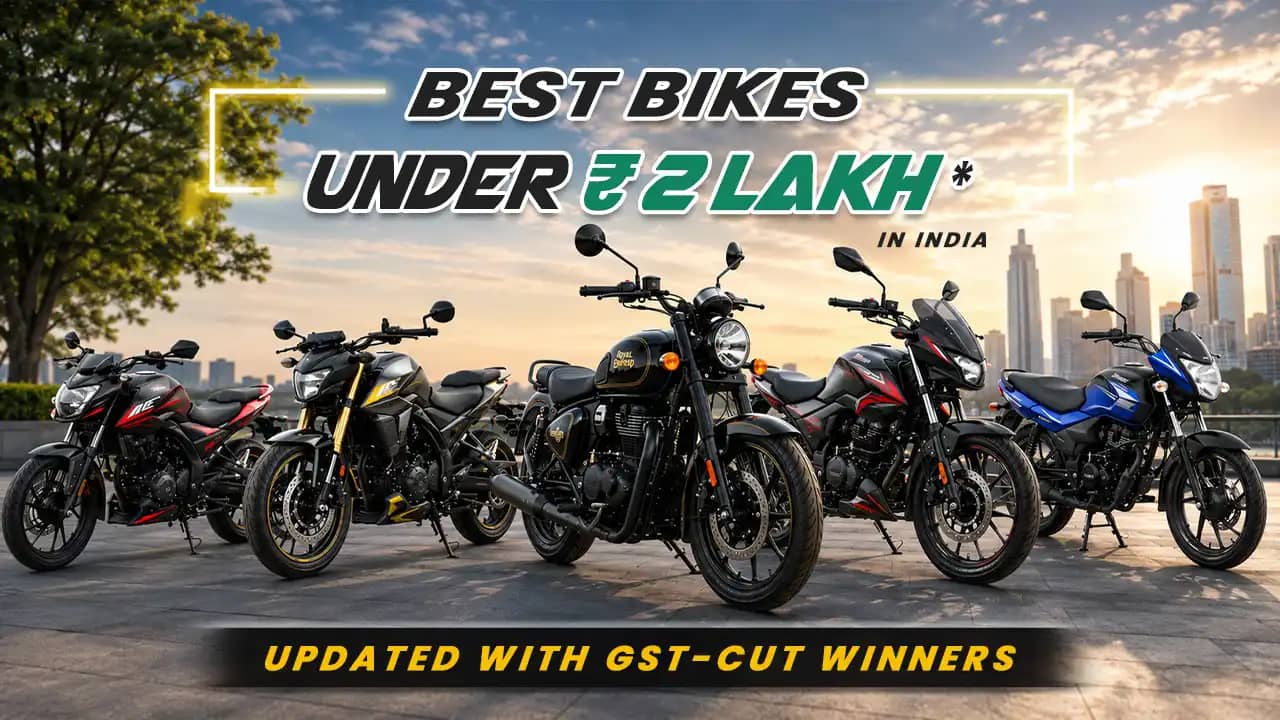
The best bikes under 2 lakh in India just got meaningfully cheaper — and if you've been waiting for the right moment to buy, May 2026 is arguably the most compelling window in recent memory. The GST Council's latest rationalization on two-wheelers between 125cc and 350cc has trimmed effective on-road prices by ₹3,000 to ₹8,000 across several popular models, with manufacturers passing on most of the benefit. Whether you're upgrading from a scooter or stepping into your first proper motorcycle, the segment has never offered this much machine for the money.
Which Bikes Actually Benefit From the GST Cut?
Not every motorcycle under ₹2 lakh saw equal gains. The clearest winners are bikes in the 150cc–200cc bracket — the sweet spot where performance meets daily usability on Indian roads. The Bajaj Pulsar N150, the TVS Apache RTR 160 4V, and the Honda CB Hornet 2.0 all saw price corrections that narrow the gap to their smaller-displacement rivals, strengthening the case for stepping up.
The Bajaj Pulsar N150, now priced at ₹1.12 lakh ex-showroom, is the most direct beneficiary in the entry-performance tier. Its oil-cooled 149.7cc engine produces 14.5 PS and 13.5 Nm — numbers that translate to confident overtakes on national highways and enough grunt for loaded two-up riding without constant downshifting. In city traffic, the N150's linear power delivery is forgiving enough for newer riders while still rewarding those who want to push.
What ₹1.5–2 Lakh Now Buys You
Push your budget toward the ₹2 lakh ceiling and the options become genuinely impressive. The Royal Enfield Hunter 350 — still the best-selling premium commuter in India — sits at ₹1.68 lakh ex-showroom for the Dapper variant after revised pricing. Its 349cc single-cylinder produces 20.2 bhp and 27 Nm, and anyone who's opened the throttle on Delhi's outer ring road or Pune's expressways will know that torque figure makes the Hunter feel quicker than its specifications suggest.
The Yamaha MT-15 Version 2.0 competes in a different register entirely. At ₹1.74 lakh, it carries a 155cc liquid-cooled, VVA-equipped motor producing 18.5 PS — figures that would have seemed improbable for this price even three years ago. The MT-15's USD forks and streetfighter geometry aren't cosmetic choices; the chassis handles broken tarmac with genuine composure, a factor that matters enormously when a pothole can appear without warning mid-corner on Indian roads.
For those ready to enter proper performance motorcycling, the KTM Duke 200 at ₹1.89 lakh ex-showroom is worth serious consideration. Its 199cc liquid-cooled single produces 25 PS and 19.5 Nm, with a slipper clutch standard — hardware that places it in a different performance league than anything else at this price. The Duke 200's on-road price in Delhi will be approximately ₹2.15–2.20 lakh after registration and insurance, which strains the budget, but this is a motorcycle that will still feel rewarding two years from now.
Apache vs. Hornet vs. Xtreme: The Commuter Calculus
If daily mileage and running costs matter as much as weekend performance — and for most Indian buyers they should — the conversation narrows to three bikes: the TVS Apache RTR 160 4V (₹1.14 lakh), the Honda CB Hornet 2.0 (₹1.35 lakh), and the Hero Xtreme 160R 4V (₹1.18 lakh).
The Apache's 157.7cc oil-cooled motor with race-tuned fuel injection claims 17.63 PS — the highest of this sub-group — and its dual-channel ABS with petal disc brakes make it one of the safest buys in the segment. Real-world fuel efficiency runs between 42–47 kmpl in mixed urban riding, which at ₹103 per litre works out to roughly ₹2,000–2,200 per month on a 1,000km monthly pattern. The Hornet 2.0 returns approximately 38–43 kmpl but trades that efficiency for a more relaxed ergonomic and Honda's near-unmatched long-term reliability. Drivio has covered the CB Hornet 2.0 in detail, and its long-term ownership costs remain among the lowest in the 180cc segment. The Hero Xtreme 160R 4V's 160cc unit producing 16.3 PS sits slightly below the other two on outright performance but compensates with Hero's pan-India service network — a genuine advantage if you ride in Tier-2 cities or travel frequently for work.
Who Should Buy What
The best bikes under 2 lakh in India aren't one-size-fits-all, and this year's GST revision has made the buying decision simultaneously easier and harder. Easier, because you get substantially more motorcycle per rupee. Harder, because the quality gap between a ₹1.1 lakh and a ₹1.7 lakh bike has compressed — now it's mostly about riding character, not build quality.
If the budget is firm and commuting dominates, the Pulsar N150 or Apache RTR 160 4V are the rational picks — well-equipped, widely serviced, and genuinely engaging to ride. If you can reach ₹1.65–1.75 lakh, the Hunter 350 or MT-15 V2 deliver a step-change in character and highway capability. And if you want the most capable machine the money can buy without fixating on the on-road premium, nothing below ₹2 lakh touches the Duke 200.
In May 2026, this segment is as competitive as it has ever been — the GST correction has compressed real-world cost differences enough that decisions now hinge on use case and riding style, not just price tags. Before you walk into a showroom, check the exact on-road price and current EMI for your shortlisted model in your city on Drivio — city-to-city differences can exceed ₹10,000, and the right financing structure can bring the Duke 200 within reach of someone budgeting for the Hornet.
The best bikes under 2 lakh in India just got meaningfully cheaper — and if you've been waiting for the right moment to buy, May 2026 is arguably the most compelling window in recent memory. The GST Council's latest rationalization on two-wheelers between 125cc and 350cc has trimmed effective on-road prices by ₹3,000 to ₹8,000 across several popular models, with manufacturers passing on most of the benefit.