Hero Is Launching the Karizma XMR 250 This Month — And It's Priced to Kill the Dominar 250
Overview
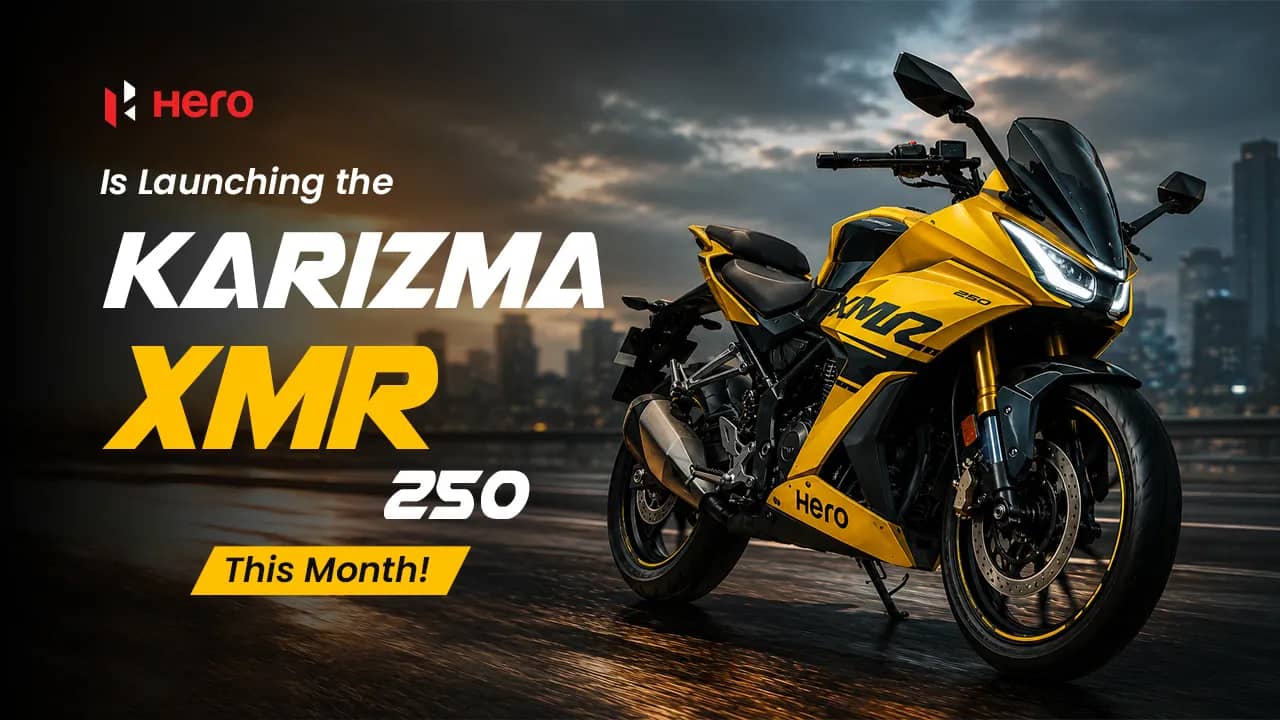
Hero Is Launching the Karizma XMR 250 This Month — And It's Priced to Kill the Dominar 250 brings key updates for two-wheeler buyers in India. The Hero Karizma XMR 250 is expected to launch in India this month at a price of approximately ₹2 lakh ex-showroom
The Hero Karizma XMR 250 is expected to launch in India this month at a price of approximately ₹2 lakh ex-showroom, and if Hero MotoCorp delivers on those numbers, this could be the most competitive quarter-litre motorcycle to enter the market in 2026. The Karizma name already made a strong comeback with the XMR 210, but riders wanting more punch — without crossing into KTM or Triumph price territory — have been waiting for exactly this step up. The timing matters: the 250cc segment in India is more crowded and more capable than it's ever been, and Hero needs to land this right.
What We Know About the Hero Karizma XMR 250 So Far
Hero MotoCorp hasn't officially confirmed a launch date, but dealer-level activity and component supply movement strongly point toward a May 2026 reveal. The motorcycle is expected to be built around a 250cc liquid-cooled, single-cylinder engine — an evolution of the architecture seen in the XMR 210 — tuned to produce somewhere in the range of 25–27 bhp and approximately 23 Nm of torque. Those aren't class-leading figures on paper, but Hero's engineers have consistently prioritised real-world rideability over dyno bragging, and the XMR 210 proved that a well-sorted chassis can make modest power feel entirely adequate in city traffic and on open highways.
The frame is expected to carry over a perimeter-style setup with revised geometry for the larger engine. Upside-down (USD) front forks are almost certainly part of the package — the XMR 210 already runs them — and dual-channel ABS will be standard, as it should be at this price point. A slipper clutch is also likely, a practical addition for anyone doing aggressive downshifts at highway entry ramps or on flyovers.
Features That Could Justify the Step Up From the XMR 210
Where the Hero Karizma XMR 250 will need to earn its higher price tag is in the features department. Expect a fully digital TFT instrument cluster with Bluetooth connectivity and turn-by-turn navigation support — these have become baseline expectations in the ₹1.8–2.2 lakh segment. Riding modes are plausible, though Hero may keep the system simple to maintain serviceability across Tier-2 and Tier-3 cities, which still account for a significant portion of their volume. Build quality on the XMR 210 has been consistently praised, and the Karizma line benefits from tighter quality control given its premium positioning within Hero's lineup.
How the Karizma XMR 250 Compares to Its Closest Rivals
This is where the real story is. The Bajaj Dominar 250 sits at around ₹1.96 lakh ex-showroom and is the most obvious benchmark — its 248.77cc single produces around 27 bhp, and it's been a reliable highway companion since launch. But the Dominar 250 has always carried a slightly heavier, more touring-focused character rather than a sporting one, and its styling hasn't evolved much to match newer competitors. If the Karizma XMR 250 brings sharper ergonomics and more aggressive styling at a similar price, Hero has a real opening.
The KTM Duke 250, priced at approximately ₹2.33 lakh ex-showroom, sets the performance benchmark in the quarter-litre class — lighter, sharper, and backed by a proven engine that rewards hard riding. However, KTM's service network outside major cities remains a genuine concern for many buyers, and the price premium adds up quickly when you factor in on-road costs. The Karizma XMR 250 appears positioned to occupy exactly the space between Bajaj's value proposition and KTM's premium ask.
Drivio has covered the TVS Apache RTR 310 extensively — it's a step above in outright performance, but also a step above in price. For the majority of Indian buyers working within a monthly EMI budget, the Karizma XMR 250 is a far more realistic option.
Who This Motorcycle Is Actually Built For
The rider this bike targets has outgrown 160–200cc commuters, rides three to five days a week, and wants something that can manage a 200–300 km weekend run without straining. Indian roads demand a particular kind of versatility — potholes, stop-and-go city traffic, and occasional stretches of reasonably smooth highway — and a 250cc engine with a torque-friendly power delivery handles that mix better than a high-strung 300cc+ unit that demands revving hard to feel alive.
Fuel economy matters in this context too. At around ₹103 per litre for petrol across most Indian cities today, a realistic figure of 28–32 kmpl in mixed riding would translate to roughly ₹6,500–₹7,500 per month for a rider covering 1,500 km. The on-road price in Delhi or Mumbai will likely land around ₹2.15–2.25 lakh after registration and insurance — numbers that are workable on a 36 or 48-month loan at current interest rates.
Should You Wait, or Buy Something Right Now?
If you're currently evaluating the Bajaj Dominar 250 or sitting on the fence about the Duke 250, the straightforward answer is: hold until the end of May 2026 for official confirmation. Hero's dealer network — the largest in India — gives the Karizma XMR 250 a servicing and resale advantage that smaller-volume competitors simply cannot match, and that matters when you're calculating total cost of ownership over three to five years.
That said, if Hero prices this above ₹2.1 lakh ex-showroom, the calculation changes. At that point the Duke 250 becomes much harder to dismiss for urban performance riders, and the Dominar 250 reasserts itself as the sensible highway choice. Hero knows this, and early signals suggest the ₹2 lakh figure isn't accidental — it's strategic.
The Hero Karizma XMR 250 has the brand equity, the expected specification, and the potential pricing to genuinely shake up the quarter-litre segment in a way that the XMR 210 came close to but didn't quite achieve. Before you make any decision, check the confirmed on-road price and EMI options for the Hero Karizma XMR 250 in your city on Drivio.
The Hero Karizma XMR 250 is expected to launch in India this month at a price of approximately ₹2 lakh ex-showroom, and if Hero MotoCorp delivers on those numbers, this could be the most competitive quarter-litre motorcycle to enter the market in 2026.