New Delhi


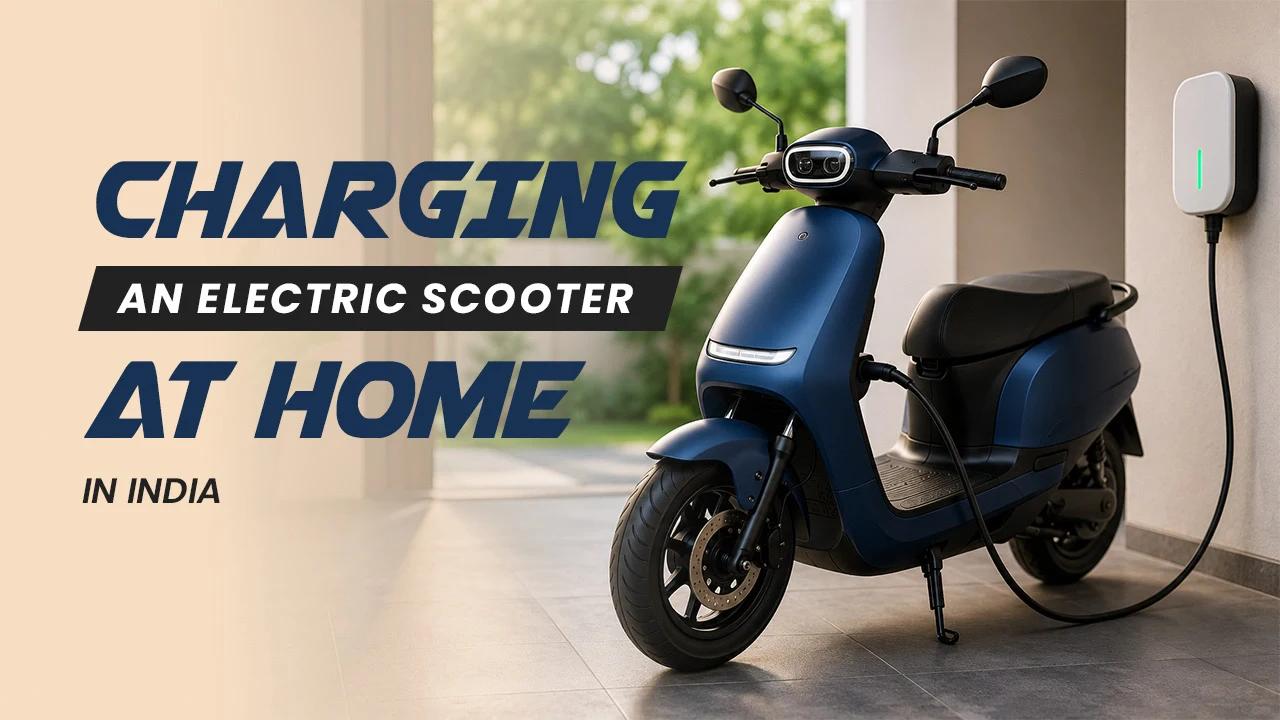

The Real Cost of Charging an Electric Scooter at Home in India in 2026
Featured Stories by Drivio | 5 Jun 2026
Charging electric scooter at home in India costs far less than most people expect, with many owners spending only ₹150–₹500 per month on electricity depending on how much they ride. As electric scooters from Ola Electric, Ather Energy, TVS iQube, Bajaj Chetak, Hero Vida, and Simple One become increasingly common on Indian roads in June 2026, buyers are paying closer attention to ownership costs rather than just purchase prices.
Manufacturers often highlight low running costs, but the real picture involves electricity tariffs, charging efficiency, home setup expenses, and a few hidden charges that rarely appear in advertisements. If you're considering an EV scooter or already own one, understanding these costs can help you calculate what charging at home will actually add to your monthly budget.
How Much Electricity Does an Electric Scooter Consume?
The amount of electricity an electric scooter uses depends largely on battery capacity. Most mainstream electric scooters in India today come with battery packs ranging from 2 kWh to 5 kWh.
A scooter with a 2 kWh battery generally offers around 70–90 km of range, while larger 4–5 kWh batteries found in premium models can deliver anywhere between 150 km and 250 km under ideal conditions.
It's important to remember that charging is never 100% efficient. Some electricity is lost as heat during AC charging and battery management. In real-world conditions, a 3 kWh battery usually draws around 3.2–3.5 units of electricity from your home's power supply for a full charge.
What Does It Cost to Charge an Electric Scooter at Home?
Residential electricity tariffs vary across India, but most urban households pay between ₹7 and ₹10 per unit depending on city and consumption slab. For calculation purposes, let's assume an average tariff of ₹8 per unit.
Here's what a complete charge typically costs:
| Battery Size | Electricity Consumed* | Cost Per Full Charge |
| 2 kWh | 2.3 units | ₹18–₹20 |
| 3 kWh | 3.4 units | ₹27–₹30 |
| 4 kWh | 4.5 units | ₹36–₹40 |
| 5 kWh | 5.6 units | ₹45–₹50 |
*Includes charging losses.
Even large-capacity scooters such as the Simple One or premium variants from Ola Electric and Ather Energy usually cost less than ₹50 for a complete home charge.
Monthly Charging Cost for Indian Riders
The actual impact on your electricity bill depends on how far you travel every day.
Rider Covering 20 km Per Day
A commuter travelling roughly 600 km per month will consume about 17 units of electricity.
Monthly charging cost:
Approximately ₹136
Rider Covering 40 km Per Day
A rider covering 1,200 km per month will use around 34 units.
Monthly charging cost:
Approximately ₹272
Rider Covering 60 km Per Day
Heavy commuters travelling close to 1,800 km per month will consume about 51 units.
Monthly charging cost:
Approximately ₹408
For most households, this increase is relatively small and often goes unnoticed compared to other household appliances.
What Is the Real Cost Per Kilometre?
One of the biggest reasons people switch to electric scooters is the extremely low cost per kilometre.
Assuming electricity costs ₹8 per unit and your scooter delivers around 35 km from one unit of electricity, the running cost works out to roughly:
₹0.23 per kilometre
Even after accounting for charging losses and battery aging, most electric scooters operate between ₹0.25 and ₹0.40 per kilometre. This is significantly lower than any petrol-powered scooter currently available in India.
Electric Scooter vs Honda Activa 125: Monthly Cost Comparison
The Honda Activa 125 remains one of the most popular choices among Indian commuters, making it a useful benchmark for comparison.
Assuming petrol costs ₹103 per litre and the Activa returns around 50 kmpl, the fuel cost works out to approximately ₹2.06 per kilometre.
Here's how the monthly expense compares:
| Distance Per Month | Electric Scooter | Honda Activa 125 |
| 600 km | ₹136 | ₹1,236 |
| 1,200 km | ₹272 | ₹2,472 |
| 1,800 km | ₹408 | ₹3,708 |
The difference becomes substantial over a year. A rider covering 1,200 km every month could save more than ₹25,000 annually on energy costs alone.
Do You Need a Dedicated Home Charging Setup?
Most electric scooters sold by Ola Electric, TVS iQube, Bajaj Chetak, Hero Vida, Ather Energy, and Simple One can be charged using a standard 15A household socket.
A dedicated charging point is not compulsory, but it is recommended for safety and convenience. A properly installed socket reduces overheating risks and makes overnight charging easier.
Typical setup costs include:
| Item | Approximate Cost |
| New 15A Socket | ₹500–₹1,500 |
| MCB Protection | ₹800–₹2,000 |
| Wiring Upgrade | ₹1,000–₹4,000 |
| Dedicated Charging Point | ₹2,000–₹8,000 |
| Extension Cable | ₹500–₹2,500 |
Most homeowners spend between ₹2,000 and ₹10,000 for a practical charging setup.
Hidden Charges and Real-World Challenges
While home charging is cheap, there are a few ownership realities buyers should know about.
Apartment residents often face the biggest challenges. Many societies do not have dedicated EV charging infrastructure, requiring owners to obtain permissions, install additional wiring, or pay for separate metering arrangements.
Basement parking can also increase installation costs because cables may need to run longer distances. During monsoon season, charging equipment should remain protected from water exposure, even though modern chargers include multiple safety features.
Battery degradation is another factor. As lithium-ion batteries age, charging efficiency gradually declines, which can slightly increase electricity consumption over time. Public fast charging is also usually more expensive than charging at home, making regular home charging the most economical option.
Is Charging an Electric Scooter at Home Actually as Cheap as People Think?
In most cases, yes.
For the average Indian commuter in 2026, charging an electric scooter at home genuinely costs a fraction of what it takes to run a petrol scooter. Most owners spend less than ₹500 per month on electricity while enjoying a cost per kilometre that is often 80–90% lower than a Honda Activa 125.
However, buyers should factor in charging setup costs, apartment parking limitations, electricity tariff slabs, and long-term battery efficiency when calculating total ownership expenses. These costs don't eliminate the savings, but they do provide a more realistic picture of EV ownership.
Before choosing an electric scooter from Ola Electric, Ather Energy, TVS iQube, Bajaj Chetak, Hero Vida, or Simple One, it's worth comparing ownership costs, charging expenses, on-road prices, and EMI options. Drivio can help you evaluate all these factors so you can make a smarter purchase decision before bringing an electric scooter home.