Top Electric Scooters Launching in India in Second Half of 2026 — Should You Wait?
Overview
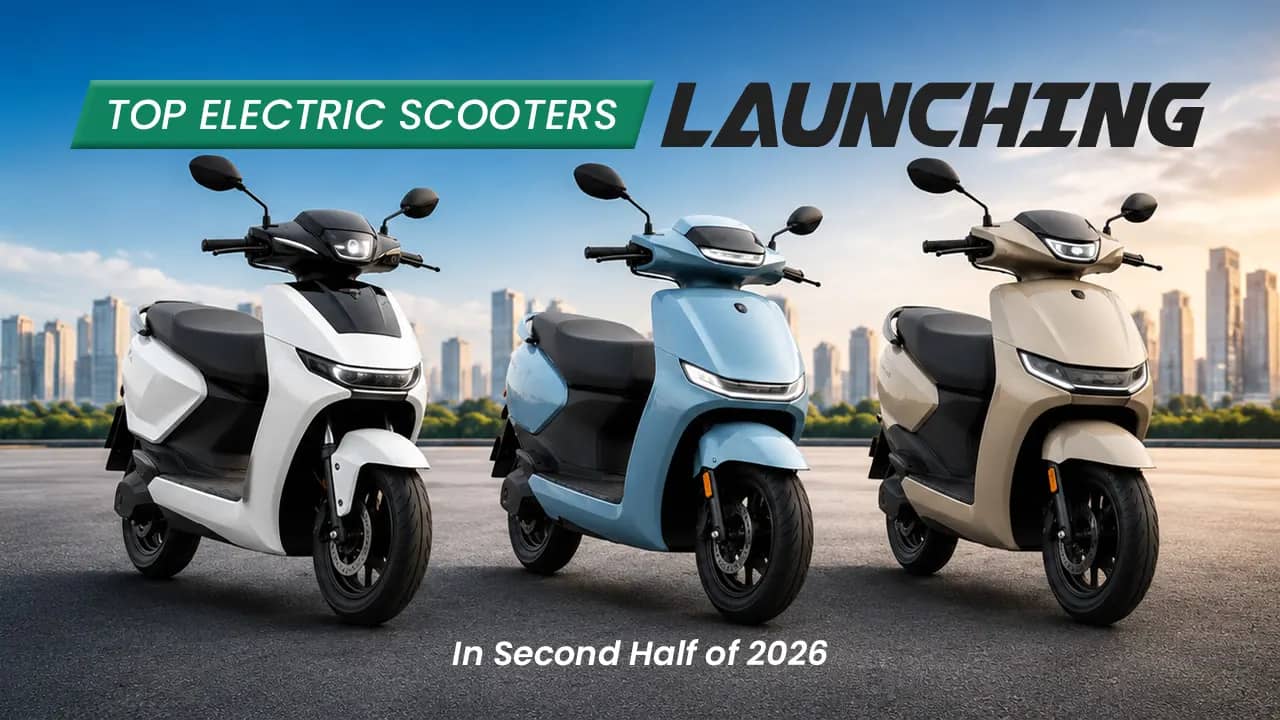
Top Electric Scooters Launching in India in Second Half of 2026 — Should You Wait? brings key updates for two-wheeler buyers in India. Top electric scooters launching in India in second half of 2026 could make this year tricky for buyers who were ready to book a TVS iQube, Bajaj Chetak, Ather Rizta,
Top electric scooters launching in India in second half of 2026 could make this year tricky for buyers who were ready to book a TVS iQube, Bajaj Chetak, Ather Rizta, Ola S1 or Hero Vida today. Expected prices for the next wave of electric scooters in India sit broadly between ₹90,000 and ₹1.40 lakh ex-showroom, which means the on-road price in Delhi/Mumbai will likely land around ₹1.02 lakh to ₹1.58 lakh, depending on insurance, registration, state benefits and battery subscription models. For Indian riders in June 2026, the real question is simple: wait for newer EVs or buy an already proven scooter now?
Upcoming Electric Scooters in India 2026: Why Buyers Are Waiting
The electric scooter market in India has shifted from early-adopter excitement to practical family buying. People no longer ask only about claimed IDC range; they ask whether the scooter can handle a 35 km office run, school drop, market trip and weekend errand without charging anxiety. That is why the second half of 2026 matters. The next set of launches is expected to focus on lower purchase prices, better real-world range, fixed battery convenience and wider service reach.
For buyers comparing petrol scooters, the running cost argument is still strong. Petrol at around ₹103/litre makes a regular 40–50 km daily commute noticeably expensive, while home charging an electric scooter can still cost a fraction of that every month. But EV ownership is not only about electricity cost. Home charging access, battery warranty, service network and resale value now matter just as much as range.
Top Electric Scooters Launching in India in Second Half of 2026
The top electric scooters launching in India in second half of 2026 are expected to come from brands that already understand Indian scooter buyers. Ather wants to go more affordable, Hero Vida wants a stronger sub-₹1 lakh position, TVS could use the Jupiter name for a practical family EV, and Simple Energy is expected to bring a more family-focused scooter below its premium models. None of these should be treated as final showroom-ready products until the brands officially announce prices, but the direction is clear: the EV scooter fight is moving from flashy performance to daily usability.
Ather EL01: A More Affordable Ather For Family Buyers
The Ather EL01 is one of the most important upcoming electric scooters in India 2026 because it could bring Ather’s software, chassis tuning and connected experience to a more accessible price point. The scooter is expected around August 2026, with an estimated ex-showroom price around ₹99,000 to ₹1.10 lakh, although final pricing may depend on variant, battery size and whether Ather uses a subscription-style ownership model. On-road price in Delhi/Mumbai could be approximately ₹1.10 lakh to ₹1.25 lakh.
Ather’s current 450X is quick and sharp, while the Rizta is more family-friendly, but both sit in a price band where buyers also look at the TVS iQube and Bajaj Chetak. The EL01 is likely to be Ather’s answer to that pressure. Expect a practical floorboard, usable under-seat storage, connected app features, OTA updates and a real-world range that should ideally sit around 90–110 km if Ather wants it to work for office commuters.
For Indian roads, the EL01 will make sense if Ather keeps the suspension comfortable and the seat height family-friendly. A fast scooter is nice, but a predictable scooter in traffic is more useful. If you were considering the Ather Rizta, Drivio’s Ather Rizta coverage is a useful reference point before deciding whether the EL01 is worth waiting for.
Hero Vida Sub-₹1 Lakh Scooter: The Mass-Market EV Play
Hero Vida’s expected sub-₹1 lakh electric scooter could be the most important affordability move of the second half of 2026. The launch is expected around August 2026, and reports suggest Hero wants this scooter to sit below the current Vida V2 range. If the ex-showroom price stays under ₹1 lakh, the on-road price in Delhi/Mumbai could be around ₹1.08 lakh to ₹1.18 lakh, depending on local charges and variant structure.
The big advantage here is Hero’s reach. Ather may have strong tech credibility and Ola may have aggressive pricing, but Hero understands the mass commuter market better than most brands in India. If the new Vida gets a fixed battery setup, practical boot space and a real-world range of around 80–100 km, it could become a strong option for riders shifting from Activa, Jupiter or Access petrol scooters.
The trade-off may be performance. Hero is unlikely to chase the sharp acceleration numbers of Ola or Ather here. Instead, this scooter will likely focus on predictable throttle response, easier service access and lower EMI. Buyers who want an electric scooter for family use should watch this one closely.
TVS Jupiter Electric: The Practical Family Name Goes EV
TVS already has the iQube, which remains one of the more sensible electric scooters in India. A TVS Jupiter Electric, expected around August 2026, would be a very different kind of product if TVS positions it around the everyday family scooter buyer. Expected pricing is around ₹1.10 lakh to ₹1.30 lakh ex-showroom, which could put the on-road price in Delhi/Mumbai near ₹1.22 lakh to ₹1.45 lakh.
The Jupiter name matters because Indian families already trust it as a petrol scooter. If TVS carries over the same approach to seating comfort, storage, stable ride quality and easy controls, the Jupiter Electric could become a direct rival to the Ather Rizta, Bajaj Chetak and Hero Vida V2. A real-world range of around 90–120 km would be enough for most city users, provided charging is easy and the warranty feels safe.
This is where TVS has an advantage. The iQube has already shown that TVS can build an EV scooter that feels familiar rather than experimental. Buyers who liked Drivio’s TVS iQube review but wanted a more traditional family scooter should keep an eye on this expected launch.
Simple Family Electric Scooter: Lower Price, Practical Focus
Simple Energy is known for long-range electric scooters, but its premium models are not exactly budget buys. The upcoming Simple family electric scooter is expected around October 2026, with an estimated price between ₹90,000 and ₹1.10 lakh ex-showroom. That means the on-road price in Delhi/Mumbai could fall around ₹1.02 lakh to ₹1.25 lakh, depending on final battery size and insurance.
This scooter is expected to be more conventional than the Simple One and Simple Ultra. That is a good thing for family buyers. A mid-spec motor, comfortable seating, predictable braking and enough storage would matter more here than a dramatic claimed range figure. If Simple can deliver a real-world range near 100 km with decent build quality, it will compete strongly against the Vida, Chetak and iQube lower variants.
The risk is service network confidence. Simple has interesting technology, but buyers outside major cities will need to check showroom access, parts support and service response before booking. For a daily scooter, the nearest service centre matters as much as the battery pack.
Simple Arrive: A More Premium Late-2026 Option
The Simple Arrive is expected around December 2026, with an estimated price range of ₹1.30 lakh to ₹1.40 lakh ex-showroom. On-road price in Delhi/Mumbai could be approximately ₹1.45 lakh to ₹1.58 lakh, placing it closer to premium EV scooters like the Ather 450X, Ola S1 Pro and higher Chetak variants. This may not be the cheapest option, but it could appeal to buyers who want stronger performance and longer range without going into the very expensive end of the EV scooter space.
If Simple positions the Arrive as a performance-oriented yet usable scooter, it will need more than just range claims. Indian buyers at this price expect fast charging support, strong brakes, good tyres, connected features, navigation, and a battery warranty that feels trustworthy. A scooter above ₹1.30 lakh must feel premium in daily use, not only on paper.
Should You Wait Or Buy An Electric Scooter Now?
The decision depends on why you are buying. If your current petrol scooter is still reliable and your daily running is not urgent, waiting until August–October 2026 makes sense because Ather EL01, Hero’s new Vida and TVS Jupiter Electric could make the ₹1 lakh to ₹1.30 lakh segment more competitive. More competition usually means better offers, better EMI plans and sharper feature packaging.
But if your current scooter is already costing too much in fuel and repairs, waiting blindly may not save much. The Bajaj Chetak, TVS iQube, Ather Rizta, Ola S1 X and Hero Vida V2 are already available, and many buyers can start saving on fuel immediately. A rider doing 35–40 km daily can easily spend several thousand rupees every month on petrol, while home charging usually keeps the monthly running cost far lower.
The top electric scooters launching in India in second half of 2026 are worth waiting for if you want newer battery tech, fresher features, better family-scooter design and stronger value around ₹1 lakh. Buy now if you need dependable daily transport immediately, have home charging ready, and find a good EMI deal on an existing model. Before locking your decision, check the on-road price and EMI for the latest electric scooters in your city on Drivio.
Top electric scooters launching in India in second half of 2026 could make this year tricky for buyers who were ready to book a TVS iQube, Bajaj Chetak, Ather Rizta, Ola S1 or Hero Vida today. Expected prices for the next wave of electric scooters in India sit broadly between ₹90,000 and ₹1.40 lakh ex-showroom, which means the on-road price in Delhi/Mumbai will likely land around ₹1.02 lakh to ₹1.58 lakh, depending on insurance, registration, state benefits and battery subscription models.