New Delhi


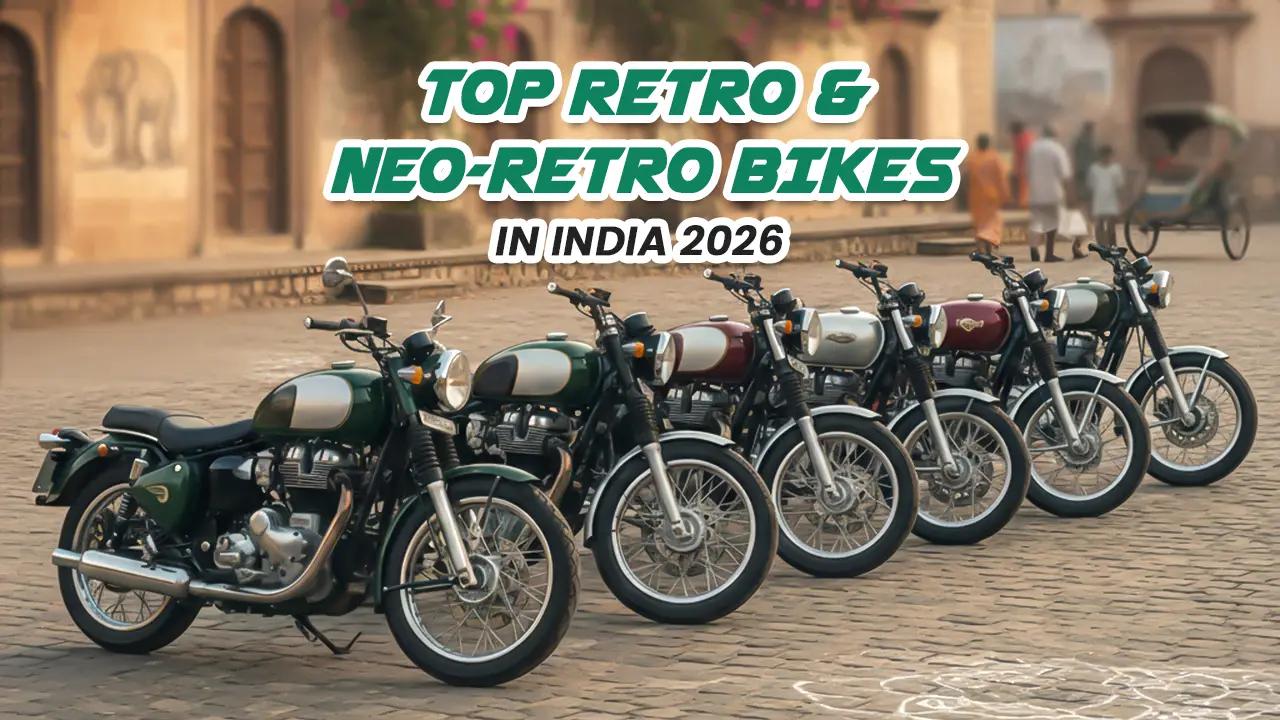

Top Retro And Neo-retro Motorcycles In India 2026
Featured Stories by Drivio | 7 Feb 2026
Retro and neo-retro motorcycles continue to dominate the Indian premium two-wheeler segment in 2026, accounting for over 80% of the 350cc–500cc category. This growth reflects a clear shift from utility-focused commuting to lifestyle-oriented motorcycling. Riders now seek machines that blend classic design with modern reliability, comfort, and safety.
These motorcycles successfully combine vintage aesthetics with contemporary technology such as fuel injection, dual-channel ABS, LED lighting, and improved chassis dynamics, making them suitable for daily commuting as well as long-distance touring.
Market Overview
The Indian motorcycle market in 2026 has witnessed strong expansion in the mid-capacity segment, particularly between 300cc and 500cc. Demand for retro-styled motorcycles has grown at an estimated annual rate of 15%, driven by buyers who want versatile motorcycles capable of handling city traffic and weekend highway rides.
Prices in this category generally range from ₹1.9 lakh to ₹4 lakh (ex-showroom), placing these motorcycles well within reach of India’s growing middle-class and young professionals. Localized manufacturing and strategic global partnerships have helped manufacturers control costs despite rising input prices and inflationary pressures.
Key Trends in the Indian Retro Motorcycle Segment
1. Modern Technology with Classic Design
Manufacturers are increasingly integrating advanced engineering into heritage-inspired motorcycles. Liquid-cooled engines, ride-by-wire systems, traction control, and improved braking hardware are becoming common, especially in neo-retro models.
2. Global Manufacturing Partnerships
Collaborations such as Bajaj–Triumph and Hero MotoCorp–Harley-Davidson have reshaped the segment. These partnerships have enabled global brands to offer high-performance neo-retro motorcycles at competitive prices tailored for Indian riding conditions.
3. Rising Customization Culture
Customization is another major trend in 2026. Brands now offer extensive official accessory catalogs, including touring seats, exhausts, panniers, and cosmetic upgrades, allowing riders to personalize their motorcycles without compromising warranty or reliability.
Popular Retro and Neo-Retro Motorcycles in India (2026)
| Model | Engine | Mileage | Price (Ex-Showroom) | Ideal Use Case |
| Royal Enfield Classic 350 | 349cc | 35 kmpl | ₹1.93 lakh | City & Touring |
| Triumph Speed 400 | 398cc | 30 kmpl | ₹2.40 lakh | Performance Retro |
| Harley-Davidson X440 | 440cc | 35 kmpl | ₹2.39 lakh | Highway Cruising |
| Honda CB350 | 348cc | 35 kmpl | ₹2.14 lakh | Refined Commuting |
| Jawa 350 | 334cc | 30 kmpl | ₹2.15 lakh | Authentic Vintage |
| Royal Enfield Interceptor 650 | 648cc | 25 kmpl | ₹3.03 lakh | High-Speed Touring |
Buyer Guide: How to Choose the Right Retro Motorcycle
Choosing the ideal retro or neo-retro motorcycle depends on your riding style, daily usage, and touring requirements.
- For classic feel and strong resale value: Motorcycles with long-stroke engines such as the Royal Enfield Classic 350 and Honda CB350 deliver relaxed performance, strong low-end torque, and excellent comfort.
- For modern performance and technology: The Triumph Speed 400 stands out with its liquid-cooled engine, advanced electronics, and agile handling, making it ideal for riders who want retro styling with sporty performance.
- For highway-focused torque and brand heritage: The Harley-Davidson X440 offers a torquey engine and relaxed ergonomics, suited for long highway rides.
- For smooth high-speed touring: Riders seeking a twin-cylinder experience should consider the Royal Enfield Interceptor 650, which remains the benchmark for refined touring in this category.
Advantages and Limitations of Retro Motorcycles
Advantages
- Timeless design with strong road presence.
- Upright and comfortable ergonomics suitable for long-distance riding.
- Strong low-end torque, ideal for city traffic and relaxed cruising.
- High brand value and excellent resale potential.
- Simple mechanical layouts, making maintenance easier in remote areas.
Limitations
- Heavier curb weight compared to modern naked or sport motorcycles.
- Limited aerodynamic efficiency due to minimal or no fairings.
- Basic instrument clusters in some models, lacking advanced navigation features.
- Higher vibration levels in certain air-cooled single-cylinder motorcycles at sustained high speeds.
Final Verdict
In 2026, retro and neo-retro motorcycles offer one of the best value propositions in the Indian motorcycle market. They deliver a balanced mix of style, comfort, durability, and everyday usability. For most riders, the 350cc segment remains the ideal entry point, offering an excellent balance between fuel efficiency and performance.
While the Royal Enfield Classic 350 continues to dominate sales with its unmatched heritage appeal, neo-retro motorcycles from Triumph and Harley-Davidson provide compelling alternatives for riders who prioritize modern performance and advanced features. Ultimately, buyers should choose based on whether they value traditional character or contemporary rider aids more in their motorcycling experience.