Overview
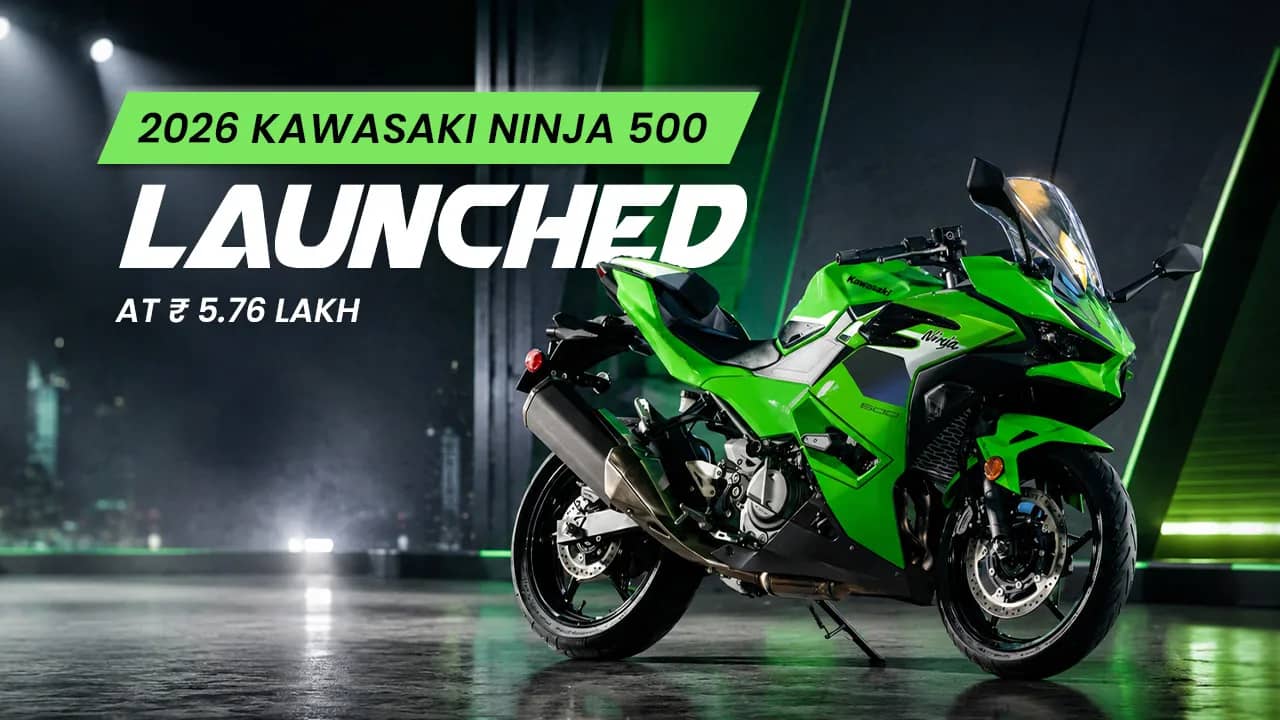
2026 Kawasaki Ninja 500 Launched at Rs. 5.76 Lakh brings key updates for two-wheeler buyers in India. The 2026 Kawasaki Ninja 500 has been launched in India at ₹5.76 lakh ex-showroom, giving the country’s twin-cylinder sports bike segment a fresh, if slightly pricier, option to consider. Kawasaki
The 2026 Kawasaki Ninja 500 has been launched in India at ₹5.76 lakh ex-showroom, giving the country’s twin-cylinder sports bike segment a fresh, if slightly pricier, option to consider. Kawasaki has used June 2026 to reaffirm its commitment to the Indian market, rolling out an E20-compliant version of the Ninja 500 rather than letting it fade out amid speculation of a quiet discontinuation. For buyers who have been eyeing a proper parallel-twin sports bike instead of the usual single-cylinder crowd, this update lands at an interesting time, even if the price hike means the value argument needs a closer look.
2026 Kawasaki Ninja 500 Price in India: What Has Changed
At ₹5.76 lakh ex-showroom, the bike costs roughly ₹10,000 more than the outgoing model, a modest increase that Kawasaki attributes to the E20 fuel compliance update rather than any major mechanical overhaul. Factor in insurance, RTO registration and basic accessories, and the on-road price in Delhi or Mumbai will likely sit around ₹6.45 lakh to ₹6.70 lakh depending on the dealership and city-specific charges. That on-road figure puts the Ninja 500 firmly in premium territory, well above India-assembled rivals and closer to what buyers expect to pay for a fully imported machine.
The bike continues to be brought into India via the CBU, or Completely Built Unit, route, which explains both the higher price tag and the limited initial stock at launch. Kawasaki has not localized any part of the Ninja 500’s production for India, and that decision keeps it positioned as a premium twin-cylinder sports bike rather than a volume product chasing the commuter-turned-enthusiast crowd. For buyers who have already saved up for this segment, the new pricing is unlikely to be a dealbreaker, but it does invite a direct comparison with rivals that offer more kit for less money.
Engine, Performance and Real-World Use
The 2026 Kawasaki Ninja 500 is powered by a 451cc, liquid-cooled, parallel-twin engine that produces close to 44.7 bhp (45 PS) and 42.6 Nm of torque, paired with a 6-speed gearbox. Kerb weight comes in at approximately 171 kg, which keeps the bike manageable in stop-start traffic despite its sporty intent. Where this engine earns its keep is in the way it delivers power: the twin-cylinder layout spreads torque across a wider rev range than a single-cylinder unit, so there’s less of the buzzy, all-or-nothing character that riders associate with bikes like the KTM RC 390.
On Indian highways, that translates into a motorcycle that can comfortably hold triple-digit cruising speeds without feeling strained, while still having enough in reserve for quick overtakes. In city traffic, the parallel-twin’s smoother low-end delivery means less clutch fanning at crawling speeds, which matters a lot more in Indian riding conditions than peak horsepower figures ever do. The refinement gap between this engine and a single-cylinder rival becomes most obvious on long, undivided highway stretches, where vibration through the bars and pegs is noticeably better controlled on the Ninja 500.
Features, Brakes and Hardware
Visually, the new Ninja 500 sticks closely to the established Ninja design language, with full fairing, a sharp twin-headlamp setup and LED lighting throughout. The cockpit uses an LCD instrument console that prioritizes clear, at-a-glance readability over flashy graphics, which works well when riders need information quickly while riding in dense traffic. Braking duties are handled by disc brakes at both ends with dual-channel ABS as standard, giving riders predictable stopping power regardless of road surface or weather.
Suspension is built around a conventional telescopic fork up front and a rear monoshock, tuned for a balance between sporty handling and everyday usability rather than outright track-focused stiffness. At 171 kg kerb weight, the chassis stays agile enough for quick direction changes in traffic while still feeling planted at higher speeds. None of this hardware is groundbreaking for the segment, but it’s dependable, well-proven equipment that doesn’t ask the rider to compromise on confidence.
Kawasaki Ninja 500 vs Aprilia RS 457, Yamaha R3 and KTM RC 390
The most relevant rival in India is the Aprilia RS 457, which offers a similarly sporty riding position and a single-cylinder engine with more electronic aids, including ride modes, making it a stronger value proposition on paper. The Yamaha R3 takes a simpler, lighter approach with its own twin-cylinder engine, appealing to riders who want a more compact, beginner-friendly package without the added bulk. The KTM RC 390, meanwhile, remains the value leader for aggressive, track-day-minded riders, undercutting the Ninja 500 significantly on price while offering sharper, more aggressive handling characteristics.
| Motorcycle | Engine | Power | Price (ex-showroom) |
| Kawasaki Ninja 500 | 451cc parallel-twin | ~44.7 bhp | ₹5.76 lakh |
| Aprilia RS 457 | 457cc single-cylinder | ~46.8 bhp | ~₹4.10 lakh |
| Yamaha R3 | 321cc parallel-twin | ~41.4 bhp | ~₹4.65 lakh |
| KTM RC 390 | 399cc single-cylinder | ~46 bhp | ~₹3.40 lakh |
Where the Ninja 500 pulls ahead is refinement and outright engine character; where it falls behind is the value-for-money equation, since rivals like the RS 457 pack more technology at a noticeably lower price.
Mileage and Running Cost for Indian Riders
Real-world mileage on the Ninja 500 should fall in the 22–26 kmpl range, depending on riding style, throttle discipline and the mix of city versus highway use. With petrol priced at approximately ₹103 per litre in most Indian metros, that works out to a running cost of roughly ₹4.3 per km at 24 kmpl, which is a reasonable, if not class-leading, figure for a 451cc twin-cylinder motorcycle. For riders covering 800 to 1,000 km a month, monthly fuel expenses would land somewhere between ₹3,440 and ₹4,300, depending on how much of that distance is spent in traffic versus open highway.
That running cost sits a notch higher than what owners of smaller single-cylinder rivals typically report, which is the trade-off that comes with the larger displacement and twin-cylinder configuration. Riders who prioritize engine smoothness and highway composure over the lowest possible running cost will find the math acceptable; those purely chasing efficiency may want to look at lighter, single-cylinder options instead.
Should You Buy It?
The 2026 Kawasaki Ninja 500 makes the most sense for riders who specifically want twin-cylinder smoothness, Kawasaki’s reliability reputation and the road presence that comes with the Ninja badge, and who are willing to pay a premium for all three. It’s a strong pick for buyers upgrading from a 150cc-250cc motorcycle who want a noticeable jump in refinement without stepping into 650cc territory just yet. Value-focused buyers, however, should cross-shop it carefully against the Aprilia RS 457 before booking, since the RS 457 offers comparable performance with a more generous electronics package at a meaningfully lower price.
For riders who have already decided that the twin-cylinder experience and Kawasaki ownership are worth the extra spend, the 2026 Ninja 500 remains a satisfying, dependable choice in June 2026’s premium sports bike lineup. Check the on-road price and EMI for the Kawasaki Ninja 500 in your city on Drivio.
The 2026 Kawasaki Ninja 500 has been launched in India at ₹5.76 lakh ex-showroom, giving the country’s twin-cylinder sports bike segment a fresh, if slightly pricier, option to consider. Kawasaki has used June 2026 to reaffirm its commitment to the Indian market, rolling out an E20-compliant version of the Ninja 500 rather than letting it fade out amid speculation of a quiet discontinuation.