Ola S1 Air vs Honda Activa 7G — EV or Petrol, Which Is Smarter for 40 km/Day Commuters?
Overview
Ola S1 Air vs Honda Activa 7G — EV or Petrol, Which Is Smarter for 40 km/Day Commuters? reveals upcoming Honda two-wheeler developments, detailing new platform designs, key technological features, and expected market debuts tailored for Indian motorcycle and scooter enthusiasts.
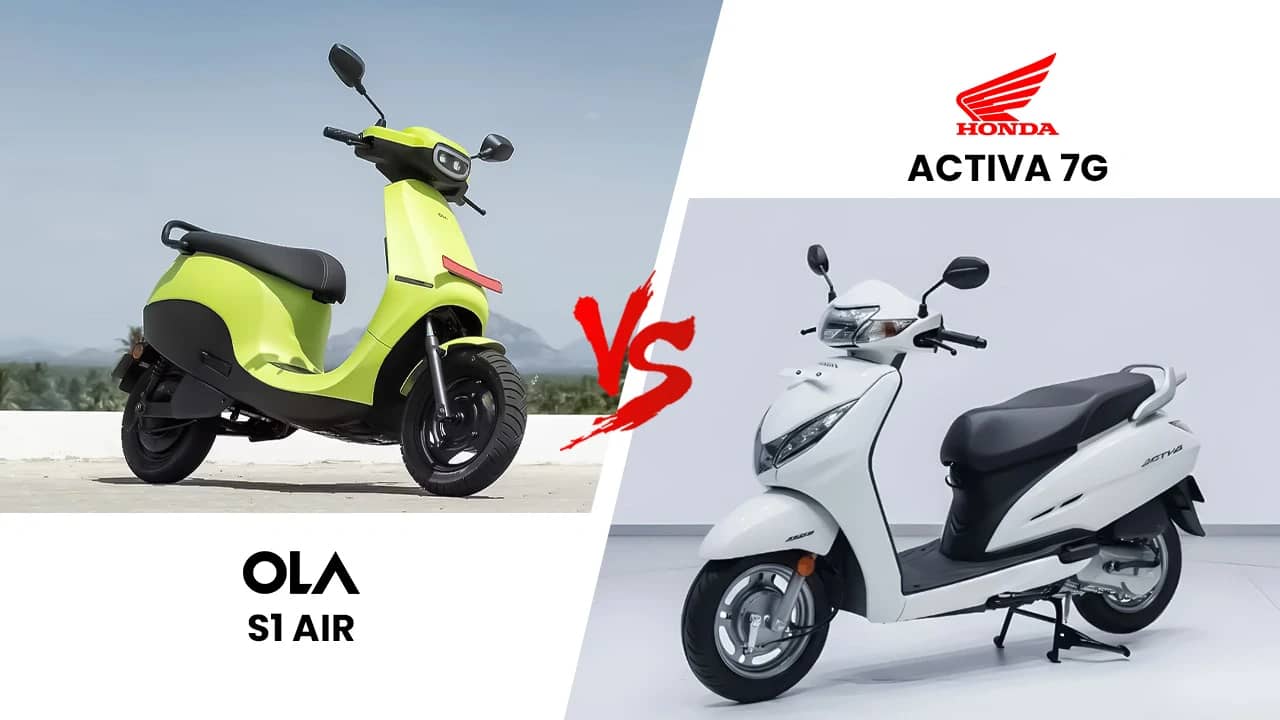
Ola S1 Air vs Honda Activa 7G is one of the most relevant scooter comparisons for Indian buyers in May 2026, especially when daily commuting distances are touching 40 km or more. With the Ola S1 Air priced at around ₹89,999 ex-showroom and the Honda Activa 7G expected to start around ₹82,000–₹86,000 ex-showroom, buyers in India are now facing a genuine choice between electric mobility and traditional petrol reliability.
For someone riding roughly 40 km every day, the decision is no longer just about purchase price. Running costs, convenience, charging access, long-term ownership expenses and resale value all play a major role. Here's how these two commuter-focused scooters stack up in the real world.
Specs Comparison: Ola S1 Air vs Honda Activa 7G
| Specification | Ola S1 Air | Honda Activa 7G (Expected) |
| Powertrain | Electric Motor | 109.51cc Single-Cylinder Petrol |
| Max Power | 6 kW (8.05 bhp) Peak | 7.9 bhp |
| Peak Torque | 58 Nm | 8.9 Nm |
| Top Speed | 90 km/h | 85 km/h (approx.) |
| Range / Mileage | 151 km IDC Range | 55-60 kmpl Real World |
| Charging Time | 5 Hours (0-100%) | Not Applicable |
| Transmission | Automatic | CVT Automatic |
| Ex-Showroom Price Delhi | ₹89,999 | ₹82,000-₹86,000 (Expected) |
Running Cost Matters More Than Purchase Price
For a commuter covering 40 km daily, monthly usage typically reaches around 1,200 km.
The Honda Activa 7G, assuming a realistic mileage of 55 kmpl and petrol prices near ₹103 per litre, would consume roughly 22 litres of fuel every month. That translates to approximately ₹2,250–₹2,350 in monthly fuel expenses.
The Ola S1 Air tells a different story. With electricity tariffs averaging ₹8–₹10 per unit in many Indian cities, charging costs for the same monthly distance usually stay between ₹250 and ₹400.
Over a year, the difference becomes substantial. An Activa owner could spend nearly ₹27,000 on petrol, while an Ola S1 Air owner may spend less than ₹5,000 on electricity. For riders with predictable daily commutes, this is where electric scooters begin making financial sense.
Ola S1 Air vs Honda Activa 7G for Daily Office Commutes
A 40 km daily commute is almost tailor-made for modern electric scooters.
The Ola S1 Air's claimed range of 151 km means most users will charge only twice a week. Even accounting for traffic, air conditioning in nearby vehicles creating stop-and-go congestion, and occasional high-speed riding, real-world range remains sufficient for several days of commuting.
The Activa 7G counters with unmatched convenience. There is no need to think about charging schedules, battery percentages or charging infrastructure. Refuelling takes less than two minutes and every corner of India has a petrol pump.
For urban professionals living in apartments with dedicated parking and charging access, the EV route is easier than ever. For people without a fixed charging point, petrol remains significantly more convenient.
Performance on Indian Roads
The biggest surprise for riders moving from petrol to electric is instant torque.
The Ola S1 Air delivers its 58 Nm peak torque immediately, making city overtakes effortless. Traffic light launches feel quicker than most 110cc petrol scooters, and the scooter remains smooth throughout the speed range.
The Honda Activa 7G is expected to continue Honda's proven formula. The refined 109.51cc engine prioritises smoothness and reliability over outright acceleration. It feels familiar, predictable and easy to ride for all age groups.
In dense urban traffic, the Ola actually feels faster. On longer suburban stretches, both scooters comfortably maintain commuter speeds, although the Activa's petrol powertrain still feels more reassuring when covering unexpected longer distances.
Long-Term Ownership Costs
The real debate isn't about fuel versus electricity alone.
Honda's Activa platform has built its reputation over decades. Service centres are available across India, spare parts are affordable, and mechanics understand the scooter thoroughly. Maintenance costs remain low and predictable.
The Ola S1 Air eliminates engine oil changes, air filter replacements and many routine maintenance requirements. However, battery health becomes the major consideration over long ownership periods. Modern lithium-ion batteries have improved significantly, but replacement costs after several years remain a factor buyers should keep in mind.
If your ownership cycle is around three to five years, the EV's lower running costs generally outweigh potential battery concerns.
Resale Value and Reliability
This is where Honda continues to enjoy a significant advantage.
Activa scooters consistently command strong resale prices because demand remains high throughout the used vehicle market. Buyers know what they are getting, and reliability records are well established.
The EV resale market is still evolving. Battery condition, software support and future technology developments influence used EV prices more heavily than traditional scooters.
For buyers who frequently upgrade vehicles every few years, the Activa remains the safer choice. For those planning longer ownership periods, the savings generated by the Ola can offset weaker resale performance.
Which Scooter Makes More Sense in 2026?
The answer depends heavily on your lifestyle.
If you have home charging access, ride around 40 km daily, mostly travel within city limits and want the lowest possible running costs, the Ola S1 Air presents a compelling case. The savings on fuel alone can recover the purchase premium surprisingly quickly.
If you regularly take unplanned long rides, lack reliable charging infrastructure or simply value proven reliability above everything else, the Honda Activa 7G remains difficult to beat. Its simplicity, service network and resale value continue to make it one of India's safest scooter purchases.
Buyers considering alternatives should also look at the TVS iQube and Ather Rizta, both of which occupy a similar practical commuter space and offer different strengths in terms of charging ecosystem and family-friendly usability.
Verdict: EV or Petrol for a 40 km/Day Rider?
For a commuter covering 40 km every day in urban India, the Ola S1 Air vs Honda Activa 7G comparison ultimately favours the electric scooter. The significantly lower running costs, stronger city performance and adequate range make the Ola S1 Air the smarter financial choice for most daily riders in 2026.
The Honda Activa 7G remains the better option for buyers prioritising proven reliability, widespread service support and maximum flexibility without worrying about charging. But if your commute is predictable and charging is available at home, the economics increasingly favour electric mobility. Check the on-road price and EMI for the Ola S1 Air in your city on Drivio.
Ola S1 Air vs Honda Activa 7G is one of the most relevant scooter comparisons for Indian buyers in May 2026, especially when daily commuting distances are touching 40 km or more. With the Ola S1 Air priced at around ₹89,999 ex-showroom and the Honda Activa 7G expected to start around ₹82,000–₹86,000 ex-showroom, buyers in India are now facing a genuine choice between electric mobility and traditional petrol reliability.