TVS iQube ST vs Bajaj Chetak Premium: Which Legacy Brand Wins in 2026?
Overview
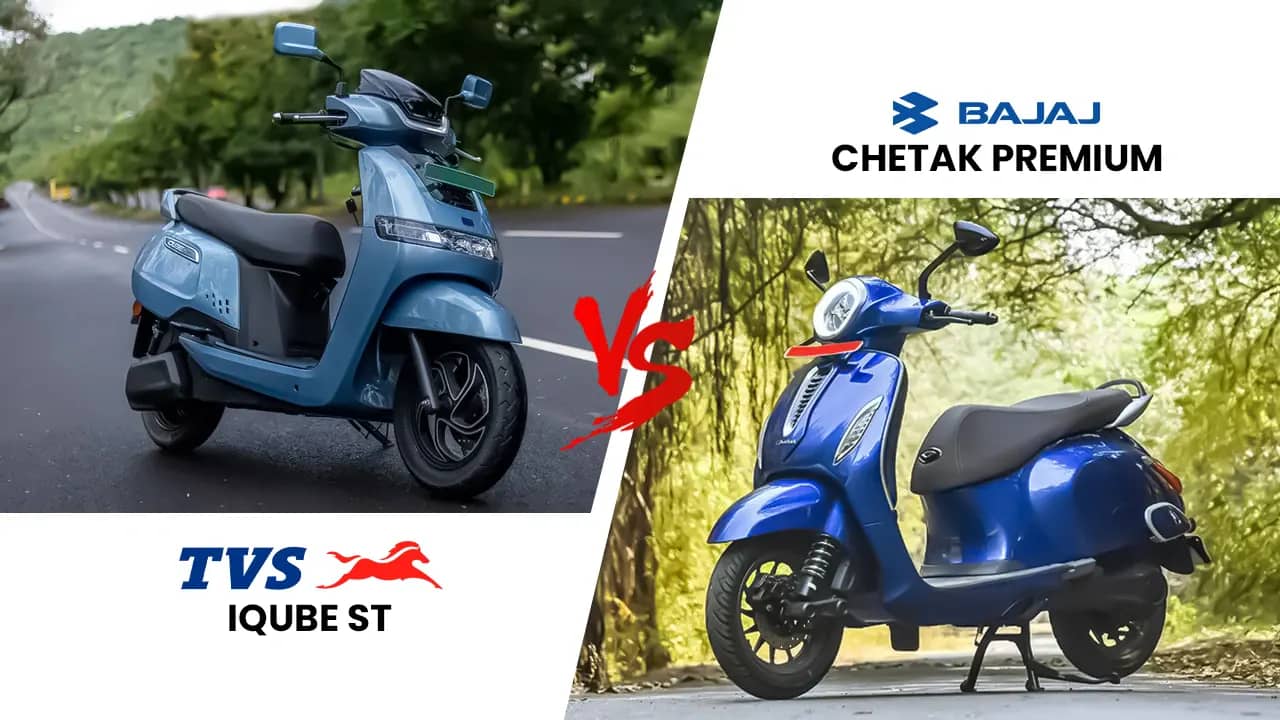
TVS iQube ST vs Bajaj Chetak Premium: Which Legacy Brand Wins in 2026? brings key updates for two-wheeler buyers in India. The electric scooter rivalry between TVS iQube ST and Bajaj Chetak Premium defines the premium EV segment in 2026. Both scooters come from established Indian manufacturers and target buyers upgrading
The electric scooter rivalry between TVS iQube ST and Bajaj Chetak Premium defines the premium EV segment in 2026.
Both scooters come from established Indian manufacturers and target buyers upgrading from 125cc petrol scooters. While the iQube ST focuses on range and advanced technology, the Chetak Premium emphasizes durability and metal body construction.
Electric Scooter Market in 2026 & PM E-DRIVE Subsidy
India’s EV ecosystem has transitioned from FAME-II to the PM E-DRIVE (Progressive Mobility through Electric and Drone Innovations) subsidy scheme.
What PM E-DRIVE Means for Buyers
- Incentive linked to battery capacity
- Subsidy capped at ₹10,000 for these models
- Already included in effective ex-showroom pricing
This policy shift has strengthened legacy brands like TVS and Bajaj against startup competitors.
Battery Capacity, Range & Performance Comparison
TVS iQube ST (5.1 kWh) Performance
- Battery Capacity: 5.1 kWh (NMC Lithium-ion)
- IDC Range: 185 km
- Real-World Range:
- Eco Mode: 150 km
- Power Mode: 110 km
- Motor Peak Power: 4.4 kW
- Peak Torque: ~140 Nm
- Top Speed: 82 km/h
- Charging Time (0–80%): 4 hours 18 minutes
The iQube ST is ideal for long-distance daily commuters and families.
Bajaj Chetak Premium (3.2 kWh) Performance
- Battery Capacity: 3.2 kWh (IP67 Rated)
- IDC Range: 126 km
- Real-World Range:
- Eco Mode: 110 km
- Sports Mode: 90 km
- Motor Peak Power: 4.2 kW
- Peak Torque: ~120 Nm
- Top Speed: 73 km/h
- Charging Time (0–80%): 3 hours 50 minutes
The Chetak Premium is optimized for city commuting and short daily rides.
Specifications Comparison Table (2026)
| Specification | TVS iQube ST (5.1 kWh) | Bajaj Chetak Premium |
| Ex-Showroom Price (Delhi) | ₹1,85,300 | ₹1,47,250 |
| Battery Capacity | 5.1 kWh | 3.2 kWh |
| Motor Type | BLDC | BLDC |
| Peak Power | 4.4 kW | 4.2 kW |
| Peak Torque | ~140 Nm | ~120 Nm |
| IDC Range | 185 km | 126 km |
| Real-World Range (Eco) | 150 km | 110 km |
| Top Speed | 82 km/h | 73 km/h |
| Charging Time (0–80%) | 4.3 hours | 3.8 hours |
| Battery Warranty | 3 Years / 70,000 km | 3 Years / 50,000 km |
| Motor Warranty | 3 Years | 3 Years |
Features & Technology Comparison
TVS iQube ST Features
- 7-inch TFT touchscreen display
- SmartXonnect app connectivity
- Alexa integration
- OTA software updates
- Predictive maintenance alerts
- 32-litre under-seat storage
- Telescopic front suspension
The iQube ST stands out as a tech-heavy premium electric scooter.
Bajaj Chetak Premium Features
- 5-inch TFT non-touch display
- Reverse mode
- Hill-hold assist
- Sequential LED blinkers
- All-metal body construction
- 21-litre under-seat storage
- TecPac subscription for advanced features
The Chetak Premium focuses on build quality and timeless design.
Real-World Ownership Experience
Ride Quality
- iQube ST: Softer suspension, better pothole absorption
- Chetak Premium: Stable but slightly stiff on sharp bumps
Service Network
- TVS: 800+ EV touchpoints
- Bajaj: Presence in 500+ cities
Running Cost Per Kilometer
- iQube ST: Approx. ₹0.28/km
- Chetak Premium: Approx. ₹0.24/km
Pros and Cons
TVS iQube ST Pros & Cons
Pros
- 150 km real-world range
- 32L boot space
- Advanced touchscreen with OTA
Cons
- Higher purchase price
- Plastic body panels
- Larger dimensions
Bajaj Chetak Premium Pros & Cons
Pros
- Strong metal body
- Elegant styling
- Faster city charging
Cons
- Lower top speed
- Smaller storage
- Paid TecPac features
Final Verdict – Which Electric Scooter Should You Buy in 2026?
Buy TVS iQube ST If:
- You travel 70–100 km daily
- You need maximum range
- You want tech-rich features
Buy Bajaj Chetak Premium If:
- Daily usage under 60 km
- You prioritize durability
- You prefer premium metal finish
Conclusion
In 2026, the TVS iQube ST wins in range, performance, and storage practicality.
The Bajaj Chetak Premium wins in build quality, value, and timeless styling.
For highway speeds above 100 km/h, consider performance-focused options like Ather 450 Apex or Ola S1 Pro Gen 2.
Ultimately, your decision depends on whether you prioritize range and technology or durability and design.
The electric scooter rivalry between TVS iQube ST and Bajaj Chetak Premium defines the premium EV segment in 2026. Both scooters come from established Indian manufacturers and target buyers upgrading from 125cc petrol scooters. While the iQube ST focuses on range and advanced technology, the Chetak Premium emphasizes durability and metal body construction.