Delhi EV Policy 2026: ₹30,000 Subsidy on Electric Scooters — Who Qualifies and How to Claim It
Overview
Delhi EV Policy 2026: ₹30,000 Subsidy on Electric Scooters — Who Qualifies and How to Claim It brings key updates for two-wheeler buyers in India. Delhi EV Policy 2026 puts real money on the table for anyone buying an electric scooter this year — up to ₹30,000 off, straight into your account, on top of
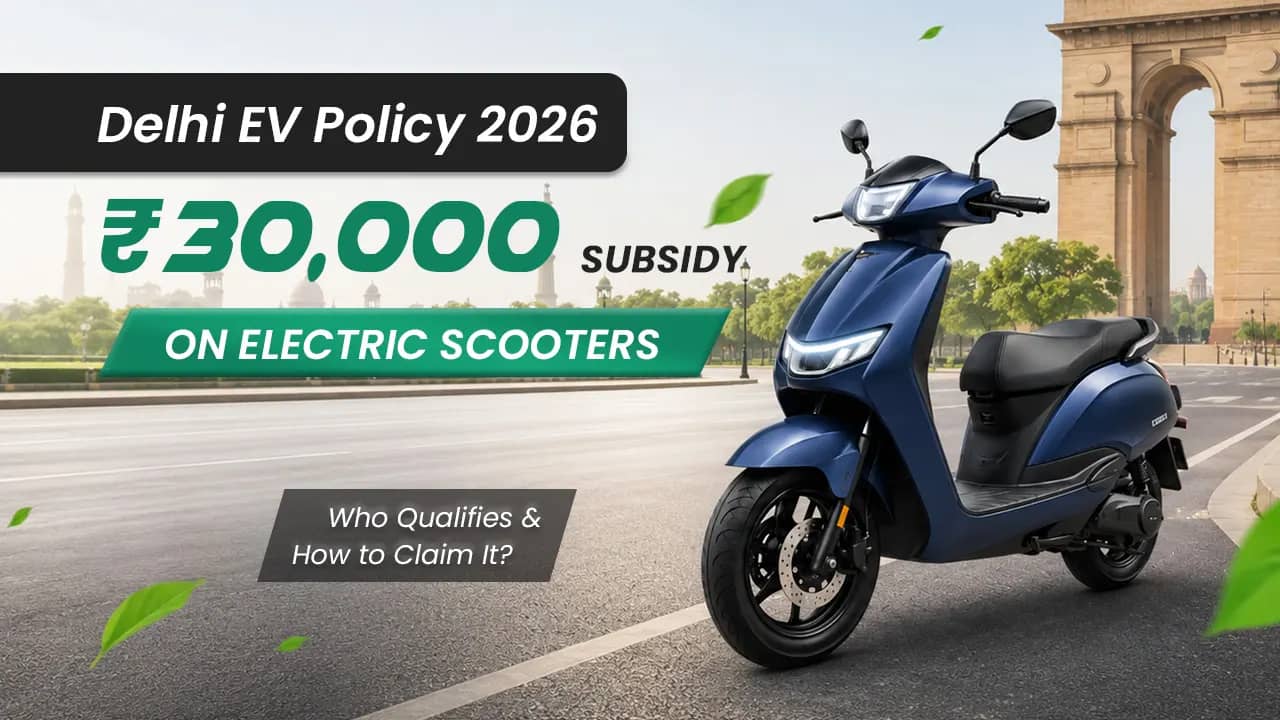
Delhi EV Policy 2026 puts real money on the table for anyone buying an electric scooter this year — up to ₹30,000 off, straight into your account, on top of what the dealership already knocks off your invoice. For a city where two-wheelers make up roughly two-thirds of the vehicles on the road, that's not a token gesture. It's the difference between a scooter EMI you can absorb and one that stretches your budget. The policy runs from July 1, 2026 to March 31, 2030, and the amount you get depends entirely on when you buy — wait too long, and the number shrinks.
Who Qualifies for the Delhi Electric Scooter Subsidy
You qualify if you're buying an electric two-wheeler priced up to ₹2.25 lakh ex-factory and registering it in Delhi. That covers almost every mass-market electric scooter sold today — commuters, delivery riders on daily shift work, students riding to college, and office-goers doing a 15–20km round trip all fall inside this bracket. There's no stated fleet-only restriction and no separate residency test beyond registering the vehicle in Delhi under your own name, which is a lower bar than many buyers expect. What actually decides your payout isn't who you are — it's your battery size and the year you buy.
How the ₹30,000 Figure Is Actually Calculated
Here's the part most articles skip: the subsidy isn't a flat ₹30,000 for everyone. It's ₹10,000 per kWh of battery capacity, capped at ₹30,000 in Year 1. Buy a scooter with a 3kWh or larger battery this year, and you hit the full cap. Buy something smaller — say a 2kWh entry-level model — and you'll get ₹20,000, not ₹30,000. In Year 2 the cap drops to ₹20,000, and by Year 3 it's down to ₹10,000. Buying now, in Year 1, is worth roughly three times what the same scooter earns you two years from now.
There's also a second layer that stacks on top: scrap a Delhi-registered BS-IV or older petrol two-wheeler at an authorised centre, and you can claim an additional ₹10,000 scrapping incentive within six months of getting your Certificate of Deposit. Add the central PM E-DRIVE scheme — ₹2,500 per kWh, capped at ₹5,000, available through July 31, 2026 — and a buyer scrapping an old scooter while purchasing a 3kWh-plus electric model in Delhi can realistically pull together ₹45,000 in combined subsidies, before counting the 100% road tax and registration fee waiver.
Claiming It Without the Runaround
The claim process is split into two halves, and knowing which is which saves you a lot of confusion at the showroom. The PM E-DRIVE portion is applied instantly — the dealer runs your Aadhaar e-KYC and the discount shows up directly on your invoice before you pay. The Delhi state subsidy works differently: it comes later, as a Direct Benefit Transfer into your bank account, not as an upfront price cut. Chief Minister Rekha Gupta's government has launched a dedicated portal, evsubsidy.delhi.gov.in, where you apply within 30 days of purchase using your invoice, Aadhaar, vehicle registration copy, and bank account details; the transfer is expected within 60 days once verified. Keep your Aadhaar linked to an active mobile number before you buy — that single step is what holds up most DBT payouts.
What Electric Scooters Actually Cost After the Subsidy
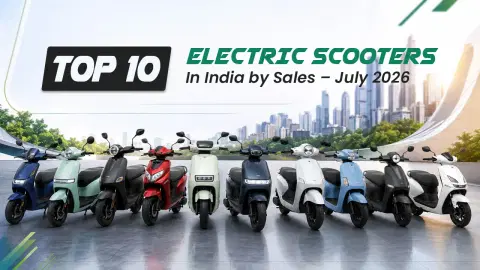
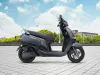
A TVS iQube S with a 3.5kWh battery lists at roughly ₹1,15,000 ex-showroom and manages around 90km of real-world range against a claimed figure closer to 100km+. Since 3.5kWh comfortably exceeds the 3kWh threshold, it qualifies for the full ₹30,000 cap, bringing effective cost down to about ₹85,000 before road tax savings — on a standard five-year loan, that's roughly ₹700–800 off your monthly EMI. The Bajaj Chetak, similarly specced at 3.5kWh and priced around ₹1,11,000, lands in the same subsidy bracket and delivers a comparable EMI cut. For buyers wanting the lowest entry point, the Ola S1 X with a 2kWh pack costs approximately ₹80,000 ex-showroom; its smaller battery caps the subsidy at ₹20,000 rather than the full ₹30,000, but it still remains the cheapest way into the segment.
Petrol vs Electric: The Real Monthly Math
Run the numbers against a typical 110cc petrol scooter at Delhi's current petrol price of around ₹103 per litre, and the daily commute math shifts fast. A commuter covering 40km a day on a petrol scooter averaging 45kmpl burns close to ₹3,700 a month on fuel alone. The same distance on an electric scooter charging off a home socket costs somewhere between ₹350 and ₹500 a month in electricity, depending on tariff slabs. That's a monthly saving north of ₹3,000 before you even factor in the near-zero service costs EVs carry compared to periodic oil changes and carburettor work. Stack that saving against the reduced EMI from the subsidy, and the ownership cost gap over three years runs into tens of thousands of rupees, not a marginal difference.
Delivery riders and daily long-commute users benefit the most from Delhi EV Policy 2026, since their higher monthly mileage compounds the fuel savings fastest. Students and short-distance office-goers still gain from the subsidy and tax waivers, but the payback period stretches longer given lighter daily usage. Anyone planning to scrap an old BS-IV scooter should do it now rather than in Year 2 or 3, since the ₹10,000 bonus and the ₹30,000 purchase cap only align at their combined peak during this first year. Check the on-road price and EMI for electric scooters in your city on Drivio.
Delhi EV Policy 2026 puts real money on the table for anyone buying an electric scooter this year — up to ₹30,000 off, straight into your account, on top of what the dealership already knocks off your invoice. For a city where two-wheelers make up roughly two-thirds of the vehicles on the road, that's not a token gesture.