Monsoon 2026: The Complete Two-Wheeler Buying and Riding Guide for Indian Roads
Overview
Monsoon 2026: The Complete Two-Wheeler Buying and Riding Guide for Indian Roads brings key updates for two-wheeler buyers in India. A monsoon two-wheeler buying guide for Indian roads has to start with the number showrooms rarely lead with: ground clearance, not top speed. Two of India's best-selling scooters, the Honda
A monsoon two-wheeler buying guide for Indian roads has to start with the number showrooms rarely lead with: ground clearance, not top speed. Two of India's best-selling scooters, the Honda Activa 6G at roughly ₹78,500 ex-showroom in Delhi and the TVS Jupiter 125 at around ₹78,700, sit at nearly identical price points, and the choice between them this season comes down to how each handles standing water, not how fast either one revs to 60. With the rains already active across most of the country and July-August bringing the heaviest spells, this is the window when a wrong tyre choice or a skipped service turns a daily commute into a breakdown call.
Which two-wheeler actually survives Indian monsoon roads
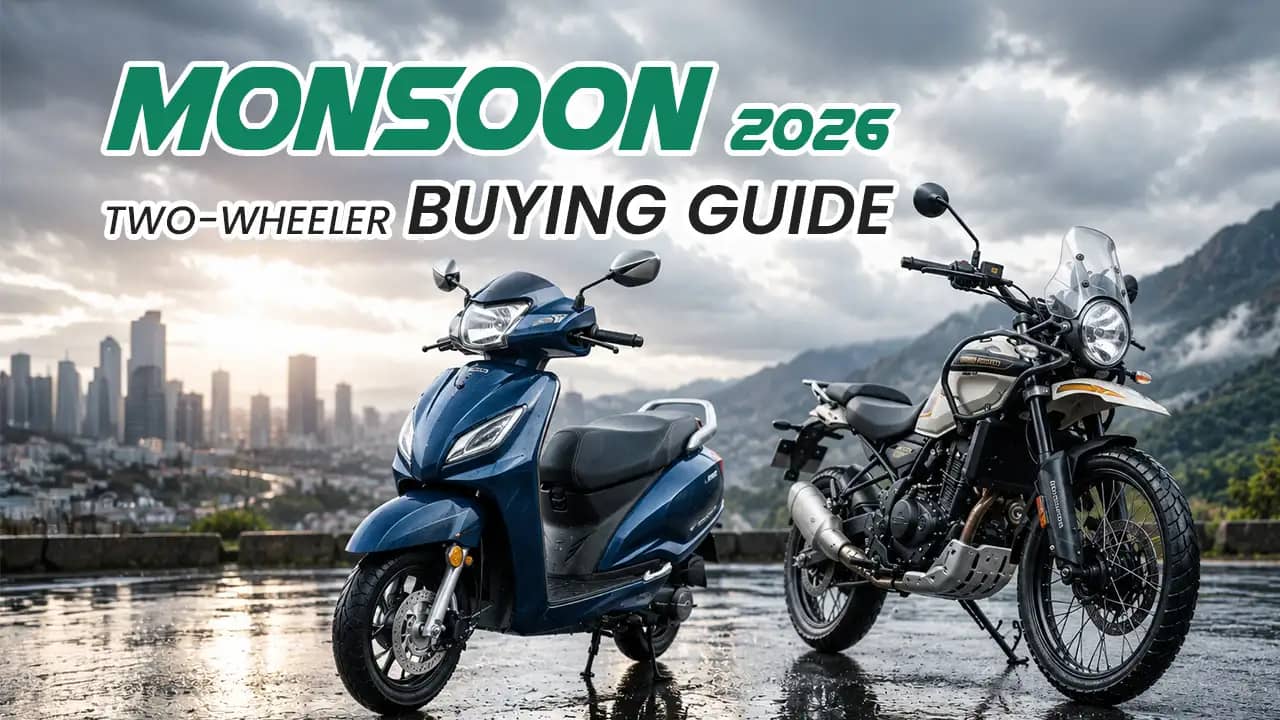
The Activa 6G runs a 109.51cc engine making 7.89bhp, weighs 106kg, and returns close to 44kmpl in real city use against Honda's claimed 47. The Jupiter 125 counters with a 124.8cc, 8.15PS motor, a claimed 57.27kmpl that settles nearer 45-48kmpl once you factor in waterlogged first-gear crawls, and a genuinely useful edge in monsoon conditions: TVS fits a wider under-seat storage bay that swallows a raincoat and spare gloves without you needing a tank bag. Both come on tubeless tyres as standard now, which matters more than any spec sheet number during the rains, since a puncture on a tubed tyre in ankle-deep water usually means walking the bike to the nearest shop rather than plugging it roadside.
Neither scooter is built for anything past a flooded underpass, though. Riders regularly commuting through low-lying stretches of Gurugram, Mumbai's western suburbs, or Chennai's OMR corridor should budget extra for aftermarket air-intake snorkel extensions, a ₹300-500 accessory most local mechanics can fit in under an hour, since stock air intakes on both scooters sit low enough to gulp water past knee-deep.
What it actually costs to run one through the season
At the fixed petrol price of ₹103 a litre and a daily 50km commute, the Activa 6G works out to roughly ₹3,510 a month in fuel, while the Jupiter 125's slightly thirstier real-world mileage brings it to about ₹3,430 — close enough that fuel cost shouldn't be the deciding factor either way. On EMI, assuming the standard 20% down payment over 60 months at 11% interest, the Activa's ₹90,000-odd on-road Delhi price works out to an EMI near ₹1,565 a month, and the pricier Jupiter 125, at roughly ₹93,900 on-road, comes to about ₹1,633. Servicing tells a similar story: expect four scheduled visits by the 10,000km mark, running ₹3,500-4,500 combined for either scooter, mostly labour and oil changes since neither carries a chain that needs monsoon-specific lubrication the way a motorcycle does.
That chain point matters if you're weighing a geared bike instead. Chain-drive commuters need degreasing and re-lubing every 500-700km through the rains, roughly double the dry-season interval, because grit washed off the road embeds itself in the links and eats through them faster than dust ever does.
For riders who won't stay in the city
Adventure riders eyeing something that can handle both flooded city stretches and a monsoon trip to the hills have a different calculation entirely. Royal Enfield's Himalayan 450, priced from ₹2.85 lakh ex-showroom and landing near ₹3.43 lakh on-road in Delhi, brings 230mm of ground clearance against the Activa's roughly 150mm — enough to clear water levels that would flood a scooter's air box. Its 452cc liquid-cooled engine puts out 39.47bhp and 40Nm, dual-channel switchable ABS handles wet braking far better than a single front disc, and the 17-litre tank means fewer stops at flooded fuel stations. It's a different budget bracket entirely, but for someone planning an actual monsoon ride to Ladakh or the Western Ghats rather than a daily office run, it's the only bike among these three built for it.
Riding through it, not just buying for it
Whatever you choose, three habits matter more than any spec. First, drop tyre pressure by roughly 2-3 psi from the recommended dry-weather figure — it widens the contact patch marginally and improves grip on wet tar, though don't go lower than that or you'll compromise handling on the rare dry stretch. Second, treat the first five minutes of any rain shower as the most dangerous window on the road, since that's when oil and dust residue rise to the surface before getting washed away, and braking distances on a fresh wet road can run 20-30% longer than on a road that's been rained on for an hour. Third, replace tyres once tread depth drops below 2mm rather than waiting for them to look visibly bald — worn tubeless tyres lose wet grip long before they lose their ability to hold air, and that gap is exactly where monsoon accidents happen.
Between the two mainstream picks, the Jupiter 125's storage space and marginally better wet-weather ergonomics edge out the Activa 6G for anyone riding through genuinely flood-prone routes, while the Activa remains the safer, cheaper bet for buyers on drier, better-drained city roads. Check the on-road price and EMI for the Activa 6G, Jupiter 125, or Himalayan 450 in your city on Drivio before the next spell hits.
A monsoon two-wheeler buying guide for Indian roads has to start with the number showrooms rarely lead with: ground clearance, not top speed. Two of India's best-selling scooters, the Honda Activa 6G at roughly ₹78,500 ex-showroom in Delhi and the TVS Jupiter 125 at around ₹78,700, sit at nearly identical price points, and the choice between them this season comes down to how each handles standing water, not how fast either one revs to 60.