New Delhi


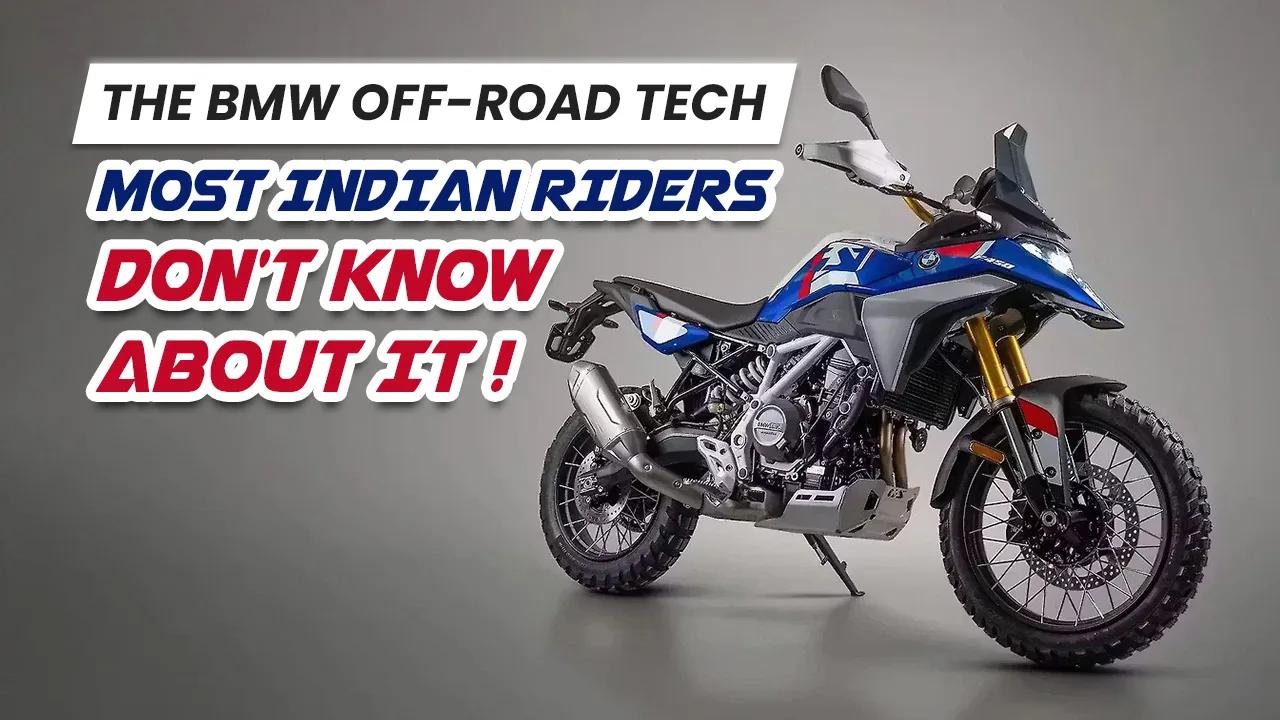

The BMW Off-Road Tech Most Indian Riders Don't Know About
Featured Stories by Drivio | 27 Apr 2026
Picture this: You're crawling through bumper-to-bumper Bengaluru traffic on a brand-new adventure bike. Left hand aching. Clutch in, clutch out, clutch in again — for the hundredth time. Then suddenly, your bike stalls. Right in the middle of the intersection.
Now imagine if you didn't have to touch the clutch at all.
That's not a fantasy anymore. The BMW F 450 GS just made it real — with a clever little piece of engineering called the Easy Ride Clutch (ERC). And once you understand how it works, you'll wonder why every bike doesn't have it.
What Exactly Is the Easy Ride Clutch (ERC)?
In simple terms, the Easy Ride Clutch is BMW Motorrad's automatic clutch system — built directly into the F 450 GS. You still have a clutch lever on the handlebar, but here's the twist: you don't have to use it most of the time.
Think of it like the brain of your clutch. Instead of relying on you to engage or disengage the clutch at exactly the right moment, the ERC does that math for you — automatically, silently, and in milliseconds.
For beginners, this is nothing short of a game-changer. For experienced riders, it's a tool that removes one more thing to worry about when the trail gets technical.
How Does It Actually Work? (The RPM Magic)
Here's where it gets interesting — and surprisingly simple once you break it down.
The ERC operates on a centrifugal clutch principle, combined with smart electronics. At idle or very low RPMs, the clutch is automatically disengaged. As the engine RPM rises — say, when you blip the throttle — the system senses the change and smoothly engages the clutch on its own.
So when you're pulling away from a traffic light? Just blip the throttle and go. No clutch lever needed.
When you come to a stop? The bike senses the drop in RPM and disengages the clutch automatically — preventing stalls entirely.
It's not fully automatic like a scooter. The gearbox is still manual. You shift gears with your foot, exactly like a traditional motorcycle. But the clutch engagement happens on its own, based entirely on RPM thresholds the system monitors in real time.
Manual Override Still Exists
Here's what makes it genuinely clever: the clutch lever isn't gone. It's still there. Advanced riders can use it manually for clutch-in starts, slow technical manoeuvres, or precise off-road control. The ERC simply handles the basics so you don't have to — not that you can't.
The Real-World Benefits Nobody Is Talking About Enough
1. City Traffic Becomes Bearable
If you've ever ridden an adventure bike through Delhi or Pune traffic, you know the pain. Heavy clutch pull, constant engagement, burning left wrist — it adds up fast on a long commute. With ERC, urban riding becomes almost effortless. The bike handles the clutch work so you can focus on the road, the gaps, and staying alive.
2. Zero Stall Anxiety for New Riders
Stalling at an intersection is embarrassing. Stalling on a mountain trail with a 200 kg bike? Terrifying. The ERC eliminates this fear completely. Since the clutch automatically disengages before the engine can stall, new riders gain confidence faster — and that confidence is priceless on the BMW F 450 GS's intended terrain.
3. Off-Road Focus, Not Clutch Focus
Here's where the ERC earns its keep for enthusiasts too. On a rocky trail or a loose gravel climb, your brain is juggling throttle, body position, line selection, and balance all at once. Having to modulate a clutch on top of all that? That's cognitive overload.
ERC strips one variable away. You can concentrate entirely on riding the terrain, not managing the mechanics.
India-Specific Usability — Why This Matters More Here
Indian riding conditions are genuinely unique. Potholes that appear from nowhere. Speed breakers every 200 metres. Cattle on mountain roads. Stop-start traffic that would make a seasoned London commuter quit.
These are exactly the conditions where automatic clutch bikes in India make the most sense — and where the ERC shines brightest. Whether you're navigating the chaos of a metro city or crawling up a broken forest track in Himachal, the system adapts without you having to think about it.
For a country where adventure riding is exploding in popularity, and where many new riders are jumping straight to mid-capacity bikes, this technology arrives at exactly the right time.
The Limitations — Let's Be Honest
No technology is perfect, and balance demands we say so.
The learning curve is different, not absent. Riders used to traditional clutch control may find the ERC slightly unintuitive at first, particularly during very slow technical manoeuvres where precise clutch slipping is a skill they've built over years.
You're dependent on the system. If an ERC-related sensor or actuator fails in a remote area, you're more reliant on dealer service than you would be with a mechanical clutch. Simplicity has its own resilience.
It adds cost. The BMW F 450 GS is already a premium machine. The ERC is part of that price — and rivals offer competitive off-road capability at lower price points without such systems.
How Does It Stack Up Against the Competition?
BMW F 450 GS vs KTM 390 Adventure
The KTM 390 Adventure is a serious rival — sharp, capable, and loaded with electronics. But it runs a conventional manual clutch. KTM relies on its slipper clutch and ride modes to make the experience smooth, which it does well. However, there's no equivalent to ERC. In heavy traffic or for less experienced riders, the BMW's system offers a meaningfully different (and less fatiguing) experience.
BMW F 450 GS vs Royal Enfield Himalayan 450
The Royal Enfield Himalayan 450 has genuinely impressed the adventure community. It's accessible, capable, and priced to compete. But again — no automatic clutch system. For its price point, the Himalayan 450 punches above its weight in many areas, but the ERC remains a BMW-exclusive advantage. If city usability and beginner friendliness are priorities, this gap matters.
So, Is the ERC Just a Gimmick?
Not even close.
Gimmicks are features that sound good in brochures and disappear in real life. The Easy Ride Clutch is the opposite — it's quietest when you're showing off, and loudest when you're grinding through the fifth kilometre of stop-and-go traffic or trying not to stall on a steep rocky descent.
It's a feature that earns its respect the longer you ride with it.
The Future Is Already Here
The BMW F 450 GS with its ERC system isn't just a new motorcycle. It's a preview of where adventure biking is headed — toward machines that are smarter, more accessible, and less punishing to ride, without sacrificing the raw capability that makes the segment exciting.
As automatic clutch technology becomes more refined and, eventually, more affordable, expect other manufacturers to follow. KTM, Royal Enfield, and others will face growing pressure to offer their own interpretations.
But right now, in 2025, BMW has the head start.
If you've been on the fence about picking up an adventure bike because the clutch work feels intimidating — or if you're a seasoned rider tired of aching hands in traffic — the BMW F 450 GS Easy Ride Clutch might just be the feature that finally tips you over the edge.
Ride smarter. Ride further. Let the bike handle the boring parts.