New Delhi


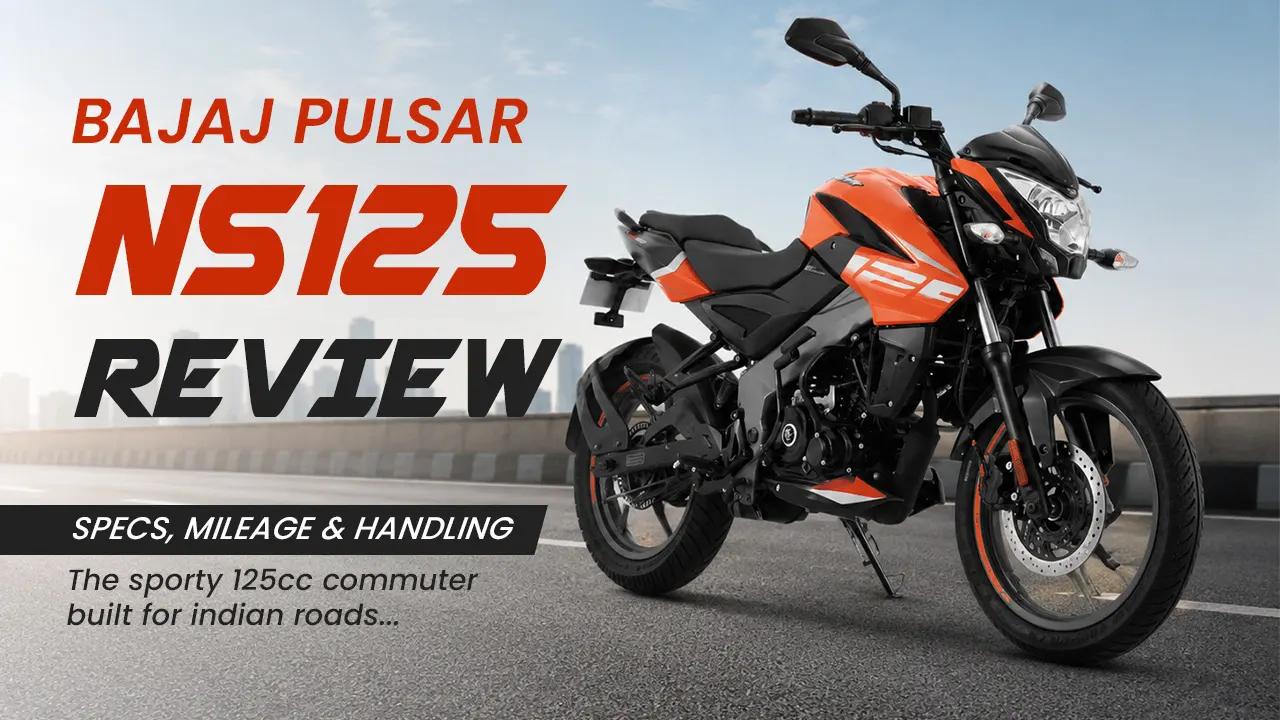

Bajaj Pulsar NS125 Review: Specs, Mileage & Handling
Reviews by Drivio | 19 Jun 2026
Bajaj Pulsar NS125 review season has arrived right on time for buyers comparing 125cc options before the festive rush, with the bike currently priced between ₹92,180 and ₹98,400 (ex-showroom) depending on variant. That makes it one of the more accessible ways into Pulsar ownership, and Bajaj has positioned the NS125 as its sporty 125cc commuter — built for young riders who want the muscular NS-series styling without the running costs that come with bigger-displacement Pulsars. With petrol prices still hovering near ₹103/litre in most metros and college and office commutes dominating daily two-wheeler use, a bike that blends street-fighter looks with genuine fuel efficiency is exactly what a large chunk of India's 125cc shoppers are hunting for in May 2026.
Pulsar NS125 specs that matter on the road
Strip away the marketing language and the Pulsar NS125 specs sheet reads like a sensible, no-drama commuter underneath the aggressive bodywork. The bike runs a 124.45cc, single-cylinder, air-cooled engine that puts out 11.8 PS of power and 11 Nm of torque, sent to the rear wheel through a 5-speed gearbox. None of those numbers will set pulses racing on paper, but they translate into a motor that pulls cleanly from low revs and doesn't need constant gear-shuffling in stop-start city traffic. Suspension duties are handled by telescopic front forks paired with a Nitrox monoshock at the rear, a combination borrowed from the larger NS family that gives the bike a noticeably more controlled ride than older twin-shock 125cc commuters. Braking comes via a CBS (Combi Braking System) setup on most variants, with Bajaj having added a single-channel ABS option to the lineup as well, which matters more than people expect when riding behind buses and autos in Indian city traffic. Internal link opportunity: readers cross-shopping in this segment may also want to check Drivio's TVS Raider 125 review on Drivio for a direct sense of how the competition stacks up on paper.
Riding the NS125 in real Indian traffic
This is where most Bajaj Pulsar NS125 review write-ups get lazy and stick to spec comparisons, but the actual riding experience is what decides whether this bike fits your life. In bumper-to-bumper city traffic, the NS125 feels light and flickable — the perimeter frame and compact dimensions make filtering through gaps second nature, and the clutch is light enough that a two-hour crawl through peak-hour traffic doesn't leave your wrist aching. Cornering confidence is genuinely one of the bike's stronger traits; the monoshock rear and the lower center of gravity inherited from the NS design language mean it holds a line through roundabouts and flyover curves with far more composure than a typical commuter-spec 125. Ride comfort over Indian roads — broken patches, speed breakers thrown in without warning, the occasional pothole that appears overnight — is handled reasonably well by the telescopic front end, though the suspension is tuned firm enough that you'll feel sharper bumps more than you would on a softer commuter like the Pulsar 125. Braking confidence is solid for a 125, and the CBS system noticeably shortens stopping distances in panic-braking situations compared to non-CBS rivals.
Highway behavior and where the engine runs out of breath
Where the Pulsar NS125 shows its limits is on the highway, and any honest review has to say so plainly. The 124.45cc engine simply doesn't have the headroom for sustained high-speed cruising — sit it at 80-85 kmph for any length of time and you'll feel the motor working hard, with vibrations creeping into the footpegs and handlebar. This isn't a bike built for long intercity runs; it's built for the daily grind of office commutes, college runs, and weekend errands within city limits, and that's exactly the job it does well. Riders who regularly need to do 100+ km highway stretches should look at something with more displacement, but for the 15-25 km daily commute that describes most Indian riders, the engine's character is well-matched to the use case.
Bajaj Pulsar NS125 mileage and what it costs to run
Bajaj claims an ARAI-certified mileage figure in the mid-40s for the NS125, but real-world numbers in actual Indian traffic conditions tend to land in the 45-55 kmpl range depending on riding style, throttle discipline, and how much of your commute is stop-start versus steady-state. Run the math at the lower end of that range with petrol at roughly ₹103/litre, and a rider doing 1,200 km a month would burn through roughly 27 litres, working out to a fuel bill of around ₹2,780 per month — genuinely competitive territory for a bike with this much road presence. Maintenance expectations are in line with what Pulsar owners have come to expect: Bajaj's wide service network across India keeps running costs predictable, and the 125cc engine's lower stress levels compared to bigger displacement options should mean fewer surprises at service intervals.
Pulsar NS125 price in India and on-road costs by city
The Bajaj Pulsar NS125 price in India starts at ₹92,180 ex-showroom for the base variant and climbs to ₹98,400 for the top trim with LED lighting, Bluetooth connectivity, and ABS. The Bajaj Pulsar NS125 on-road price is meaningfully higher once you factor in RTO registration, mandatory insurance, and local cess — expect to pay somewhere between ₹1.04 lakh and ₹1.20 lakh on-road in cities like Delhi and Mumbai, with the exact figure varying by state taxation and the dealership's insurance bundling.
Pulsar NS125 vs TVS Raider 125 vs Hero Xtreme 125R
Place the NS125 next to its closest rivals and a clear pattern emerges. Against the TVS Raider 125, the Pulsar wins on outright street presence and that unmistakable Pulsar brand pull, but the Raider counters with a noticeably richer features list — TVS has packed in more connected-tech and convenience touches that make the Raider feel like the more modern package on a spec sheet. Against the Hero Xtreme 125R, the comparison shifts again: the Xtreme 125R comes across as sharper and more contemporary in its design language and switchgear quality, while the NS125 leans on its stable, planted handling and that distinctive NS-family stance to hold its ground. Neither rival outright beats the Pulsar on cornering composure, but both make a real case on feature value for the same money. Riders chasing maximum tech-for-rupee should seriously cross-shop the Hero Xtreme 125R review on Drivio before deciding.
Final verdict: should you buy the Pulsar NS125?
For riders who want sporty styling that actually turns heads, manageable running costs, and a daily commuter that won't punish your wallet at the pump, the Bajaj Pulsar NS125 earns a genuine recommendation — particularly for younger buyers and first-time Pulsar owners who value the badge and the stance over a longer features checklist. It isn't the most tech-loaded bike in its class, and it isn't built for highway duty, but within the city limits where most Indian riders actually live, it does its job with confidence. If feature count matters more to you than styling, the Raider 125 or Xtreme 125R are worth a serious look first. Check the on-road price and EMI for the Bajaj Pulsar NS125 in your city on Drivio.