Yamaha MT-07 vs Triumph Trident 800: The 2026 Middleweight Streetfighter War
Overview
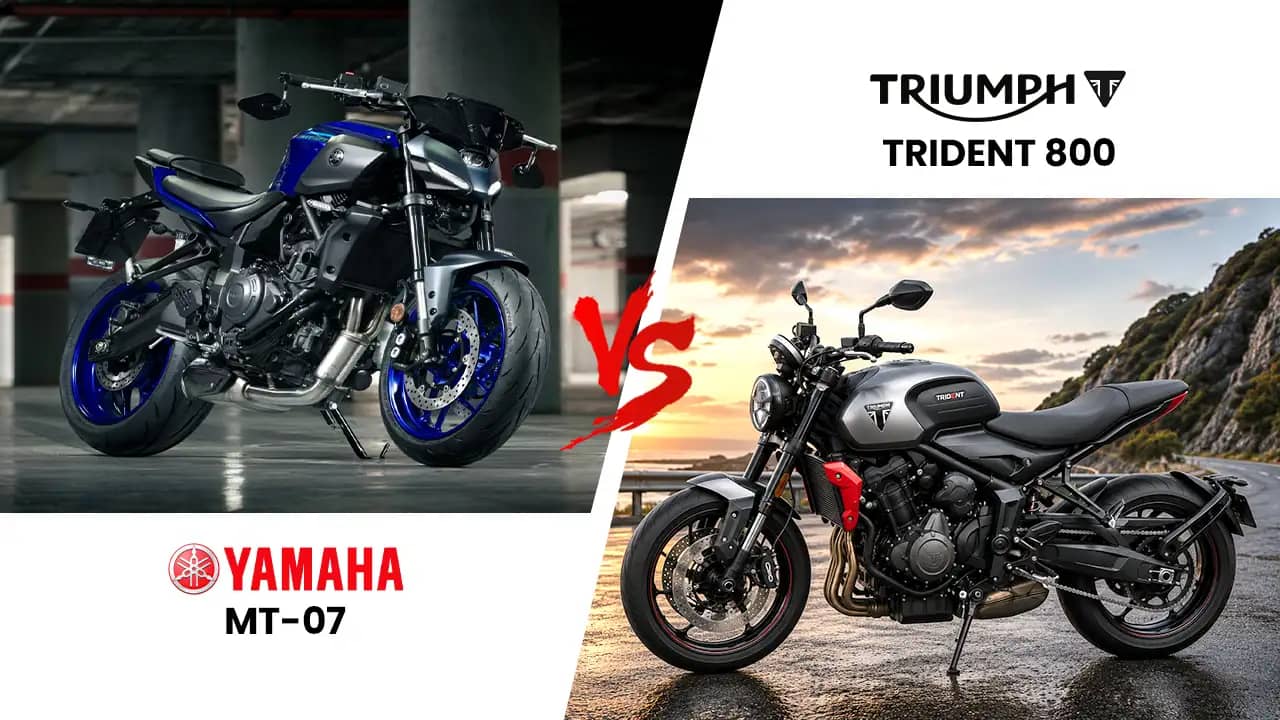
Yamaha MT-07 vs Triumph Trident 800: The 2026 Middleweight Streetfighter War brings key updates for two-wheeler buyers in India. The Yamaha MT-07 vs Triumph Trident 800 is the most important middleweight streetfighter showdown to hit India in years, and in May 2026, both bikes are positioned to change what
The Yamaha MT-07 vs Triumph Trident 800 is the most important middleweight streetfighter showdown to hit India in years, and in May 2026, both bikes are positioned to change what premium naked riders here expect for their money. Yamaha's 689cc parallel-twin roadster is expected to arrive at an ex-showroom price of ₹7.90 lakh in India, while the Triumph Trident 800 — carrying a 798cc three-cylinder engine and a muscular 115 PS — is expected to land at around ₹11.50 lakh ex-showroom. That ₹3.60 lakh gap is the central tension of this comparison, and whether that premium is justified is the question every serious buyer in Delhi, Mumbai, or Bengaluru needs answered before writing the cheque.
Where the Battle Lines Are Drawn
These two bikes represent fundamentally different philosophies, even though they sit in the same market segment. Yamaha built the MT-07 around accessibility — a torquey, linear engine character that rewards riders upgrading from 200–300cc machines without punishing them for the ambition. Triumph, on the other hand, engineered the Trident 800 to fill the void left by the Street Triple 765 R, which has quietly exited the 2026 lineup. The result is a machine that competes upward in feel and outright performance, even if its price stays grounded enough to attract buyers who'd otherwise be looking at the Kawasaki Z900 or Honda CBR650R.
Both are liquid-cooled, both use six-speed gearboxes with slipper clutches, and both target the urban premium rider who also wants serious weekend capability. That's where the similarity ends.
Specs at a Glance
| Specification | Yamaha MT-07 | Triumph Trident 800 |
| Engine | 689cc parallel-twin | 798cc inline triple |
| Max Power | 73.4 PS @ 8,750 rpm | 115 PS @ 10,750 rpm |
| Peak Torque | 67 Nm @ 6,500 rpm | 84 Nm @ 8,500 rpm |
| Top Speed | ~180 km/h | ~220 km/h |
| Real-World Mileage | ~25–28 kmpl | ~18–22 kmpl |
| Ex-Showroom Price (Delhi) | ₹7.90 lakh* | ₹11.50 lakh* |
Expected price at time of India launch; subject to confirmation.
The Engine Story — And What It Means on Indian Roads
On paper, the Trident 800's advantage reads like a blowout: 115 PS and 84 Nm against the MT-07's 73.4 PS and 67 Nm. But numbers on a spec sheet rarely translate directly to real-world feel, especially on roads that alternate between potholed service lanes and expressway sweepers.
The MT-07's CP2 parallel-twin is one of the most respected middleweight engines globally precisely because of how it delivers its power — strong, accessible torque from 3,000 rpm onwards, with a linear throttle response that makes filtering through Delhi traffic feel intuitive rather than nerve-wracking. The Trident 800's 798cc triple, derived from the Tiger Sport 800 engine, operates in a different register altogether. It builds through the rev range with a purposeful surge, rewards committed cornering, and hits its stride between 6,000 and 10,750 rpm with a three-cylinder howl that is among the most characterful sounds in the segment. For riders who spend weekends on Nh48 or the Pune-Mumbai Expressway, that top-end urgency matters. For those navigating Bengaluru's ORR at 8 AM, the MT-07's mid-range grunt is arguably more useful day-to-day.
Real-world mileage is also worth examining. At petrol prices hovering around ₹103/litre in most Indian metros, the MT-07's estimated 25–28 kmpl will cost roughly ₹3,675–₹4,120 per 1,000 km in fuel. The Trident 800, at an estimated 18–22 kmpl, works out to ₹4,680–₹5,720 per 1,000 km. Not catastrophic, but meaningful if you're riding 2,000 km a month.
Hardware, Electronics, and the Technology Divide
This is where the Triumph earns much of its price premium. The Trident 800 arrives with 41mm adjustable Showa USD forks, a preload-and-rebound-adjustable Showa monoshock, IMU-based lean-sensitive Optimised Cornering ABS, switchable traction control, cruise control, Triumph Shift Assist bi-directional quickshifter, Bluetooth connectivity, and three ride modes — Road, Sport, and Rain. For a bike priced at ₹11.50 lakh, that's a hardware sheet that would be at home on motorcycles costing ₹2–3 lakh more.
The MT-07, by contrast, gains 41mm inverted forks and SpinForged lightweight wheels for 2026 — a meaningful upgrade — along with a 5-inch TFT display with Y-Connect smartphone integration and dual-channel ABS. What it doesn't offer, at least in its expected India specification, is cornering ABS, a quickshifter, or ride modes. For the price, that omission is understandable. It does not, however, go unnoticed when the two bikes are parked side by side.
Braking and Suspension: Urban Reality Check
On Indian roads — where surface quality changes without warning and monsoon patches appear with no advance notice — the Triumph's cornering ABS gives riders a genuine real-world confidence margin that the MT-07 simply can't match. The Michelin Road 5 tyres fitted as standard on the Trident 800 also provide meaningful wet-weather grip during the monsoon months; the MT-07's tyre specification for the India market is yet to be confirmed.
The Price Reality — On-Road Numbers That Matter
At ₹7.90 lakh ex-showroom, the MT-07's on-road price in Delhi will sit at approximately ₹8.90–9.10 lakh, accounting for registration, insurance, and accessories. In Mumbai, expect closer to ₹9.30 lakh on-road. The Trident 800, at ₹11.50 lakh ex-showroom, will likely demand ₹12.80–13.20 lakh on-road in Delhi and upwards of ₹13.50 lakh in Mumbai. Both are significant commitments — but when you compare the Trident 800 against the Kawasaki Z900 (₹9.99 lakh ex-showroom) or the Honda CBR650R (₹12.49 lakh ex-showroom), the Triumph's positioning starts to make commercial sense.
We've previously covered the Triumph Trident 660 and the Kawasaki Z650 on Drivio — both strong options in the sub-₹10 lakh naked space — and the MT-07 vs Triumph Trident 800 fight essentially represents the next rung up on that same ladder.
Who Should Buy Which?
The MT-07 is the right answer for riders who are upgrading to their first serious middleweight — those coming from a Yamaha FZ-S or KTM Duke 250 who want a true 700cc experience without the financial or ergonomic intimidation of a full-blown streetfighter. The price is sharp, the engine character is forgiving, and the handling is balanced enough for confident beginners and satisfying enough for experienced riders.
The Trident 800, however, is for riders who already know what they want. If you've owned a 400–650cc bike and you're ready to step into a machine that genuinely rewards commitment on an open road or a technical ghats section, Triumph's three-cylinder roadster offers a riding experience the MT-07 simply cannot replicate. The Yamaha MT-07 vs Triumph Trident 800 comparison ultimately comes down to where you are in your riding journey — and what the next five years of your riding life look like.
The Verdict
The Triumph Trident 800 wins this comparison on performance, hardware, and outright riding experience — but winning on paper doesn't automatically make it the right buy. If your budget caps at ₹10 lakh on-road and you spend more time in city traffic than on mountain passes, the MT-07 is the more honest, more practical, and arguably more rewarding purchase for daily Indian riding conditions. If you can stretch to the Trident's ask and want a naked roadster that genuinely excites rather than merely satisfies, the Triumph earns every rupee of its premium. Before you decide, check the confirmed on-road price and EMI options for both the Yamaha MT-07 and the Triumph Trident 800 in your city on Drivio.
The Yamaha MT-07 vs Triumph Trident 800 is the most important middleweight streetfighter showdown to hit India in years, and in May 2026, both bikes are positioned to change what premium naked riders here expect for their money.